 HYGO News
 Vast Majority of White Evangelical Leaders — Sen. Cotton Questions Biden's Nominee
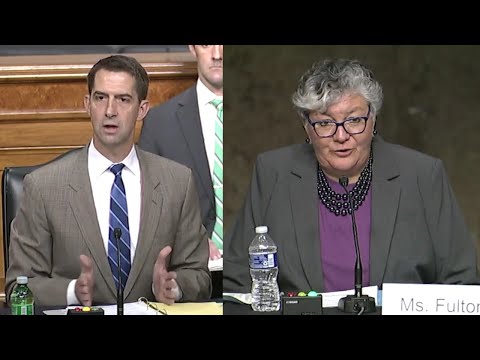
Sen. Cotton Questions Biden’s Defense Nominee Over “Vast Majority of White Evangelical Leaders” Tweet
On October 7, 2021, Senator Tom Cotton (R-AR) confronted Brenda “Sue” Fulton, President Biden’s nominee for assistant secretary of defense for manpower and reserve affairs, during a bruising Senate Armed Services Committee confirmation hearing. Cotton zeroed in on Fulton’s social media history, particularly a 2017 tweet in which she wrote that “the vast majority of white evangelical leaders are utterly unmoored from the gospel of Jesus Christ.” The exchange became one of the most watched moments of the hearing, as Cotton methodically pressed Fulton to define what she meant by “vast majority” and challenged whether someone with her record of statements about religious conservatives was fit to oversee the Defense Department’s chaplain corps and religious accommodations policy.
The “Vast Majority” Exchange
Cotton opened his questioning by reading Fulton’s August 29, 2017, tweet back to her and then asking a deceptively simple question: what percentage of white evangelical leaders did she believe were “unmoored from the gospel of Jesus Christ”?
Fulton declined to provide a number, saying simply, “No, Senator.” Cotton pressed harder, walking through progressively lower thresholds:
“Do you think 95% of white evangelical leaders are unmoored from the gospel of Christ?” “No, Senator.” “80%?” “No, Senator.” “70%?” “No, Senator.” “51%? It has to be 51, right? It has to be at least 51. You said the majority.”
The exchange highlighted the tension between political rhetoric on social media and the specificity required under congressional questioning. Cotton then shifted the focus to the racial dimension of Fulton’s statement, asking why she had singled out white evangelical leaders while not making the same claim about Black or Hispanic evangelical leaders.
“There are a lot of black evangelical leaders. There are a lot of Hispanic evangelical leaders. Are black evangelical leaders unmoored from the gospel of Christ?” Cotton asked.
Fulton attempted to broaden her response: “Senator, I’m not sure the entire context of that, but I would say that there are a wide variety of beliefs. We don’t all have the same beliefs. We don’t all have the same understanding of the gospel.”
Cotton rejected the deflection: “Of course we don’t. That’s why we have things like the Religious Freedom Restoration Act. That’s why we respect the freedom of exercise of all of our troops and all of our fellow citizens, whether they’re white, black, Hispanic, Asian, or any other race or ethnicity, or whatever their religion is.”
He then pressed Fulton on whether it was appropriate for anyone to claim that another person was “unmoored from the gospel of Christ,” even if they disagreed on political issues. Fulton conceded that while her tweet was “consistent with free speech, it’s unwise.”
The Religious Freedom Restoration Act Contradiction
Cotton expanded his line of questioning beyond the 2017 tweet to a June 30, 2014, statement in which Fulton wrote that “religious freedom” — which she placed in quotation marks — was being “twisted to mean conservative Christians can dictate their views to the rest of us.” In the same statement, Fulton had advocated for the repeal of the Religious Freedom Restoration Act (RFRA).
Cotton highlighted the bipartisan pedigree of RFRA, noting that it had been “passed almost unanimously by this Congress,” signed into law by President Clinton, and voted for by President Joe Biden when he served in the Senate. The law requires the government to demonstrate a compelling interest before burdening any person’s exercise of religion.
Cotton then confronted the contradiction between Fulton’s past advocacy for repealing RFRA and her written answers to the committee’s advance policy questions, in which she stated that troops in religious groups “should be allowed to exercise their First Amendment rights of free speech and to observe the tenets of their religion” as long as they were “acting within the confines of federal law and DOD policy.”
“So which is it, Mrs. Fulton?” Cotton demanded. “Are you actually going to protect the religious freedom of troops and chaplains? Or are you going to ensure that they can’t dictate their views to the rest of us under the guise of religious freedom?”
Fulton responded that she supported religious freedom and would uphold it for all troops and civilian employees “consistent with the law.” When Cotton asked directly whether she still believed RFRA should be repealed, Fulton said, “No, Senator.”
Cotton Announces His Opposition
Cotton concluded his questioning by declaring that he would oppose Fulton’s nomination and urging the full Senate to do the same. He connected the various threads of his questioning into a single argument about fitness for the position.
“Ms. Fulton, I think you’ll understand why so many members of this committee and the Senate do not think you are fit to take over this position,” Cotton said. “You are going to be in charge of military chaplains. You are nominated to be the Assistant Secretary of Defense for Manpower and Reserve Affairs, and you have a long history of offensive inflammatory accusations against Bible-believing Christians.”
The position Fulton was nominated for carried direct authority over the Defense Department’s religious accommodations policy and the military chaplain corps, making the nominee’s views on religious expression a matter of particular sensitivity.
Fulton’s Background and Democratic Response
Fulton brought a distinguished military background to the hearing. A former Army officer, she graduated from the United States Military Academy’s first class to include women. She later became the first openly gay member of West Point’s Board of Visitors in 2011.
Democrats on the committee did not question Fulton about her tweets during the hearing. Senate Armed Services Committee Chairman Jack Reed (D-RI) appeared to defend her near the end of the proceedings. The partisan divide in the hearing was stark, with Republicans focusing almost entirely on Fulton’s social media history and past statements while Democrats declined to engage with those issues.
The future of Fulton’s nomination remained unclear following the hearing. The confrontation illustrated the growing significance of nominees’ social media histories in the confirmation process, as statements made years earlier on platforms like Twitter were being treated as formal declarations of policy views during Senate hearings.
Key Takeaways
- Sen. Cotton methodically pressed Biden defense nominee Brenda “Sue” Fulton to define what percentage she meant by “vast majority” when she tweeted in 2017 that white evangelical leaders were “utterly unmoored from the gospel of Jesus Christ,” with Fulton declining to put a number on it at 95%, 80%, 70%, and 51%.
- Cotton exposed a contradiction between Fulton’s 2014 advocacy for repealing the Religious Freedom Restoration Act — a law passed nearly unanimously and signed by President Clinton — and her written promise to the committee to protect religious freedom for all troops.
- Cotton declared he would oppose the nomination, arguing that someone with “a long history of offensive inflammatory accusations against Bible-believing Christians” was unfit to oversee the Defense Department’s chaplain corps and religious accommodations policy.