 HYGO News
 US Trade Rep on trade deal with Switzerland; air traffic controller 'begging' Durbin to end Shutdown
US Trade Rep on trade deal with Switzerland; air traffic controller “begging” Durbin to end Shutdown
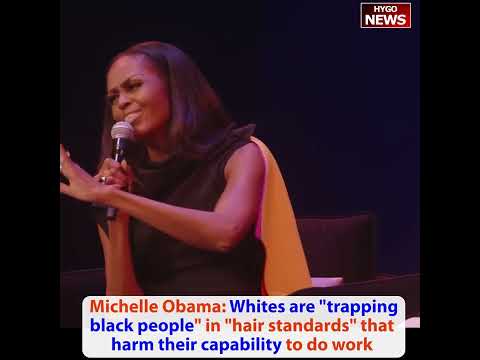
Multiple items of note. US Trade Representative Jamieson Greer announced a major trade deal with Switzerland — Swiss companies will shift manufacturing to the United States in pharmaceuticals, gold smelting, and railway equipment. Roche has already broken ground on a U.S. pharmaceutical facility. The deal, in works since April, is part of Trump’s reciprocal trade program that retains tariffs while securing market-opening commitments. Sen. Dick Durbin — who voted 14 times to keep the shutdown going — described Durbin receiving letters from air traffic controllers “begging” him to end the shutdown after they missed two paychecks. Durbin said he was tired of government shutdowns (“crude and cruel”) and that innocent victims shouldn’t suffer for political strategies. The political admission is striking after his 14 votes to maintain the shutdown. Michelle Obama delivered controversial remarks on racial experiences — claiming whites “trapping black people” in “hair standards” that harm their work capability, and that going shopping as a child required showing she was “one of them” to avoid theft accusations. Greer: “Switzerland is probably the next one … we’ve essentially reached a deal with Switzerland … they’re going to send a lot of their manufacturing here to the United States, pharmaceuticals, gold smelting, railway equipment.” Durbin: “I’ve seen enough of these government shutdowns. I think they’re crude and they’re cruel and they’re innocent victims.”
Switzerland Trade Deal
USTR Jamieson Greer announced the Switzerland deal. “Where are the things to kind of stand in terms of the who’s on deck? Sure, so Switzerland is probably the next one. I just met with them yesterday afternoon. I’ve spoken with the president just this morning and yesterday.”
The deal had been in the works for months, with intense final negotiations.
“I’ve coordinated with Cabinet colleagues, Secretary Lennox, Secretary Bessent, the chief of staff.”
The negotiating team:
- Jamieson Greer (USTR)
- Secretary Lutnick (“Lennox” is Whisper error) — Commerce
- Secretary Bessent — Treasury
- White House Chief of Staff — likely Susie Wiles
“And this is something where we’ve essentially reached a deal with Switzerland. So we’ll post details of that today on the White House website, where they’re going to send a lot of their manufacturing here to the United States, pharmaceuticals, gold smelting, railway equipment.”
Swiss manufacturing moving to U.S.:
- Pharmaceuticals (Roche, Novartis, Lonza)
- Gold smelting (Switzerland historically a major gold refining center)
- Railway equipment (Swiss trains are globally renowned)
“So we’re really excited about that deal and what it means for American manufacturing.”
Deal Background
“How long was that deal in the works and what kind of pushed it over the top? Well, it’s really been in the works since April, when the president started his reciprocal trade program.”
April 2025 — Trump’s reciprocal trade program launch. Countries have been negotiating since then.
“Switzerland, like dozens of other countries, have been extremely interested in having market-opening deals with the United States, where they open their markets to us, and we modify their reciprocal tariffs somewhat for them.”
The reciprocal framework:
- Other country opens markets to U.S. exports
- U.S. modifies (reduces) reciprocal tariffs
- Both countries benefit from improved trade
“Like all of the president’s deals, we keep a tariff. We retain a tariff on these countries because we have to get the trade deficit under control.”
Critical point: tariffs don’t go to zero. Some tariff remains. The tariff revenue continues flowing (supporting Trump’s $2,000 dividend plan and debt reduction).
“But because Switzerland, for example, has agreed to manage its trade surplus with the United States in terms of making sure that things where they have a surplus with us, pharmaceuticals, gold, etc., their companies are going to build here, so it’s going to eliminate some of the sources of that surplus.”
The mechanism:
- Switzerland has trade surplus with U.S. (exports more than imports)
- Swiss companies manufacturing in Switzerland = exports to U.S.
- Swiss companies manufacturing in U.S. = reduces surplus (U.S. production doesn’t count as Swiss exports)
- Trade imbalance addressed structurally
Roche Groundbreaking
“We’ve already seen, you know, Roche has actually broken ground already for a pharmaceutical facility in the United States. That’s really exciting.”
Roche — one of the world’s largest pharmaceutical companies — broke ground on a U.S. facility. This represents Swiss pharmaceutical manufacturing coming to U.S. soil, creating American jobs and reducing pharmaceutical imports.
The broader implications:
- U.S. pharmaceutical supply chain resilience
- American jobs in high-wage industry
- Reduced dependency on foreign pharmaceutical manufacturing
- Alignment with national security concerns about medical supply chains
Michelle Obama Hair Comments
The transcript pivoted to Michelle Obama’s controversial remarks. “We’re going to go to the gym because we’re trying to keep our hair straight for y’all. It is exhausting, and it’s so expensive, and it takes up so much time.”
Michelle Obama’s framework: black women work to maintain “straight” hair styles, which is “exhausting” and “expensive.”
“Breeds are for y’all so we can work harder and focus on the work.”
Whisper rendered unclearly — Michelle likely said something like “we do it for you all” meaning white Americans.
“So why do we need an act, an act of law, to tell white folks to get out of our hair? Don’t tell me how to wear my hair. Don’t wonder about it. Don’t touch it. Just don’t.”
The “act” reference: the CROWN Act (Creating a Respectful and Open World for Natural Hair) — federal and state legislation protecting natural hair styles in workplaces. Michelle Obama’s framework: the legislation was necessary because white Americans weren’t appropriately accepting of natural black hair.
The framing is contested:
- The CROWN Act addresses specific workplace discrimination instances
- Most Americans don’t actively police anyone’s hair
- Michelle’s generalization (“white folks”) applies to all whites rather than specific discriminators
Durbin on Shutdown
The transcript then captured Sen. Durbin’s extraordinary framework. “I got on the phone yesterday to our air traffic controllers out of the hair. I can tell you at one point they sat down and literally wrote handwritten letters to me begging for me to end this government shutdown.”
Durbin received actual handwritten letters from air traffic controllers. “Begging” him to end the shutdown.
“They missed two paychecks and it was taking its toll. Many of them had family hardship as a result of it.”
Two missed paychecks, family hardship, desperate letters. This is what Durbin heard directly — the human cost of the shutdown he had helped maintain.
”I’ve Seen Enough”
“So they understood, and I do too, that when you’re going to use a political strategy, you’ve got to carefully measure the impact it’s going to have on innocent people.”
Durbin’s framework admits:
- The shutdown was a “political strategy”
- Innocent people were affected
- Impact should have been “carefully measured”
The admission is striking. Durbin himself describes the 43-day shutdown as a political strategy. Not principled opposition — political calculation.
“And I, for one, think I’ve seen enough of these government shutdowns. I think they’re crude and they’re cruel and they’re innocent victims that we can’t protect in that circumstance.”
Durbin’s characterization:
- “Crude”
- “Cruel”
- “Innocent victims”
The extraordinary element: Durbin voted 14 times to keep the shutdown going. Now he describes it as crude, cruel, and victimizing innocents.
The political math:
- If Durbin believed shutdowns are crude, cruel, and harmful
- Why did he vote 14 times to maintain it?
- Either he lied in his 14 votes, or he’s lying now
“And I want to assert my political belief that’s why I ran for office. But I don’t want to do it at the expense of innocent people like air traffic controllers.”
Durbin’s framework: political belief worth asserting, but not at innocent people’s expense. But the 14 votes assert exactly that — political belief enforced through innocent people’s suffering.
Michelle Obama on Chicago Shopping
Michelle Obama continued with race narrative. “Exposure to the high end of Chicago and to access those places and not be accused of stealing, you realize very early on that you better let them hear you talk or, you know, come in with the right LASAC case or else you would be watched.”
Whisper rendered “letterman jacket” or similar as “LASAC case.”
Michelle’s framework:
- Going shopping in high-end Chicago
- Accusations of stealing
- “Better let them hear you talk” (show articulate speech)
- “Come in with the right” attire
- Being “watched”
“And, you know, so I think I learned then that how you show up, especially when it comes to white folks looking at young black kids, that how you present can sometimes save your life.”
Michelle’s framework: “how you present can sometimes save your life.” This frames typical retail security attention as life-threatening.
The framework is contested:
- Retail security exists across all demographics
- Michelle’s own family was prosperous (her parents were working class but stable)
- “Save your life” from shopping discrimination conflates retail attention with lethal threats
- Many Americans face retail security attention without experiencing it as existential
“So yeah, I think I was learning that all throughout my youth. No, that’s an interesting question.”
Significance
The day’s content showed:
-
Major economic progress: Switzerland deal with Roche U.S. groundbreaking represents significant manufacturing reshoring. Swiss pharma, gold, and railway companies moving to U.S. soil.
-
Durbin’s inconsistency exposed: Post-shutdown admissions contradict 14 votes. Democrats tried to blame Republicans; Durbin’s own framework admits “political strategy” causing “innocent victim” harm.
-
Michelle Obama’s race-focused messaging: Continues Democratic emphasis on racial grievance framing. May be politically calibrated for certain audiences but faces skeptical reception from independents and moderates.
-
Trade deal momentum: Switzerland follows Japan, Korea, Malaysia, Argentina, and others. The reciprocal trade program is delivering multiple major deals.
The Swiss deal is particularly significant for several reasons:
- Pharmaceutical manufacturing reshoring (supply chain security)
- Roche is a top-3 global pharma company
- Gold refining brings high-value industry back
- Swiss railway technology is world-class (ABB, Stadler)
- Deal in works since April shows persistent diplomatic engagement
The Durbin framework is politically damaging for Democrats. He publicly acknowledged:
- Shutdown was political strategy
- Innocent people harmed
- Shutdowns are “crude and cruel”
- He’d had enough of them
Yet he voted 14 times to maintain the specific shutdown he now criticizes. The incoherence undermines Democratic post-shutdown narrative.
Key Takeaways
- Greer on Switzerland deal: “We’ve essentially reached a deal with Switzerland … they’re going to send a lot of their manufacturing here to the United States, pharmaceuticals, gold smelting, railway equipment … Roche has actually broken ground already for a pharmaceutical facility in the United States.”
- Greer on mechanism: “Like all of the president’s deals, we keep a tariff. We retain a tariff on these countries because we have to get the trade deficit under control … their companies are going to build here, so it’s going to eliminate some of the sources of that surplus.”
- Durbin on shutdown admission: “I got on the phone yesterday to our air traffic controllers … they sat down and literally wrote handwritten letters to me begging for me to end this government shutdown. They missed two paychecks.”
- Durbin on shutdowns: “I, for one, think I’ve seen enough of these government shutdowns. I think they’re crude and they’re cruel and they’re innocent victims that we can’t protect in that circumstance” — after voting 14 times to maintain the shutdown.
- Michelle Obama on race: “Why do we need an act, an act of law, to tell white folks to get out of our hair? … how you present can sometimes save your life” — referring to retail security attention.