 HYGO News
 Tulsi Gabbard Sworn In as 8th Director of National Intelligence: 'Refocus Our Intelligence Community'
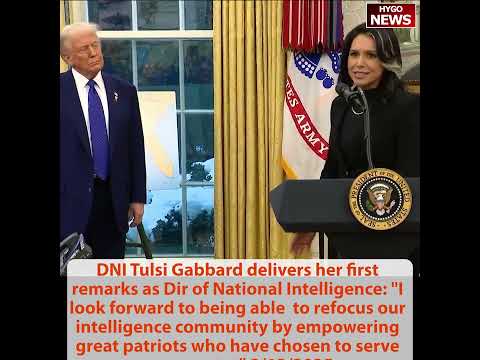
Tulsi Gabbard Sworn In as 8th Director of National Intelligence: “Refocus Our Intelligence Community”
On February 12, 2025, Tulsi Gabbard was sworn in as the 8th Director of National Intelligence at a White House ceremony just hours after the Senate confirmed her by a vote of 52 to 48. In her first remarks as DNI, Gabbard acknowledged that “the American people have very little trust in the intelligence community” due to “the weaponization and politicization of an entity that is supposed to be purely focused on ensuring our national security.” She pledged to “refocus our intelligence community by empowering the great patriots who have chosen to serve our country” and praised President Trump’s aspiration to be remembered as a peacemaker.
The Senate Confirmation: 52-48
Gabbard’s confirmation had been one of the most contentious of Trump’s second term. Once seen as one of the most unlikely nominees to survive the Senate, the former Hawaii congresswoman and 2020 Democratic presidential candidate overcame weeks of skepticism to secure the votes she needed.
The final tally was 52 to 48, with only one Republican — Senator Mitch McConnell of Kentucky — joining Democrats in opposition. McConnell said that Gabbard “failed to demonstrate” that she was prepared for the role. Democrats had focused their opposition on Gabbard’s foreign policy positions, particularly her past meetings with Syrian President Bashar al-Assad and her criticisms of U.S. interventionism, which they argued made her too sympathetic to authoritarian regimes to lead the intelligence community.
Gabbard had left the Democratic Party in October 2022, citing what she described as the party’s drift toward authoritarianism and identity politics. She endorsed Trump during the 2024 campaign and became a prominent surrogate, positioning herself as a voice for military veterans and anti-establishment reform within the Trump coalition.
Trump hosted the swearing-in ceremony at the White House later the same day as the confirmation vote, telling attendees: “There’s nobody like her for this job."
"Very Little Trust in the Intelligence Community”
Gabbard opened her remarks by thanking Trump and then immediately addressed the core problem she intended to solve. “Unfortunately, the American people have very little trust in the intelligence community, largely because they’ve seen the weaponization and politicization of an entity that is supposed to be purely focused on ensuring our national security,” she said.
The statement went directly at the intelligence community’s credibility crisis, which had been a major theme of the Trump era. The FBI’s handling of the Russia investigation, the intelligence community’s role in the Hunter Biden laptop suppression, and revelations about domestic surveillance programs had all contributed to declining public confidence in the agencies that Gabbard would now oversee.
Gabbard framed her appointment as a response to the mandate voters had delivered. “So I look forward to being able to help fulfill that mandate that the American people delivered to you very clearly in this election to refocus our intelligence community by empowering the great patriots who have chosen to serve our country in this way and focus on ensuring the safety, security, and freedom of the American people,” she said.
The phrase “empowering the great patriots” was a deliberate signal to the rank-and-file intelligence officers who had expressed frustration with what they viewed as political interference in their work. Gabbard was positioning herself not as an adversary of the intelligence workforce but as an ally of the non-political professionals within it, while targeting the leadership culture that had allowed politicization to take root.
”Rebuild That Trust”
Gabbard spoke with evident emotion about the personal significance of the appointment. “Mr. President, this is what I’ve dedicated my life to, and it is truly humbling to be in this position, to serve in your administration, help to rebuild that trust, and ultimately to keep the American people safe,” she said.
The emphasis on rebuilding trust acknowledged a reality that both supporters and critics of the intelligence community recognized: the agencies had suffered a significant credibility deficit in recent years. Whether one attributed that deficit to legitimate institutional failures or to politically motivated attacks, the damage was real and measurable in polling data showing declining public confidence in the FBI, CIA, and other intelligence agencies.
Gabbard’s background gave her a unique platform for the trust-rebuilding mission. As a combat veteran who had served in Iraq with the Hawaii Army National Guard, she brought military credibility to a civilian oversight role. As a former Democratic congresswoman who had publicly broken with her party, she represented a bridge between traditional intelligence community values and the reformist agenda of the Trump administration.
The Peacemaker Reference
In the most personal moment of her remarks, Gabbard referenced something Trump had said at the National Prayer Breakfast about his desire to be remembered as a peacemaker.
“Last thing I’ll mention, that in your National Prayer Breakfast speech, you made a statement about your legacy of wanting to be remembered as a peacemaker,” Gabbard said. “I know that I can speak for many of my fellow service members who are here today, veterans, Medal of Honor recipients, how deeply that resonates with us.”
She expanded on why the peacemaker aspiration mattered to those who had served in combat. “For those who volunteer to put their lives on the line when duty calls, but to have a President, Commander-in-Chief, who recognizes the cost of that sacrifice and ensuring that war is the last resort, not the first,” Gabbard said. “So thank you for your leadership on behalf of my friends here and all who wear the uniform. We’re grateful.”
The statement connected Gabbard’s anti-interventionist foreign policy views to Trump’s own rhetoric about ending wars and bringing troops home. It also served as an implicit contrast with the Biden and Obama administrations’ approaches to military intervention, which Gabbard had publicly criticized during her time in Congress.
The Oath of Office
Attorney General Pam Bondi administered the oath of office, with Gabbard placing her left hand on the Constitution — a departure from the traditional Bible — and raising her right hand.
“I, Tulsi Gabbard, do solemnly swear that I will support and defend the Constitution of the United States against all enemies, foreign and domestic, and that I will bear true faith and allegiance to the same, that I take this obligation freely, without any mental reservation or purpose of evasion, and that I will well and faithfully discharge the duties of the office on which I am about to enter. So help me God,” Gabbard recited.
The choice of the Constitution rather than a Bible was consistent with Gabbard’s history of swearing oaths on foundational legal documents. As a Hindu, Gabbard had previously taken her congressional oath on the Bhagavad Gita, though for her DNI oath she chose the document she was swearing to defend.
What Gabbard’s Confirmation Meant
Gabbard’s confirmation as DNI was significant on multiple levels. She was the first former Democratic officeholder to serve as DNI, the first Hindu to hold the position, and the first combat veteran to lead the intelligence community in an era when the intersection of military and intelligence operations had become increasingly important.
Her mandate was clear from her first remarks: restore public trust in the intelligence community by ending its politicization and refocusing it on national security threats rather than domestic political targets. Whether she could accomplish that goal within the entrenched culture of the seventeen intelligence agencies under her authority would be one of the defining tests of the Trump administration’s reform agenda.
Key Takeaways
- Tulsi Gabbard was sworn in as the 8th Director of National Intelligence on February 12, 2025, after a 52-48 Senate confirmation vote, with only Republican Mitch McConnell voting against her.
- In her first remarks, Gabbard said “the American people have very little trust in the intelligence community” due to “the weaponization and politicization” of the agencies and pledged to rebuild that trust.
- She committed to “refocus our intelligence community by empowering the great patriots who have chosen to serve our country” — signaling support for rank-and-file officers while targeting politicized leadership.
- Gabbard praised Trump’s stated desire to be remembered as a peacemaker, saying it “deeply resonates” with veterans who “put their lives on the line when duty calls.”
- AG Pam Bondi administered the oath of office, with Gabbard placing her hand on the Constitution and swearing to “support and defend” it “against all enemies, foreign and domestic.”