 HYGO News
 Trump welcomes Zelensky; Italian Giorgia Meloni, EU Ursula, French Macron, NATO, UK Starmer, German
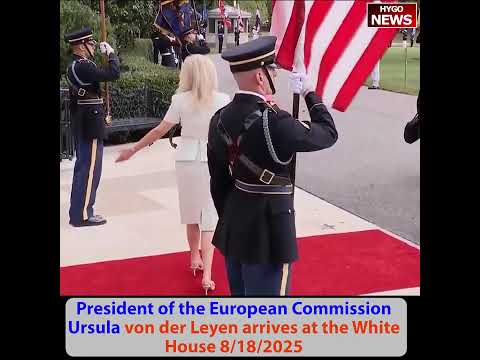
Trump welcomes Zelensky; Italian Giorgia Meloni, EU Ursula, French Macron, NATO, UK Starmer, German
President Trump welcomed Ukrainian President Volodymyr Zelensky to the White House along with a gathering of European leaders for consultations on Ukraine peace negotiations following the Alaska summit with Putin. The leaders arriving included Italian Prime Minister Giorgia Meloni, European Commission President Ursula von der Leyen, NATO Secretary General Mark Rutte, French President Emmanuel Macron, United Kingdom Prime Minister Keir Starmer, German Chancellor Friedrich Merz, and Finnish President Alexander Stubb. The multilateral gathering represented unprecedented European engagement with Trump’s Ukraine peace framework. The video audio included mostly photographer and camera operator instructions (“ready, pop, open, close, shut”) rather than substantive dialogue. Trump’s engagement with the European leaders framework — moving from Alaska bilateral summit with Putin to Washington multilateral consultation with allies — reflected Trump’s approach to resolving the Ukraine war through coordinated European-American engagement with Russia. Setting: White House hosts multiple European leaders for Ukraine peace negotiations aftermath discussions on August 18, 2025.
The Multilateral Gathering
The White House hosted an unprecedented gathering of European and allied leaders:
Volodymyr Zelensky (Ukraine) — primary stakeholder in any Ukraine peace agreement.
Giorgia Meloni (Italy) — Italian Prime Minister, right-wing leader with warm Trump relationship.
Ursula von der Leyen (European Commission) — EU’s highest executive office, representing EU member states collectively.
Mark Rutte (NATO Secretary General) — former Netherlands Prime Minister, leading the alliance.
Emmanuel Macron (France) — French President, long-time engagement with Putin and Ukraine.
Keir Starmer (United Kingdom) — UK Prime Minister, post-Brexit British foreign policy leader.
Friedrich Merz (Germany) — German Chancellor following change in German government.
Alexander Stubb (Finland) — Finnish President, representing Russia’s Nordic neighbor.
Post-Alaska Coordination
The White House gathering followed Trump’s Alaska summit with Putin. The sequence:
- Alaska summit: Trump-Putin bilateral engagement
- Washington consultations: European and Ukrainian stakeholders briefed
- Return engagements: Follow-up diplomatic activity
Trump’s approach:
- Direct leader engagement with Putin
- Subsequent consultation with European allies
- Ukrainian voice included
- Framework for potential peace
Italian Engagement
Meloni’s Italian government has been generally Trump-aligned:
- Conservative political framework
- Willingness to work with Trump
- Italian military support for Ukraine maintained
- European Council constructive participation
Meloni’s personal relationship with Trump — reportedly positive, based on shared political framework and mutual respect.
EU Engagement
Von der Leyen represented the European Union’s collective position:
- 27 member states
- Combined economic weight
- Ongoing sanctions framework against Russia
- Support for Ukrainian reconstruction
The EU’s institutional position required von der Leyen’s participation regardless of individual state positions.
NATO Coordination
Rutte as NATO Secretary General:
- Alliance-level positioning
- 32 member states (Finland and Sweden recent additions)
- U.S. as dominant member
- Article 5 considerations
NATO’s role in Ukraine peace framework:
- Security guarantees potentially
- Training and equipment continuing
- Eastern flank reassurance
- Russia deterrence
French Position
Macron’s French government has had complex position on Ukraine:
- Continued support for Ukraine
- Direct communications with Putin
- “Strategic autonomy” framework for European defense
- Potential troop deployment discussions
Macron’s White House visit — ongoing French engagement with Trump framework.
UK Position
Starmer’s Labour government:
- Continued strong Ukraine support
- Traditional Atlanticist framework
- UK military aid to Ukraine maintained
- Post-Brexit flexibility in foreign policy
Starmer in Washington — ongoing special relationship operative.
German Position
Merz’s German government following 2025 election:
- CDU/CSU-led government
- Restoration of German conservatism
- Defense spending increases
- Ukraine military support
Merz’s engagement with Trump framework — new German leadership at the table.
Finnish Position
Stubb representing Finland:
- Recent NATO member (2023)
- Direct Russian border
- Finnish military strength
- Special perspective on Russian threat
Finland’s position particularly valuable given direct Russian border and historical expertise in managing Russian relationship.
Zelensky Position
Zelensky at the White House — returning to the site of prior tense encounters. Earlier meetings had been difficult:
- February 2025 Oval Office confrontation
- Subsequent relationship recovery
- Ukrainian leadership navigating Trump’s framework
- Ukrainian territorial and security interests
Zelensky’s presence essential — no Ukraine peace agreement without Ukrainian participation.
Framework Implications
The multilateral gathering represented several implications:
For Russia: Unified Western position presented to Putin despite some internal differences among Western powers.
For Ukraine: Guarantee that Ukrainian interests considered even as Trump pursued direct Russian engagement.
For Europe: Direct input into American-led peace framework.
For Trump: Demonstration of coalition building despite concerns about unilateral approach.
For Alliance: NATO solidarity maintained through summit process.
Audio Context
The video’s audio track appears to have captured mostly photographer instructions and camera operator directions rather than substantive leader dialogue. References to “ready, pop, open, close, shut” suggest door opening sequences during arrivals — the photographers capturing each leader’s arrival ceremony.
The substantive discussions occurred in closed sessions not captured by public video. Arrivals and photo-ops provided visual documentation of the gathering.
“You betcha. You’re the best. You’re the best. That’s my job.”
Trump’s personal engagement with individuals — family members, staff, or photographers.
“Thank you very much, everybody. Thank you.”
Standard Trump close to public events.
Significance
The August 2025 multilateral White House gathering represented:
- Trump’s commitment to coordinated diplomacy
- European willingness to engage Trump framework
- NATO solidarity post-Alaska summit
- Zelensky accommodation to Trump approach
- Comprehensive stakeholder inclusion
The gathering demonstrated that Trump’s Ukraine approach — while unconventional — maintained connection to Western allied framework. Direct Putin engagement paired with immediate European consultation.
Whether substantive progress resulted — that depended on subsequent developments. The gathering itself showed procedural framework for Ukrainian peace negotiation was in place with broad stakeholder participation.
The visual documentation — European leaders arriving at White House — communicated that Trump’s approach was neither isolated nor unilateral. Coordination was occurring even while Trump pursued direct leader diplomacy.
Historical Context
Presidential multilateral gatherings on specific issues are relatively unusual:
- Camp David accords (Carter, 1978) — Egypt-Israel peace
- Dayton Accords (Clinton, 1995) — Bosnia peace
- Various G7/G8/G20 gatherings
The August 2025 White House gathering on Ukraine joined this framework — specific crisis requiring multilateral White House engagement.
Trump’s hosting of multiple European leaders simultaneously represented significant logistical and diplomatic undertaking. The White House accommodations, security arrangements, and diplomatic protocols all required substantial coordination.
Key Takeaways
- Main gathering framework: Trump welcomed multiple European and Ukrainian leaders to the White House for Ukraine peace consultations following his Alaska summit with Russian President Vladimir Putin.
- Attendee list: Ukrainian President Volodymyr Zelensky, Italian Prime Minister Giorgia Meloni, European Commission President Ursula von der Leyen, NATO Secretary General Mark Rutte, French President Emmanuel Macron, UK Prime Minister Keir Starmer, German Chancellor Friedrich Merz, and Finnish President Alexander Stubb.
- Strategic purpose: Multilateral consultation to coordinate Western response to Alaska summit outcomes and advance Ukraine peace framework with European and Ukrainian stakeholder participation.
- Diplomatic framework: Demonstrated that Trump’s direct Putin engagement was paired with immediate allied consultation rather than unilateral approach.
- Significance: Unprecedented gathering of European leaders for Ukraine peace coordination at the White House, representing procedural framework for coordinated Western diplomacy despite different national positions on specific issues.