 HYGO News
 Trump: very warm meeting, Ukraine has to agree; Race in 2025; Councilman Abu Musa mail ballots
Trump: very warm meeting, Ukraine has to agree; Race in 2025; Councilman Abu Musa mail ballots
A compound segment. Trump’s “very warm meeting” characterization of the Alaska summit with Putin. Putin inviting Trump to Moscow for the next meeting. A panel discussion on the persistent racial framing of American history (less than 2% of whites owned slaves). Scott Jennings on the “rich white liberals” driving the Mamdani nomination. And documented video evidence of Hamtramck Councilman Abu Musa stuffing three large stacks of mail ballots into a city dropbox just days before the primary he won by 76 votes. Trump: “The meeting was a very warm meeting between two very important countries — and it’s very good when they get along. I think we’re pretty close to a deal. Now look, Ukraine has to agree to it.” Putin: “Next time in Moscow.” Trump: “Oh, that’s an interesting one. I’ll get a little heat on that one, but I could see it possibly happening.” Jennings: “The rich white liberals who got Mamdani the nomination are indicative of where the Democratic Party is moving — trying to move it towards this more socialist bent. I know this because they’ve done the same thing in Minneapolis, Seattle. And for 2028, it could be a problem.” The Hamtramck election fraud footage: “New video obtained by Local 4 shows two men in a black car … a passenger starts handing ballots to an unidentified driver who then stuffs them into the city’s dropbox — in total dumping three large stacks."
"Very Warm Meeting”
Trump’s characterization. “The meeting was a very warm meeting. You know, he’s a strong guy. He’s tough as hell and all of that. But the meeting was a very warm meeting between two very important countries and it’s very good when they get along.”
“Very warm.” That is Trump’s specific temperature for the meeting. Not cold. Not tense. Warm. The personal dynamic between the two leaders was productive.
“He’s a strong guy. He’s tough as hell.” Trump’s Putin characterization. Strong. Tough. The respect that Trump typically shows for other strongman leaders regardless of specific policy differences.
“Two very important countries.” The U.S. and Russia as two important countries. That framing is historically standard — both are nuclear powers, both have global influence, both affect numerous smaller nations’ security. “Very good when they get along” — the specific observation that U.S.-Russia cooperation benefits both countries and the broader global system.
”Pretty Close to a Deal”
“I think we’re pretty close to it. Yeah, now look, Ukraine has to agree to it.”
“Pretty close to a deal.” Trump’s specific framing. Most of the work is done. Remaining issues are specific and addressable. A deal is within reach.
“Ukraine has to agree to it.” The specific conditional. Trump and Putin have converged on specific framework. Zelensky and Ukraine must accept the framework for it to become a deal. The handoff to Zelensky is the critical next step.
“Maybe they’ll say no because Biden handed out money like it was candy and Europe gave him a lot of money, you know, we gave 350 billion dollars. Europe gave them much less but still a lot — a hundred billion dollars.”
Trump’s specific concern. Ukraine may reject a deal because Biden-era funding created expectations of unlimited Western support. $350 billion in U.S. aid (Trump’s figure). $100 billion in European aid (Trump’s figure). Total Western commitment approximately $450 billion.
With that level of support, Ukraine’s calculation may have been that indefinite continued war was sustainable — Western backers would continue funding. Trump’s administration ending the unlimited U.S. funding changes Ukraine’s calculation. If continued war requires self-funding or substantially reduced Western support, Ukraine’s willingness to accept specific peace terms increases.
”Next Time in Moscow”
Putin’s invitation to Trump. “Next time in Moscow.”
That is specific diplomatic progression. Putin has visited the U.S. for the Alaska summit. Reciprocity would have Trump visiting Russia. “Next time in Moscow” proposes that reciprocity.
Trump’s response. “Oh That’s an interesting one. I’ll get a little heat on that one, but I could see it possibly happening.”
“I’ll get a little heat on that one.” Trump acknowledges the political difficulty. A sitting U.S. president visiting Russia — while the Ukraine war continues and while Russia faces Western sanctions — would be politically controversial. Domestic critics would characterize it as legitimizing Putin’s regime.
“I could see it possibly happening.” But Trump is open to the visit. If the Ukraine deal is concluded, a subsequent Moscow visit to finalize broader U.S.-Russia normalization might be diplomatically appropriate.
”Less Than 2% of White Americans Owned Slaves”
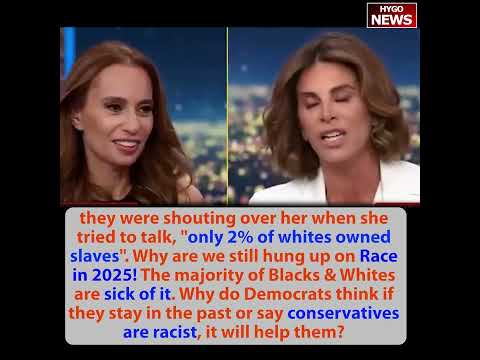
The segment pivots to a panel on American racial discourse. “You cannot tie imperialism and racism and slavery to just one race which is pretty much what every single exhibit does. Well, let’s talk about the fact that slavery in America was less than 2% of white Americans owned slaves.”
That is the specific historical claim. In 1860 (immediately before the Civil War), approximately 1.6% of white American households owned slaves — roughly 385,000 slaveholding families out of approximately 23 million white Americans.
The political significance of the 2% figure is contested. Defenders of the figure note that individual white Americans bore no specific personal responsibility for slavery (most did not own slaves). Critics note that the broader social, economic, and legal systems supported slavery regardless of personal ownership rates — non-slave-owning whites benefited from the economic system, supported the political structures, etc.
Whatever the interpretive framework, the 2% figure is factually accurate. The “all whites benefited from and perpetuated slavery” framing collapses specific individual responsibility with systemic participation in ways that produce different moral conclusions.
“Why are we still hung up on Race in 2025!” The panelist’s frustration. The American racial conversation continues with framings that many Americans — across racial lines — find unproductive. The Democratic Party’s continued emphasis on racial dynamics may not produce the electoral results the party expects.
Scott Jennings on “Rich White Liberals”
“We took voters’ intellect in New York for granted. That’s why you have a candidate who has an unproven track record to govern as the frontrunner. And I’m glad he’s asking people like Barack Obama for support and help. But you also were running people like Andrew Cuomo and Eric Adams who I wouldn’t vote for if they were running against Scott Jennings.”
The panelist (unclear who specifically) framing the NYC mayoral race. Mamdani — unproven track record — as the frontrunner. Cuomo and Adams as alternatives that the speaker would not support even against Jennings (a Republican).
That is the specific Democratic situation. Candidates the panelist views as unacceptable despite being the Democratic alternatives. The socialist Mamdani wins Democratic primary support not because he is universally popular but because the alternatives (Cuomo, Adams) are also disliked by the Democratic base.
Scott Jennings’s analysis. “The rich white liberals who got Mamdani the nomination are indicative of where the Democratic Party is moving — trying to move it towards this more socialist bent. I know this because they’ve done the same thing in Minneapolis. They’ve done the same thing in Seattle. And I think for 28, could be a problem.”
“Rich white liberals” — the specific demographic driving progressive primary wins. Upper-income urban voters with graduate-level education. Cultural progressivism combined with economic interests that protect specific wealth positions. That combination produces support for progressive candidates on cultural issues (which do not threaten the supporters’ economic position) while the candidates’ economic positions (rent freezes, higher taxes on high earners) may or may not affect the specific supporters.
Minneapolis. Seattle. The pattern Jennings cites — progressive wins in specific cities driven by similar demographics. Those wins have produced specific outcomes (defund-police initiatives, homeless policy changes, fiscal strain) that have generated national attention.
”For 2028, Could Be a Problem”
Jennings’s specific political forecast. “For 28 could be a problem.”
The 2028 presidential election. Democrats who have won progressive primaries in specific cities may produce national candidates whose platforms are difficult to defend in general election contexts. Mamdani-style politics in NYC municipal politics is one thing. Mamdani-style politics as a national Democratic presidential candidate would face substantially broader resistance.
If Democrats nominate a progressive candidate in 2028, that candidate likely faces significant moderate-voter resistance. The 2024 election — where Trump won every battleground state — is cautionary. More progressive positioning in 2028 would likely produce worse rather than better results.
Hamtramck Election Fraud: “Three Large Stacks”
The segment pivots to documented election fraud. “New video obtained by Local 4 shows two men in a black car days before the August primary. A passenger starts handing ballots to an unidentified driver who then stuffs them into the city’s dropbox — in total dumping three large stacks before driving away.”
That is specific documentary evidence. Video footage of specific individuals engaged in specific election-related activity. Three large stacks of ballots. A dropbox location. Specific timing (days before the primary).
“Sources tell Local 4 the passenger appears to be current council member Abu Musa. The same council member that is currently seeking reelection and rose to the top with more than 1,100 votes in last week’s primary.”
Hamtramck, Michigan, Councilman Abu Musa. Currently seeking reelection. Won his primary with 1,100+ votes. That is a narrow margin in a municipal election.
“He’s also the council member accused of not living in Hamtramck and the council member named in the 2023 election fraud case. However, he was never…”
Prior residency allegations. Prior 2023 election fraud case. Musa has a documented history of election-integrity questions. The current video evidence adds to that pattern.
”Abu Won Last Week by 76 Votes”
“Abu won last week by 76 votes.”
76 votes is a small margin. Three large stacks of ballots stuffed into a dropbox could easily contain more than 76 ballots. If the stuffing represented fraudulent votes, it could have determined the outcome.
Whether the specific ballots were fraudulent requires investigation. Ballot drop-offs are generally legal — voters can deposit their own ballots or, in some jurisdictions, ballots of specific family members. But “three large stacks” suggests volume beyond what a single voter or family would handle.
The broader point: specific patterns of election-integrity concerns in specific jurisdictions. Hamtramck is a small city with specific demographic characteristics (large Bangladeshi-American Muslim population). Musa’s pattern of election-integrity questions combined with the current video footage raises specific concerns about whether the 2025 primary result reflects actual voter preference or specific manipulation.
”Ohio Victory Party for Rep. Ismail Mohamed”
The segment ends with footage of a victory party. “Somalia? Nope. Ohio victory party for Rep. Ismail Mohamed.”
Ismail Mohamed — Ohio state representative. Somali-American. The victory party footage shows specific cultural elements (traditional Somali music, traditional dress, specific celebratory practices) that viewers might associate with Somalia rather than Ohio.
The political framing is specific. Immigration-driven demographic change producing specific political victories. Whether that trend continues and whether it produces specific policy outcomes depends on future political dynamics.
Four Distinct Threads
Trump’s warm-meeting summit characterization (plus Putin’s Moscow invitation). Race-in-2025 framing (less than 2% of whites owned slaves). Scott Jennings on rich white liberals driving progressive wins. Hamtramck election fraud video (Abu Musa stuffing ballots).
Each reflects specific political dimensions. Foreign policy progress (summit). Cultural/historical narrative tensions (race discussion). Democratic Party strategic direction (progressive vs. moderate). Election-integrity concerns (documented video evidence).
The composite reflects the specific political moment. Administration operational success. Cultural debate unresolved. Democratic Party fracture. Election-integrity questions that administration opponents typically dismiss.
Key Takeaways
- Trump on the Alaska summit: “The meeting was a very warm meeting between two very important countries — and it’s very good when they get along. I think we’re pretty close to a deal. Now look, Ukraine has to agree to it.”
- Putin’s invitation: “Next time in Moscow.” Trump: “Oh, that’s an interesting one. I’ll get a little heat on that one, but I could see it possibly happening.”
- On American racial history: “Let’s talk about the fact that slavery in America was less than 2% of white Americans owned slaves.”
- Scott Jennings on Democratic direction: “The rich white liberals who got Mamdani the nomination are indicative of where the Democratic Party is moving … they’ve done the same thing in Minneapolis, Seattle. And for 28, could be a problem.”
- Hamtramck election fraud video: “New video obtained by Local 4 shows two men in a black car … a passenger starts handing ballots to an unidentified driver who then stuffs them into the city’s dropbox — in total dumping three large stacks” — where Councilman Abu Musa won the primary by 76 votes.