 HYGO News
 Trump-Zelensky Full Oval Office Confrontation: 'You Don't Have the Cards'; Vance: 'Stop Fighting in the Media'
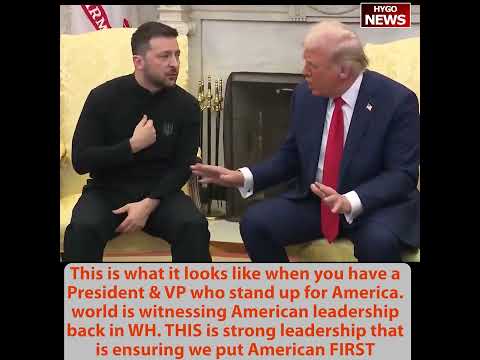
Trump-Zelensky Full Oval Office Confrontation: “You Don’t Have the Cards”; Vance: “Stop Fighting in the Media”
The extended footage of the February 28, 2025, Trump-Zelensky Oval Office confrontation revealed the full scope of one of the most extraordinary diplomatic exchanges in modern presidential history. Trump told Zelensky “it’s going to be a very hard thing to do business like this” after the Ukrainian leader refused to show gratitude. VP Vance demanded Zelensky “accept that there are disagreements and litigate those disagreements rather than trying to fight it out in the American media when you’re wrong.” Trump said he kept the cameras rolling deliberately: “I think it’s good for the American people to see what’s going on out here.” The confrontation included the “Javelins vs. sheets” exchange, the “gambling with World War III” warning, and Trump’s revelation that Putin had told him Ukraine would have fallen “in three days” without American weapons.
”Very Hard to Do Business Like This”
The extended clip captured Trump’s assessment after the confrontation had escalated beyond diplomatic repair.
“It’s going to be a very hard thing to do business like this. I tell you,” Trump said, shaking his head.
Vance added the demand that would define the administration’s posture going forward. “You just say thank you, accept that there are disagreements, and let’s go litigate those disagreements rather than trying to fight it out in the American media when you’re wrong,” Vance told Zelensky. “We know that you’re wrong.”
The distinction Vance drew — between litigating disagreements privately and fighting them out publicly — was the core diplomatic principle Zelensky had violated. The administration was not demanding that Zelensky agree with every American position. It was demanding that he express disagreements through diplomatic channels rather than using an Oval Office press pool as a platform to attack the president who was trying to end the war.
”I Kept This Going So Long”
In a revealing admission, Trump explained why he had allowed the cameras to capture such an extended and heated exchange.
“I think it’s good for the American people to see what’s going on out here,” Trump said. “I think it’s very important. That’s why I kept this going so long.”
The statement confirmed that Trump had made a deliberate choice to let the confrontation play out on camera. Most presidents would have cleared the room the moment the exchange became heated. Trump did the opposite — he extended the press pool’s access so that the American public could see, unfiltered, the dynamic between the United States and its most expensive foreign aid recipient.
The strategic logic was sound. For three years, the American public had been told that Ukraine was a heroic ally fighting for democracy, that American support was morally obligatory, and that any questioning of the aid was tantamount to supporting Russia. By letting the cameras capture Zelensky’s combative posture in the Oval Office — the shrugging, the eye-rolling, the refusal to express gratitude — Trump gave the public a dramatically different picture than the one they had been receiving from mainstream media coverage.
”You’re Running Low on Soldiers”
Trump pressed Zelensky on the military reality with a bluntness that no previous American official had used publicly.
“You have to be thankful. You don’t have the cards. You’re buried there. Your people are dying,” Trump said. “You’re running low on soldiers.”
When Zelensky tried to protest, Trump continued: “Don’t, don’t please. You’re running low on soldiers.”
The manpower crisis was one of Ukraine’s most closely guarded vulnerabilities. Zelensky’s government had been forced to lower the conscription age, conduct increasingly aggressive mobilization drives, and face growing domestic resistance to the draft. Trump’s willingness to state the problem publicly — in front of cameras, to Zelensky’s face — was a departure from the Biden-era practice of publicly emphasizing Ukrainian strength while privately worrying about sustainability.
The Ceasefire Demand
Trump made a specific plea for Zelensky to accept a ceasefire.
“It would be a damn good thing if you could — then you tell us, ‘I don’t want a ceasefire, I don’t want a ceasefire,’” Trump said, mimicking Zelensky’s position. “Look, if you could get a ceasefire right now, I tell you, you take it — so the bullets stop flying and your men stop getting killed.”
Zelensky responded: “Of course, we want to stop the war.”
Trump pressed: “You get a ceasefire faster than any agreement.”
The exchange revealed the fundamental disagreement. Trump wanted an immediate ceasefire to stop the killing, followed by negotiations on permanent terms. Zelensky feared that a ceasefire would freeze the front lines in Russia’s favor and remove the urgency for a comprehensive settlement. Trump’s position was that saving lives in the short term was more important than maximizing negotiating leverage — a humanitarian argument that was difficult for Zelensky to counter publicly.
Vance: “Propaganda Tour”
The most confrontational exchange between Vance and Zelensky occurred when Zelensky challenged Vance’s understanding of Ukraine’s situation.
“Have you ever been to Ukraine, that you say what problems we have?” Zelensky asked Vance.
“Come once,” Zelensky invited.
Vance’s response was withering: “I have actually watched and seen the stories, and I know what happens is you bring people, you bring them on a propaganda tour, Mr. President.”
The “propaganda tour” characterization was the harshest language any senior American official had used about Ukraine’s management of foreign visitors. Vance was saying that congressional and official delegations to Ukraine were shown a curated version of reality designed to maintain support for continued aid rather than an honest assessment of the military situation.
Vance pressed the factual point: “Do you disagree that you’ve had problems bringing people into your military?”
“We have problems,” Zelensky admitted.
“And do you think that it’s respectful to come to the Oval Office of the United States of America and attack the administration that is trying to prevent the destruction of your country?” Vance asked.
”Three Days” — Putin’s Assessment
The extended footage included a detail not captured in shorter clips. Trump revealed something Putin had told him directly about the war’s timeline.
“If you didn’t have our military equipment, this war would have been over in two weeks,” Trump said.
He then corrected himself with an even more dramatic figure: “In three days. I heard it from Putin. In three days.”
Zelensky was visibly surprised: “This is something new. Maybe less.”
Trump had revealed that Putin himself had told him Ukraine would have fallen in three days without American weapons. The revelation served Trump’s argument: the Javelin missiles and other weapons that Trump had provided during his first term — the weapons Obama had refused to send — had been the difference between Ukrainian survival and Ukrainian capitulation. The debt Zelensky owed to American military aid was not abstract; it was measured in the continued existence of his country.
Zelensky’s Warning: “You Will Feel It”
Zelensky attempted to warn Trump that American security would eventually be affected by events in Ukraine.
“Even you, but you have nice ocean and don’t feel now, but you will feel it in the future,” Zelensky said.
Trump’s response was immediate: “Don’t tell us what we’re going to feel. We’re trying to solve a problem.”
When Zelensky repeated “you will feel influenced,” Trump escalated: “You’re in no position to dictate what we’re going to feel. We’re going to feel very good and very strong.”
The exchange captured the fundamental power asymmetry in the room. Zelensky was trying to argue that Ukraine’s war was ultimately America’s problem too. Trump was saying that the United States had the luxury of choice — it could choose to help or choose to walk away — and that Zelensky’s leverage depended entirely on American goodwill, not on threats about future consequences.
Key Takeaways
- Trump said he deliberately kept the cameras rolling: “I think it’s good for the American people to see what’s going on out here. That’s why I kept this going so long.”
- Vance demanded Zelensky “accept disagreements and litigate them rather than trying to fight it out in the American media when you’re wrong.”
- Trump revealed Putin told him Ukraine would have fallen “in three days” without American weapons, upgrading his earlier “two weeks” estimate.
- Vance called Ukrainian visits by foreign officials “propaganda tours” and pressed Zelensky to admit manpower problems, which he did: “We have problems.”
- Trump urged an immediate ceasefire: “If you could get a ceasefire right now, you take it — so the bullets stop flying and your men stop getting killed.”