 HYGO News
 Trump: very close to deal in Middle East; CNN speaking worst reporters; Andy Ngo on Antifa Portland
Trump: very close to deal in Middle East; CNN speaking worst reporters; Andy Ngo on Antifa Portland
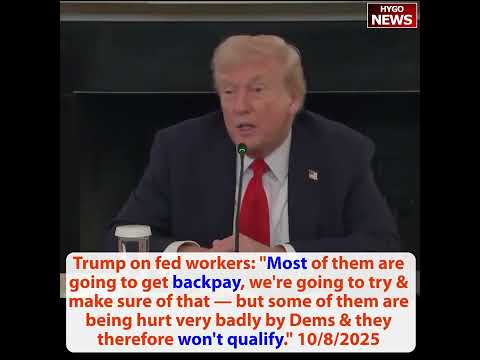
President Trump received a mid-briefing note from Secretary of State Rubio indicating the Middle East deal was “very close.” Trump addressed federal worker back pay during the shutdown — most would get paid, but “some of them are being hurt very badly by the Democrats” and would not qualify. Trump then hit CNN hard, calling the questioner “one of the worst reporters that you’ll ever” encounter and declaring both MSNBC and CNN “dying” with evening anchors “nobody ever heard of.” Investigative journalist Andy Ngo then delivered a harrowing firsthand account of his 2019 Portland Antifa attack, which left him with a subarachnoid hemorrhage (bleeding in the brain) after he was “ambushed in a mob beating” — punches coming from everywhere, drinks thrown on him “to humiliate me further,” and a subsequent effort by some in legacy media to cast him as having deserved the attack or faked his injuries. Trump: “I was just given a note by the Secretary of State saying that we’re very close to a deal in the Middle East.” On CNN: “This is CNN speaking, by the way … This is one of the worst reporters that you’ll ever — I don’t even want to take a question.” Ngo: “I was ambushed in a mob beating … the punches came from everywhere on my head and my face, and I was bleeding out of my eyes and ears.”
Middle East Deal Close
Trump opened by referencing an incoming note. “I was just given a note by the Secretary of State saying that we’re very close to a deal in the Middle East. And they’ll get a need me pretty quickly, so I will take a couple of more questions.”
Secretary of State Rubio was coordinating the Gaza ceasefire and hostage release. The “need me pretty quickly” framing indicated Trump expected to be pulled into active negotiations within minutes or hours.
The timing of the note — mid-press event — suggested the deal was reaching final stages. Trump paced the remaining questions accordingly, preparing to cut off the session if needed.
Federal Worker Back Pay
A reporter asked about federal worker pay during the shutdown: “Which workers get back pay and which workers do not?”
“Well, we’re gonna see. Most of them are gonna get back pay and we’re gonna try and make sure of that. But some of them are being hurt very badly by the Democrats and they therefore won’t qualify.”
Trump’s framework: the administration would try to secure back pay for most federal workers, but some specific categories — likely tied to programs Democrats were blocking or insisting on modifying — would be excluded. The political framing placed blame with Democrats for the shutdown rather than Republicans for any pay gaps.
Traditionally, federal workers furloughed or working without pay during shutdowns receive retroactive pay after funding resumes. Trump’s comment suggested some carve-outs might not follow that pattern this time.
”This Is CNN”
When CNN’s reporter was up for a question, Trump cut in. “This is CNN speaking, by the way. So this is one of one of the worst reporters that you’ll ever — Saturday want to take.”
The Whisper transcription was garbled but Trump’s meaning was clear: he was preemptively disparaging the CNN reporter’s reputation before any question was asked.
“Their ratings are terrible. They are terrible."
"MSNBC Is Dying, CNN Is Dying Like a Dog”
“MSNBC is dying and CNN is dying like a dog and pussy. And it’s so pathetic.”
The Whisper rendering captured Trump’s escalating insults. Both networks have indeed lost substantial viewership — MSNBC has seen sharp declines in its weekday lineup since 2024, and CNN’s ratings have struggled for years as cable news audiences fragment.
“You ever see their anchors in the evening that nobody ever heard of the weather these people come you could I could take anybody off the street in Washington DC they do a better job.”
Trump’s framework: CNN and MSNBC evening anchors are so obscure and ineffective that random DC residents could replace them without noticeable quality loss.
”iPhone and You Can Post”
Trump pivoted to the alternative media framework. “Yeah, it’s not hard to show what’s going on these days. You literally have an iPhone and you can post on it.”
The implication: legacy media’s monopoly on storytelling has collapsed. Anyone with a phone can document events and publish directly, bypassing CNN and MSNBC entirely.
“They don’t believe in the star system. Yeah, what other things…”
The “star system” reference pointed to the traditional anchor/correspondent hierarchy that built trust through identifiable on-screen personalities. Independent journalists on social platforms don’t rely on that structure — and the audience increasingly trusts them anyway.
Andy Ngo: 2019 Attack
Ngo then delivered a firsthand account of his experience. “Right, the elections night protests turned to riot three days of violent rioting in Portland and it was the first time that I saw groups dressed in black with their faces covered. This is four years before COVID.”
The timing reference — “four years before COVID” — placed the initial black-bloc sighting in 2016, following Trump’s first election win. Ngo saw Antifa tactics emerge in Portland before they became widely visible nationally.
“Some of them were waving the black flag of anarchism some the red flag of Marxism and within seconds they would ravage one street to another to another to another.”
The ideological mix: anarchist and Marxist factions within the black bloc, united in tactical disruption regardless of theoretical differences.
Legacy Media Narrative
“The next day I would read the legacy media which I still read at that time and looked forward to who and I looked up to those journalists and I was really shocked to see that the narrative was that these in my view anti-democratic political violence was legitimate acts of protests because people they were concerned about racism or all these other lies.”
Ngo’s evolution: he started as a legacy media reader and admirer. Watching coverage systematically frame Antifa’s street violence as legitimate protest against racism — when he had witnessed the violence firsthand — broke his trust in mainstream outlets.
The pattern continues: national media routinely frames Antifa actions as community response to injustice, while skipping the actual tactics, weapons, and targets.
2019 Mob Beating
“In 2019 it led to me nearly losing my life. I was covering another Antifa protest turn right at that point have been routine in Portland and then I was ambushed in a mob beating.”
The incident took place on June 29, 2019, during a downtown Portland demonstration. Video of the attack went viral — masked Antifa members pummeling Ngo while he covered the protest.
“I had never been in a fight I didn’t even realize that I was being assaulted until seconds in the punches came from everywhere on my head and my face and I was bleeding out of my eyes and ears.”
The severity: blood from eyes and ears indicates traumatic brain injury — potential skull fractures, orbital damage, or ruptured eardrums.
“And then they threw all the drinks in my eyes to humiliate me further to laugh at me.”
The drinks — reportedly including “milkshakes” that some reports alleged contained quick-drying cement — were used not just as weapons but as deliberate humiliation ritual while the victim was already down.
Brain Hemorrhage
“And I was rushed to the hospital in a ambulance CT scan and I had subarachnoid hemorrhage which is bleeding the brain and nearly died.”
A subarachnoid hemorrhage — bleeding into the space around the brain — is a life-threatening injury. It’s often fatal or causes permanent neurological damage. Ngo survived.
“After surviving that the reporting that I saw on liberal media was it seemed to suggest that I had deserved it because they branded me far right.”
Rather than coverage focused on the attack itself, legacy media pivoted to interrogating whether Ngo’s political positioning made him a legitimate target. The framework: he had been “branded far right,” and that brand justified revisiting the question of whether he deserved the attack.
”Faked My Injuries”
“Some even went so far as to suggest that I may be faked my injuries.”
This claim circulated widely on social media and found traction in some outlets. The theory: Ngo had somehow staged or exaggerated his beating for sympathy.
“Above-stewed reporter after my medical records, which I did provide.”
Ngo provided his hospital medical records in response to the faking accusations. Some journalists reviewed them. The records documented the subarachnoid hemorrhage clearly.
“It’s like because I didn’t die in that attack there was another round of people who wanted to finish me off.”
Ngo’s final framework: surviving the physical attack triggered a secondary social attack. Those uncomfortable with his survival — because it gave him a platform to keep covering Antifa — worked to destroy his reputation instead. The fact that he lived was itself the problem.
Key Takeaways
- Trump on Middle East deal: “I was just given a note by the Secretary of State saying that we’re very close to a deal in the Middle East. And they’ll get a need me pretty quickly.”
- Trump on federal worker pay: “Most of them are gonna get back pay and we’re gonna try and make sure of that. But some of them are being hurt very badly by the Democrats and they therefore won’t qualify.”
- Trump on CNN: “This is CNN speaking, by the way … this is one of one of the worst reporters that you’ll ever … MSNBC is dying and CNN is dying like a dog … I could take anybody off the street in Washington DC they do a better job.”
- Ngo on his 2019 attack: “I was ambushed in a mob beating. I had never been in a fight. I didn’t even realize that I was being assaulted until seconds in. The punches came from everywhere on my head and my face and I was bleeding out of my eyes and ears … And then they threw all the drinks in my eyes to humiliate me further.”
- Ngo on media response: “I had subarachnoid hemorrhage which is bleeding the brain and nearly died … the reporting that I saw on liberal media was it seemed to suggest that I had deserved it because they branded me far right … It’s like because I didn’t die in that attack there was another round of people who wanted to finish me off.”