 HYGO News
 Trump to reporter: you're 2nd-rate never listen; saluting Flag, Signing hats, 2nd phase sanctions
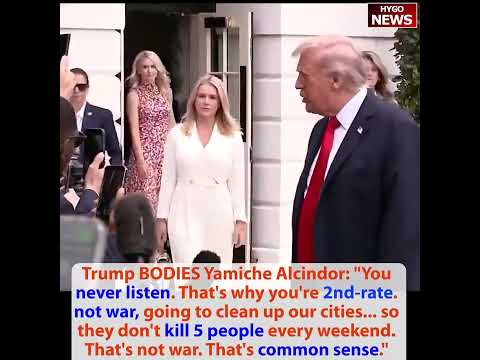
Trump to reporter: you’re 2nd-rate never listen; saluting Flag, Signing hats, 2nd phase sanctions
The video captures multiple Trump moments. Trump took his family to the US Open Tennis men’s final at Arthur Ashe Stadium in New York City, drawing cheers as he entered, saluting the American flag during The Star-Spangled Banner, and signing hats for fans in a viral “coolest boss” moment. Trump dismantled Yamiche Alcindor for asking if he was “going to war with Chicago” — Trump’s response: “You’re second-rate. You never listen. We’re not going to war. We’re going to clean up our cities so they don’t kill five people every weekend. That’s not war. That’s common sense.” Trump gave non-committal answers on whether he’s considering attacking cartels inside Venezuela (“Well, you’re going to find out”) and confirmed he’s ready to move to the second phase of sanctions against Russia. Trump praised HHS Secretary RFK Jr., saying Kennedy has “a lot of ideas” while “normal people, regular people, easy to get along with people” wouldn’t come up with the answers — connecting Kennedy’s unconventional thinking to progress on autism and other health issues. Trump to Alcindor: “You never listen. That’s why you’re second-rate. We’re not going to war. We’re going to clean up our cities… so they don’t kill five people every weekend. That’s not war. That’s common sense.” Trump on Russia: “Yeah, I am” (ready for phase two sanctions). Trump on Kennedy: “He’s got a lot of good ideas, but he’s got a lot of ideas. You know, normally they don’t have any ideas and that’s why we have problems with autism and some of the other things.”
US Open Tennis
Trump attended the 2025 US Open Tennis men’s final at Arthur Ashe Stadium, Flushing Meadows, New York City.
“POTUS Trump takes his seat at the US Open Tennis men’s final.”
Trump’s tennis attendance:
- Arthur Ashe Stadium — premier tennis venue
- Men’s final — championship match
- High-profile seating with family
- Presidential detail and security
- Public visibility and engagement
Cheers at Entry
“Cheers from the audience as President Donald J. Trump enters Arthur Ashe Stadium for the US Open Tennis.”
The reception — cheers from tennis audience. The US Open audience reflects New York demographics, which in 2025-2026 had shifted toward Trump support:
- Working class New Yorkers concerned about crime, economy
- Immigration concerns
- Cost of living issues
- Trump’s New York roots reinforcing local connection
The cheers signal political reception — New York City increasingly friendly to Trump despite NYC’s historical Democratic dominance.
Saluting the Flag
“President Donald J. Trump is shown saluting our Great American Flag during The Star Spangled-Banner at the US Open Tennis.”
Trump saluting during the national anthem — standard presidential conduct demonstrating American patriotism. The image resonates with Trump’s base — presidential respect for flag and anthem aligned with broader cultural framework about patriotism.
The contrast implicit:
- Some athletes have knelt during anthem
- Some political figures have not saluted
- Trump’s conduct models traditional American ceremony
- Resonates with cultural conservatism
Signing Hats
“The People’s President and the coolest boss ever. Signing hats for fans at the US Open.”
Trump interacting with fans in the stands:
- Signed “Make America Great Again” or similar hats
- Personal engagement with supporters
- Accessible presidency
- Viral social media content
The “coolest boss” framework — Trump’s casual engagement generating positive social media. Unusual for sitting presidents to engage this directly at public events.
”Second-Rate” Reporter
The video pivoted to Trump’s confrontation with reporter Yamiche Alcindor.
The question from Alcindor (paraphrased from context): Was Trump going to war with Chicago (referencing federal crime intervention)?
Trump’s response: “You never listen. That’s why you’re second-rate.”
Trump’s characterization of Alcindor:
- Not listening
- Second-rate professional
- Missing substantive content
- Reliant on narrative framing
“You’re not going to war. We’re going to clean up our cities.”
Trump reframing — this is not military war but civic cleanup.
“We’re going to clean them up so they don’t kill five people every weekend.”
The stark reality:
- Chicago experiences multiple murders most weekends
- “Five people every weekend” understates sometimes (some weekends 10-20)
- Crime as genuine crisis requiring response
- Federal intervention legitimate response to emergency
“That’s not war. That’s common sense.”
Trump’s framework — intervention to stop weekend murders is common sense, not warfare. The rhetorical question of what else could be called “common sense.”
Venezuela Cartels
A reporter asked about potential Venezuela operations.
“Are you considering attacking the car shells inside of Venezuela?”
“Cartels” (transcription artifact “car shells”) — whether Trump would pursue drug cartels inside Venezuela. Context:
- Venezuelan Tren de Aragua designated terrorist organization
- Drug boat strikes in international waters
- Narco-terrorist funding Maduro regime
- Cross-border implications
Trump’s response: “Well, you’re going to find out.”
Strategic ambiguity:
- Not confirming
- Not denying
- Threat preserved
- Policy unpredictability
Russia Sanctions Phase Two
“Are you ready to move to the second phase of sanctions against Russia?”
The reporter asking about escalated Russia sanctions.
“Yeah, I am.”
Trump’s direct confirmation:
- Phase two ready
- Signal to Moscow
- Pressure on Putin
- Coordinated with ongoing negotiations
Phase two sanctions framework:
- Additional financial sanctions
- Secondary sanctions expansion
- Sectoral sanctions
- Asset freezes broader
- Diplomatic measures
Kennedy Framework
Trump’s comments on HHS Secretary Robert F. Kennedy Jr.
“Well, he’s a different kind of a guy. He’s got a lot of good ideas, but he’s got a lot of ideas.”
The framework — Kennedy as unconventional but productive. “Different kind of guy” captures Kennedy’s independent approach.
“You know, normally they don’t have any ideas and that’s why we have problems with autism and some of the other things.”
Trump’s implicit critique — traditional HHS leadership lacks creative thinking. Autism and other chronic conditions haven’t been addressed because of conventional bureaucratic thinking.
“Because we’re coming up with the answers for autism. You watch.”
Trump’s prediction — Kennedy’s HHS will produce autism answers. Kennedy’s long focus on environmental causes, dietary factors, and pharmaceutical safety may produce insights missed by conventional research.
“We’re coming up with the answers for other things that normal people, regular people, easy to get along with people wouldn’t be able to do.”
Trump’s framework:
- Normal, conventional thinking produces conventional results
- Creative, unconventional thinking required for breakthroughs
- Kennedy’s “difficult” personality connected to his “different” thinking
- Results justify unconventional approach
“He’s got a lot of ideas and so do I. We’re going to clean them up.”
Trump connecting his own unconventional approach to Kennedy’s. Both embrace different thinking.
Trump’s New York Engagement
Trump’s return to New York for major public events:
- US Open Tennis
- Various Trump Tower appearances
- Potential Madison Square Garden events
- Trump Organization business
Despite being President and based in Washington, Trump’s New York connections continue through personal visits and business activities.
Cultural Reset
Trump’s US Open attendance represented cultural moment:
- Presidential engagement with sports
- New York audience favorable
- Public visibility
- Family engagement
- Flag-saluting imagery
The contrast with some Democratic figures:
- Obama often respected but polarizing
- Biden rarely at sporting events
- Harris campaign events contrived
- Trump natural in public settings
Significance
The video captured Trump’s multi-dimensional presidency:
- Cultural engagement — sporting events, fan interaction
- Press management — aggressive responses to hostile questions
- Foreign policy — Venezuela ambiguity, Russia sanctions
- Domestic policy — Chicago federal framework
- Personnel praise — Kennedy’s unconventional approach
The Alcindor moment — “second-rate” dismissal — captures Trump’s continued hostility toward unfriendly press but also his accessibility to engage them at all. Many political figures simply refuse such questions; Trump engages combatively.
The US Open moments humanized Trump — hat-signing, flag-saluting, family presence — in ways that contrast with more formal presidential imagery. The “coolest boss” framing captures the appeal.
Trump’s unconventional leadership framework — embracing Kennedy’s “different” approach, promising autism breakthroughs, pursuing Chicago intervention — connects to the broader Trump second-term narrative of doing what conventional leaders wouldn’t do.
Key Takeaways
- Trump to Alcindor: “You never listen. That’s why you’re second-rate. We’re not going to war. We’re going to clean up our cities… so they don’t kill five people every weekend. That’s not war. That’s common sense.”
- Trump on Venezuela cartels: “Well, you’re going to find out.”
- Trump on Russia sanctions phase two: “Yeah, I am.”
- Trump on Kennedy: “He’s got a lot of ideas. Normally, they don’t have any ideas and that’s why we have problems with autism and some of the other things… We’re coming up with the answers for autism. You watch.”
- Trump at US Open: Saluted the flag during The Star-Spangled Banner, signed hats for fans in “coolest boss” moment, and drew cheers entering Arthur Ashe Stadium for the men’s final.