 HYGO News
 Trump Ambushes Ramaphosa in Oval Office: 'Turn the Lights Down and Put This On' -- EFF's Malema 'Kill the Boer, Kill the Farmer'; Trump Shows Crosses for 1,000+ Dead White Farmers; Ramaphosa Claims Ignorance
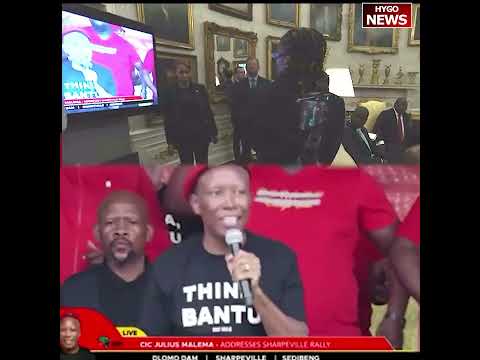
Trump Ambushes Ramaphosa in Oval Office: “Turn the Lights Down and Put This On” — EFF’s Malema “Kill the Boer, Kill the Farmer”; Trump Shows Crosses for 1,000+ Dead White Farmers; Ramaphosa Claims Ignorance
In one of the most remarkable diplomatic moments of 2025, President Trump ambushed South African President Cyril Ramaphosa with a video presentation during a May 2025 Oval Office meeting. When a reporter asked Ramaphosa what would convince Trump there was no “white genocide” in South Africa, Ramaphosa deflected that Trump should “listen to the voices of South Africans.” Trump responded by ordering the Oval Office lights dimmed: “Let me see the articles, please. Turn the lights down and just put this on.” The video showed EFF leader Julius Malema chanting “Kill the Boer, kill the farmer” and declaring that “killing is part of a revolutionary act.” Malema also said: “I’m not calling for the killing of white people, at least for now — I can’t guarantee the future.” Trump also showed footage of crosses representing over 1,000 murdered white South African farmers. Ramaphosa claimed ignorance: “I’d like to know where that is, because this I’ve never seen.”
The Setup
The Oval Office meeting had been scheduled as a diplomatic engagement between President Trump and President Ramaphosa of South Africa. The meeting’s public agenda included discussions of trade, mineral resources, and regional stability.
Trump had other plans. Having been briefed on the evidence of systematic violence against white South African farmers, Trump had prepared a video presentation designed to force Ramaphosa to confront evidence he would rather not acknowledge publicly.
The key trigger came when a reporter posed the direct question.
“Mr. President, what will it take for you to be convinced that there’s no white genocide in South Africa?” the reporter asked.
The question was directed at Trump, but Trump deflected to Ramaphosa: “Well, I can answer that for President. It’s for him. I’d rather have him answer that.”
Trump then invited Ramaphosa to respond: “My President will respond to you.”
Ramaphosa’s response was diplomatic but evasive: “It will take President Trump listening to the voices of South Africans, some of whom are his good friends, like those who are here. It will take him, President Trump, listening to their stories, to their perspective. That is the answer to your question.”
Ramaphosa’s framing was that Trump’s concerns were based on misunderstanding that could be corrected through dialogue with the right South Africans. The “good friends, like those who are here” reference was to the South African delegation, which included prominent white South Africans who were willing to defend the Ramaphosa government’s position.
”Turn the Lights Down”
Trump’s response was unexpected.
“But Mr. President, I must say that we have thousands of stories talking about it,” Trump said. “We have documentaries, we have news stories, and there is Natalie here, somebody here to turn that.”
He made the specific request: “Let me see the articles, please, if you would. Excuse me, turn the lights down. Turn the lights down and just put this on. It’s right behind you.”
The “turn the lights down” instruction transformed the meeting. What had been a standard diplomatic engagement became a presentation where Trump would force Ramaphosa to watch evidence of the “white genocide” claims Ramaphosa had been publicly dismissing.
The Oval Office staff dimmed the lights and queued the video behind Ramaphosa’s position. The moment was theatrical but also substantive: Ramaphosa would now have to react to specific video evidence rather than respond to abstract claims.
Julius Malema’s Incitement
The video Trump showed featured Julius Malema, leader of the Economic Freedom Fighters (EFF), South Africa’s third-largest political party. Malema had been expelled from the ruling ANC in 2012 and had founded the EFF as a more radical left-wing party emphasizing Black economic empowerment, land expropriation without compensation, and nationalization of major industries.
The first video segment showed Malema in Parliament: “There’s nothing you can do. There’s nothing this parliament can do. Without you, people are going to occupy land. We require no permission from you, from the President, from no one.”
Malema continued his defiance: “We don’t care. We can do whatever you want to do. Who are you to tell us whether we can occupy land or not? We are going to occupy land. South Africans occupy land. That’s who we are.”
The parliamentary context showed opposing members objecting. A presiding officer tried to intervene: “Honourable Members, please speak out. Can we draw my membership from this useless parliament? Honourable Members, please. Yes, Honourable Members.”
The “useless parliament” framing was Malema’s characterization of the South African legislative process. If parliament would not vote for his preferred land expropriation without compensation, he would encourage direct action — illegal occupation of farms and other land — regardless of legal process.
”Killing Is Part of a Revolutionary Act”
The next segment was more incendiary.
“You must never be scared to kill a revolution,” Malema said. “Demand that at some point, they must be killing. Because the killing is part of a revolutionary act.”
He led a chant: “I took you, Yamaza, to kill the poor, the farmer. Kill the poor, the farmer. Brrpa, pa, brrpa, pa.”
The video showed the chant continuing: “You killed Yamaza, to kill the poor, the farmer. Kill the poor, the farmer.”
The “Kill the Boer, kill the farmer” chant was an anti-apartheid era song that had originally been directed at Afrikaner farmers during the struggle against white-minority rule. In post-apartheid South Africa, its continued use by EFF leaders and supporters had been controversial because it appeared to call for violence against a specific racial group — white farmers who were no longer part of any apartheid system.
Multiple South African courts had addressed the song’s legality. Some rulings had found it to be hate speech; others had found it to be protected political expression. The inconsistent legal treatment had allowed the song to continue being chanted at political rallies despite its apparent advocacy for ethnic violence.
”Cutting the Throat of Whiteness”
The most politically explosive segment followed.
“The mayor of DA in PE is a white man,” Malema said, referring to a Democratic Alliance official. “So these people, when you want to hit them hard, go after a white man. They feel a terrible pain because you have touched a white man.”
He continued the strategic framing: “Not because Mashaba and Soleil will not be touched. They will be touched. Don’t worry. But we are starting with this whiteness. You are cutting the throat of whiteness. It’s done now.”
He led another chant: “Shoot to kill Yamaza, kill the poor, the farmer. Kill the poor, the farmer. Brrpa, pa, brrpa. Shoot to kill Yamaza, kill the poor, the farmer. Kill the poor, the farmer.”
The “cutting the throat of whiteness” framing was remarkable. Malema was explicitly describing his political strategy as directed against white South Africans specifically, using their racial vulnerability in post-apartheid politics to inflict political damage on the Democratic Alliance and other opposition parties.
The “shoot to kill” chants went beyond rhetorical political conflict. If taken literally — and Malema’s supporters often chanted along in apparent seriousness — the calls were for actual violence against actual people based on their race.
”I Can’t Guarantee the Future”
The video continued with Malema’s most revealing statement.
“I don’t know what’s going to happen in the future,” Malema said. “I’m saying to you, we have not called for the killing of white people. At least for now. I can’t guarantee the future.”
An interlocutor had pressed him: “You’d understand somebody watching that, especially as it gets shared on Twitter. They freak out. It sounds like a genocidal call.”
Malema delivered his policy position: “I’m going to say this. We will expropriate land without compensation, whether they like it or not. If they object, they can seek refugee in America.”
The “I can’t guarantee the future” line was particularly chilling. Malema was explicitly declining to commit to continued non-violence against white South Africans. The implication was that future circumstances might justify the killings that he was currently only chanting about.
The “seek refugee in America” reference was particularly pointed given the Oval Office setting. Malema was openly telling white South Africans who objected to land expropriation to go to the United States — which was precisely what some were doing through the Trump administration’s Afrikaner refugee program.
The Crosses and the Graveyard
Trump then showed footage of what the administration described as crosses representing over 1,000 murdered white South African farmers.
Trump addressed Ramaphosa directly: “This people are all killed.”
He asked the question: “Have they told you where that is, Mr. President?”
Ramaphosa’s response was striking: “No. I’d like to know where that is, because this I’ve never seen.”
Trump: “Okay.”
Ramaphosa pivoted: “I mean, it’s in South Africa. I need to find out.”
The claim that the South African president had “never seen” the crosses was difficult to credit. The roadside memorial of white crosses — representing victims of farm murders in South Africa — had been widely documented in international media for years. Multiple South African politicians had addressed the memorial. Various journalism outlets had covered it. Ramaphosa’s claim of ignorance was either:
- A genuine admission that he had been poorly briefed by his staff
- A diplomatic evasion to avoid engaging with the substance
- A rhetorical claim designed to challenge the authenticity of the footage
Regardless of the explanation, the moment was damaging to Ramaphosa’s credibility. A head of state claiming never to have seen a well-documented memorial to controversial killings in his own country suggested either negligent ignorance or calculated denial.
The “White Genocide” Debate
The substantive question underlying the exchange was whether South Africa was experiencing “white genocide” — systematic killing of white people based on their race.
The evidence was contested but substantial:
Farm murder statistics: South Africa had experienced thousands of farm attacks and hundreds of farm murders over the past decades. While exact numbers varied by source, the pattern included disproportionate targeting of white farmers by non-white attackers, often accompanied by torture and other atrocities beyond simple robbery.
Rhetoric from officials: Elected officials (including Malema and others) had chanted “kill the Boer” and made other statements that appeared to call for violence against white people. Official actions against such rhetoric had been minimal.
Legal framework: The Expropriation Act and related legislation had created mechanisms for land seizure without compensation, which critics argued were designed to target white land ownership specifically.
Economic pressure: BEE (Black Economic Empowerment) regulations had made many business sectors effectively closed to white South Africans, creating economic pressure parallel to the land issue.
Whether all of this constituted “genocide” under legal definitions was contested. Genocide typically required intent to destroy a group as such. Defenders of the South African government argued that:
- Farm murders were criminal acts rather than systematic policy
- Inflammatory rhetoric from Malema was not official government policy
- Land reform was economic justice rather than ethnic targeting
- White South Africans retained substantial economic resources and emigration options
Critics argued that:
- The pattern of violence, rhetoric, and legal pressure together constituted systematic targeting
- Official tolerance of incitement enabled violence even without official incitement
- The cumulative effect on white South African communities was displacement even without formal genocide
- Emigration was not a solution when people had deep ancestral ties to the land
Key Takeaways
- Trump ordered Oval Office lights dimmed and played video ambushing Ramaphosa about white South African farmer persecution.
- Video showed EFF’s Julius Malema chanting “Kill the Boer, kill the farmer” and declaring “killing is part of a revolutionary act.”
- Malema: “I can’t guarantee the future” on continued non-violence against white South Africans.
- Malema: “If they object to land expropriation, they can seek refugee in America” — which is what’s happening.
- Trump showed 1,000+ crosses for murdered white farmers; Ramaphosa claimed “I’d like to know where that is, I’ve never seen.”