 HYGO News
 Trump: Putin make a decision if we're unhappy; go to Chicago or New Orleans wants us to come
Trump: Putin make a decision if we’re unhappy; go to Chicago or New Orleans wants us to come
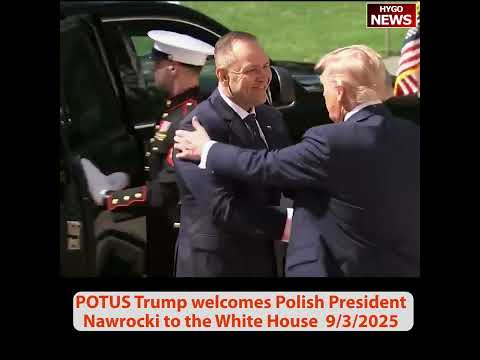
President Trump spoke to reporters at the White House covering multiple topics. On Russia: Trump stated he has no message for Putin because Putin knows where he stands — Putin will make a decision and if Trump is unhappy, “you’ll see things happen.” When a Polish radio reporter claimed there had been “no action” on Russia since Trump took office, Trump shot back citing secondary sanctions on India that cost Russia hundreds of billions of dollars, noting phase two and phase three sanctions had not yet been deployed. On the next city for federal crime intervention: Trump said the administration is determining whether to deploy to Chicago or New Orleans — Louisiana Governor Jeff Landry actively wants federal help. Trump said crime in New Orleans could be straightened out in two weeks. The video also captured Polish President Karol Nawrocki’s arrival at the White House with F-16 and F-35 jets flying over the White House to honor a fallen Polish fighter pilot. Trump on Putin: “I have no message to President Putin, he knows where I stand and he’ll make a decision one way or the other whatever his decision is. Will he be happy about it or unhappy and if we’re unhappy about it, you’ll see things happen.” Trump on New Orleans: “We’re going to be going to maybe Louisiana and you have New Orleans which has a crime problem. We’ll straighten that out in about two weeks, it’ll take us two weeks, easier than DC.” Trump on Chicago: “We could straighten out Chicago, all they have to do is ask us to go into Chicago if we don’t have the support of some of these politicians. But I’ll tell you who is supporting us, the people of Chicago.”
Putin Message
A reporter asked if Trump had a message for Putin. Trump responded with calibrated distance.
“I have no message to President Putin, he knows where I stand and he’ll make a decision one way or the other whatever his decision is.”
Trump’s framework:
- No message needed
- Putin already knows Trump’s position
- Putin’s decision binary — peace or not
- Trump ready to respond
“Will he be happy about it or unhappy and if we’re unhappy about it, you’ll see things happen.”
The veiled threat:
- Trump could be happy or unhappy with Putin’s decision
- Unhappy Trump leads to “things happening”
- Non-specific but clearly escalatory
- Pressure without specifics
The rhetorical strength — saying less can communicate more. Putin receives signal through media. Direct communication maintained through the leader-level channel (summit, calls).
Polish Radio Reporter
“Sir, you’ve expressed many times your frustration and disappointment with Putin, but there’s no action since you took your office.”
The Polish radio reporter — Polish interest in Russia-Ukraine very high given direct proximity.
The “no action” framing provoked strong Trump response. Trump’s frustration with European characterization of his Russia approach as passive or weak.
“How do you know there’s no action? But who are you with? I’m with the Polish radio What happened?”
Trump’s response:
- Questioned the premise
- Asked about reporter’s affiliation
- Polish radio (Polskie Radio)
- Engagement with international press
“Don’t tell me about that What happened?”
Trump pushing back — demanding reporter explain basis for “no action” claim.
Indian Sanctions
Trump listed specific Russia-related actions. Context from broader clips in this framework:
“Would you say that putting secondary sanctions on India… That cost hundreds of billions of dollars to Russia. You call that no action?”
The secondary sanctions framework:
- Imposed on third parties facilitating Russian trade
- India as major Russian oil buyer
- Sanctions threatened against Indian firms purchasing Russian oil
- Pressure on Indian to reduce Russian purchases
The economic impact:
- Billions in lost Russian oil revenue
- Pressure on Russian budget
- Reduced Chinese/Indian purchases
- Amplified Western sanctions effect
“And I haven’t done phase two yet or phase three.”
Trump’s framework:
- Phase one (current): some sanctions in place
- Phase two (potential): more severe sanctions
- Phase three (potential): comprehensive economic warfare
- Trump reserving escalation capacity
The phased approach allows graduated pressure. Putin sees capability but retains opportunity to negotiate before maximum pressure applied.
Next City Determination
Trump pivoted to the next federal law enforcement deployment.
“Do we go to Chicago or New Orleans? We’re going to be going to maybe Louisiana and you have New Orleans which has a crime problem.”
New Orleans and Chicago both candidates:
- Both experiencing significant crime
- Both with Democratic mayors
- Different governor situations
“We’ll straighten that out in about two weeks, it’ll take us two weeks, easier than DC.”
New Orleans timeline estimate:
- Two weeks to transform
- Easier than D.C. (because smaller scale?)
- Federal resources deployed
- National Guard support
Governor Landry Support
“We could straighten out Chicago, all they have to do is ask us to go into Chicago if we don’t have the support of some of these politicians.”
The conditional — Chicago requires local political cooperation. Illinois Governor JB Pritzker hostile to Trump, making Chicago deployment politically complicated.
“But I’ll tell you who is supporting us, the people of Chicago. And I sort of want them to let it be known, they have incompetent people.”
The framework:
- Illinois politicians hostile
- Chicago residents supportive
- Political gap between leadership and constituents
- Trump urging Chicago residents to pressure officials
Louisiana Governor Jeff Landry (Republican) actively requesting federal help — making Louisiana/New Orleans easier politically.
Polish President Visit
“A flyover honors a fallen Polish army F-16 pilot as Polish President Karol Nawrocki arrives at the White House.”
Polish President Karol Nawrocki — newly elected President of Poland. The White House visit included symbolic gestures:
- F-16 and F-35 flyover over the White House
- Tribute to fallen Polish fighter pilot
- Respect for Polish-American military relationship
Polish military significance:
- NATO member with substantial forces
- Direct border with Russia/Belarus
- Major defense spending increase
- Critical Ukraine support route
F-16/F-35 Flyover
“F-16 and F-35 jets fly over the White House to pay tribute to fallen Polish fighter pilot.”
The flyover:
- F-16s represent U.S.-Poland aircraft cooperation (Poland operates F-16s)
- F-35s representing modern fighter capability
- Tribute to fallen Polish pilot
- Symbolic alliance demonstration
The specific Polish pilot’s death — likely training or operational incident that had caused Polish military mourning. U.S. hosting of tribute flyover demonstrated alliance depth.
Nawrocki Welcome
“President Trump welcomes the President of the Republic of Poland to the White House.”
Karol Nawrocki’s background:
- Historian by training
- Conservative political framework
- Close ties to Polish Law and Justice (PiS) party
- Presidential role focused on foreign policy
Polish-American relationship:
- NATO alliance
- U.S. troop presence in Poland
- Defense cooperation
- Energy infrastructure (LNG, pipelines)
- Democratic coordination
Audio Context
Much of the transcribed audio includes photography direction artifacts (“Ready close? Ready shut? Ready face?”). The substantive political exchange preceded the photo-op sequences.
Significance
The video captured Trump’s engagement across multiple fronts:
- Russia/Ukraine — escalation ready but negotiation preferred
- Domestic crime — extending federal framework to new cities
- Alliance management — Polish President visit
- Military display — tribute flyover for fallen ally
The Indian sanctions response to Polish radio reporter revealed Trump’s frustration with characterizations of his Russia approach as passive. Secondary sanctions represent substantive pressure even without direct Russian sanctions escalation.
The Chicago/New Orleans determination reflected Trump’s expanding federal crime intervention framework. States with cooperating Republican governors (Louisiana) easier than states with hostile Democratic governors (Illinois).
The Polish President visit combined substantive alliance coordination with symbolic gestures (flyover). Poland’s strategic importance in NATO makes these visits significant beyond immediate political context.
Key Takeaways
- Trump on Putin: “I have no message to President Putin, he knows where I stand and he’ll make a decision one way or the other whatever his decision is. Will he be happy about it or unhappy and if we’re unhappy about it, you’ll see things happen.”
- Trump on Indian sanctions: “Would you say that putting secondary sanctions on India… That cost hundreds of billions of dollars to Russia. You call that no action? And I haven’t done phase two yet or phase three.”
- Trump on New Orleans: “We’re going to be going to maybe Louisiana and you have New Orleans which has a crime problem. We’ll straighten that out in about two weeks, it’ll take us two weeks, easier than DC.”
- Trump on Chicago: “We could straighten out Chicago, all they have to do is ask us to go into Chicago if we don’t have the support of some of these politicians. But I’ll tell you who is supporting us, the people of Chicago.”
- Polish President visit: “A flyover honors a fallen Polish army F-16 pilot as Polish President Karol Nawrocki arrives at the White House. F-16 and F-35 jets fly over the White House to pay tribute to fallen Polish fighter pilot.”