 HYGO News
 Trump on WH roof: financed by me; NBC Red-Faced Fact-Check; China close to deal, China reliant on US
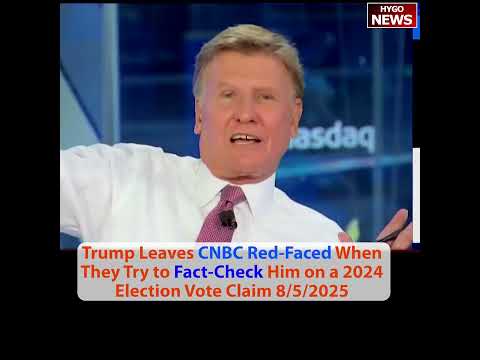
Trump on WH roof: financed by me; NBC Red-Faced Fact-Check; China close to deal, China reliant on US
Three items in a phone interview and impromptu press availability. On the White House improvement projects Trump was personally inspecting: “Anything I do is financed by me, so in other words, contributed. Just like my salary is contributed.” Reporters tried to fact-check Trump’s claim that he got “the highest vote in the history of Texas” — and CNBC’s Joe Kernan had to walk it back on air after staff confirmed Trump was correct. “You did get the highest number of votes in Texas, so that’s true.” Trump on China: “I didn’t call for the meeting. He called for the meeting, so the fake news announced… Donald Trump wants a meeting with China. No, I didn’t want it … we’re getting very close to a deal. We’re getting along with China very well.” And on Xi Jinping during the COVID period: “I was very angry with him and essentially didn’t want to talk to him … because it did come out of Wuhan in all fairness.” Plus a blunt characterization of Biden: “They didn’t respect Biden. They thought he was a numbskull."
"Financed by Me”
Trump, inspecting White House improvement projects from the roof. “It’s just another way to spend my money for the country. Anything I do is financed by me, so in other words, contributed. Just like my salary is contributed from somebody I’ve mentioned.”
“Anything I do is financed by me” is the framing. Specific improvements Trump is pursuing at the White House complex — the ballroom, the landscaping changes, apparently roof-level improvements — are privately financed by Trump personally and other donors.
“Just like my salary is contributed.” Trump, across both terms, has donated his presidential salary ($400,000 annually) to various federal programs. That pattern has become a recurring personal-finance element of the Trump presidency. Other presidents have drawn their salaries. Trump donates his.
“In other words, contributed.” The framing is gift rather than investment. Trump is presenting these expenditures as contributions to the country rather than business expenses or personal investments.
The CNBC Fact-Check Moment
The CNBC interview produced a specific on-air embarrassment for the network. The hosts had tried to fact-check Trump’s claim about Texas vote totals. The claim was accurate. The hosts had to walk back their implied skepticism.
“And I won Texas. I got the highest vote in the history of Texas, as you probably know.”
Trump made the claim. The CNBC hosts pushed back. “Check it, check it. Why don’t you check it, Brian? The fact checkers expect us to check everything you say on the phone.”
“The fact checkers expect us to check everything you say on the phone.” That is CNBC host Joe Kernan’s framing. The hosts are framing themselves as fact-checkers in real time.
Trump’s pushback. “I want you to check it. But for four years, the fact checkers didn’t fact check anything that was said about… We don’t need to re-lite that either, but the expect fact check… Joe, why don’t you check it?”
“For four years, the fact checkers didn’t fact check anything.” That is Trump’s accurate observation about media coverage of Biden. Biden’s statements during his first term received far less real-time fact-checking than Trump’s statements did. The asymmetry in media scrutiny between Trump and Biden was documented across multiple academic studies.
“Okay, because I like it too. I got the highest vote in the history of Texas, okay?” Trump repeating the claim while the hosts pull up data.
”So You Did Get the Highest Number”
The on-air correction. “So you did get the highest number of votes in Texas, so that’s true. But when you’re talking…”
Joe Kernan, having checked the data, confirms Trump was right. But Kernan tries to move to a qualifier — presumably to push some secondary framing that complicates or contextualizes the win.
Trump interrupts. “You don’t have to say anything more, Joe.”
Kernan attempts to continue. “I gotta say this.”
Trump insists. “No, don’t say anything more. Don’t qualify it by saying… I got the highest number of votes in the history of Texas.”
That is the exchange. Trump is declining to allow Kernan to soften the correction with a qualifier. Kernan had tried to fact-check Trump. The fact-check confirmed Trump. Trump is making Kernan sit with the correction without escape hatches.
“I’m moving on to your claim that…” Kernan, frustrated, moves to a different topic.
The 2024 Texas Vote
The factual record Trump was citing. In November 2024, Trump received 6,393,597 votes in Texas, defeating Kamala Harris by approximately 14 percentage points. He flipped multiple heavily Hispanic counties along the Texas-Mexico border. The total vote count broke the prior Texas vote record, which Trump himself had set in 2020.
“Highest vote in the history of Texas” is factually accurate. Trump won more votes in Texas than any candidate in any election in Texas’s history.
For CNBC to have initially pushed back on that claim before verifying reflects media reflex — default skepticism of Trump claims without immediate verification. In this case, the reflex was wrong. Trump’s claim was accurate.
”He Called for the Meeting”
Trump on China. “I didn’t call for the meeting. He called for the meeting, so the fake news announced… Donald Trump wants a meeting with China. No, I didn’t want it.”
That is the specific factual correction. Media coverage has apparently framed a forthcoming Trump-Xi meeting as Trump-initiated. Trump is correcting. Xi called. Not the other way around.
That distinction matters. A president seeking a meeting with a foreign counterpart signals specific interest, potential weakness, or desire for accommodation. A president receiving a meeting request signals that the foreign counterpart has the interest, the weakness, or the need for the engagement.
“No, he asked for a meeting, and I’ll end up having a meeting before the end of the year, most likely, if we make a deal. If we don’t make a deal, I’m not gonna have a meeting. I mean, you know, what’s the purpose of meeting if we’re not gonna make a deal?”
That is the condition. Meeting only after deal. If no deal, no meeting. That is specific negotiating posture. Trump is not granting Xi the prestige of a presidential meeting without extracting a substantive deal first.
“But we’re getting very close to a deal. We’re getting along with China very well."
"145% Tariffs”
Trump’s framing of the China tariff history. “I will tell you, you know, you had a point when I had 145% tariffs on. I put in the fentanyl, I put in…”
145% is the specific tariff rate Trump imposed at the peak on Chinese imports. That combined multiple tariff categories — the base expanded reciprocal tariff plus fentanyl-related tariffs plus other layered tariffs. The cumulative rate reached 145%.
“I actually said to people… Where are we now with China, by the way, because I kept adding more and more. They said, sir, you’re up to 145%. I said, you gotta be kidding.”
That is Trump noting his own surprise at the cumulative tariff rate. He kept adding tariffs in response to specific Chinese actions. The aggregate rate climbed higher than he realized until staff flagged the total.
“So I sort of had to bring it down a little bit. But when there was up to 145%, meaning we were doing zero business with China, China was collapsing. I don’t know if you know that. You haven’t reported it, if you do.”
“China was collapsing.” That is Trump’s characterization of the 145%-tariff period. At that rate, U.S.-China trade essentially froze. Chinese exporters lost access to the American market. Chinese manufacturing capacity, oriented heavily toward U.S. consumption, faced immediate overcapacity. The Chinese economic situation, per Trump, was deteriorating rapidly.
The COVID Period
“And just to end this conversation with China, I have a very good relationship with President. She always had, other than the COVID moment, I was very angry with him and essentially didn’t want to talk to him, frankly.”
“COVID moment” is the exception. Trump’s relationship with Xi, per his account, has been generally positive except during COVID.
“Because, you know, it did come out of Wuhan in all fairness, which I was saying from the day one, I was saying, I knew exactly where it came from. But that did interfere with the relationship.”
“It did come out of Wuhan.” That is Trump restating the COVID origin claim. The Wuhan lab-leak theory, dismissed as conspiracy theory for years by mainstream sources, has been progressively validated through FBI assessment, Energy Department assessment, and other intelligence-community reviews. Trump is noting he was right from day one.
“Interfered with the relationship” — COVID-era tension produced specific Trump-Xi friction. That period ended. The broader relationship has been restored.
”They Thought He Was a Numbskull”
“But I know I’ve had a great relationship with President Xi. We respect him a lot. They respect us a lot. They didn’t respect Biden. They thought he was a numbskull. They couldn’t believe he was the President of the United States. And neither can anyone else that that happened.”
That is a specific diplomatic framing. Trump is characterizing Chinese perception of Biden as disrespectful. “Thought he was a numbskull” is the specific Chinese assessment, per Trump.
Whether Chinese leadership privately held that view is difficult to verify. But the assessment is consistent with visible Chinese behavior during the Biden administration — increased aggression in the South China Sea, expanded military posture toward Taiwan, continued harassment of U.S. operations, and limited concessions on any bilateral issues.
“They couldn’t believe he was the President of the United States.” That is the framing Trump has used repeatedly about foreign leaders’ reactions to Biden’s cognitive state. The alleged foreign-leader view: how did the United States put this man in the presidency?
“And neither can anyone else that that happened.” Trump extending the framing to include domestic and international observers.
Three Threads
White House improvements privately financed. CNBC on-air fact-check humiliation. China close to a deal with the meeting conditional on outcome.
Each thread represents a specific Trump administration dynamic:
- Personal financing: Trump separates administration spending from his personal contributions, using the distinction for political messaging.
- Media accountability: Real-time fact-checking attempts that fail validate broader administration claims about media bias.
- China negotiation: The administration holds leverage through prior-tariff pressure, declining the Xi meeting without substantive deal progress.
The cumulative pattern reflects an administration that is operating with substantial confidence. Not defensive. Not accommodating. Willing to push back on media framings, willing to condition diplomatic engagement on substantive outcomes, willing to use personal finances to shape the White House physical infrastructure.
Key Takeaways
- Trump on White House improvement projects: “Anything I do is financed by me, so in other words, contributed. Just like my salary is contributed” — Trump donates his presidential salary and funds White House enhancements personally.
- CNBC’s Joe Kernan had to confirm Trump’s Texas vote claim on air: “So you did get the highest number of votes in Texas, so that’s true” — Trump shut down Kernan’s attempt to qualify.
- Trump on China: “I didn’t call for the meeting. He called for the meeting … I’ll end up having a meeting before the end of the year, most likely, if we make a deal. If we don’t make a deal, I’m not gonna have a meeting.”
- Trump on COVID-era Xi relations: “I was very angry with him and essentially didn’t want to talk to him … because it did come out of Wuhan in all fairness, which I was saying from day one.”
- On Chinese perception of Biden: “They didn’t respect Biden. They thought he was a numbskull. They couldn’t believe he was the President of the United States.”