 HYGO News
 Trump on Musk: 'I Just Wish Him Well -- Not Thinking About Him'; Trump on Iran: 'Not Going to Be Enrichment -- If They Enrich, We'll Have to Do It the Other Way'; 139K Jobs in May -- Third Straight Month Beating Expectations (TRUMP EFFECT!); Trump Normandy 2019: 'Men Ran Through Fires of Hell Moved by Force No Weapon Could Destroy'
Trump on Musk: “I Just Wish Him Well — Not Thinking About Him”; Trump on Iran: “Not Going to Be Enrichment — If They Enrich, We’ll Have to Do It the Other Way”; 139K Jobs in May — Third Straight Month Beating Expectations (TRUMP EFFECT!); Trump Normandy 2019: “Men Ran Through Fires of Hell Moved by Force No Weapon Could Destroy”
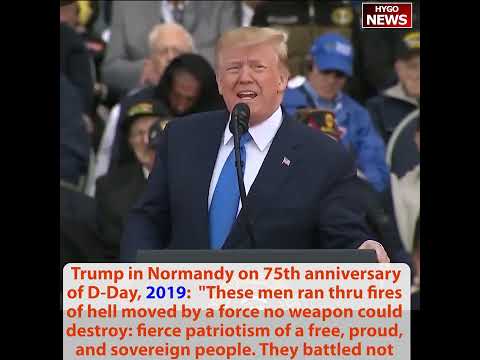
Multiple significant stories marked June 7, 2025. A reporter asked Trump about Elon Musk: “What’s your view on Elon Musk as of today? Have you heard from him at all?” Trump’s diplomatic response: “Obviously I’ve been so busy working on China, working on Russia, working on Iran, working on somebody. I’m not thinking about him. I just wish him well.” On Iran’s Ayatollah saying they must enrich uranium: “There’s not going to be enrichment. If they enrich, then we’re going to have to do it the other way. We don’t want to do it the other way. We’re going to have to.” On the May jobs report: “139,000 is the non-farm payrolls number. The street was looking for 130,000. The unemployment rate stayed the same. 4.2%.” Third consecutive month beating expectations — TRUMP EFFECT! John Phelan was sworn in as Secretary of the Navy. The broadcast included Trump’s powerful 2019 Normandy speech for the 75th D-Day anniversary: “These men ran through the fires of hell, moved by a force no weapon could destroy: the fierce patriotism of a free, proud, and sovereign people. They battled not for control and domination, but for liberty, democracy, and self-rule.”
Trump on Musk
A reporter asked Trump for his view on Elon Musk.
“What’s your view on Elon Musk as of today? Have you heard from him at all?” the reporter asked.
Trump’s response was carefully measured: “Obviously I’ve been so busy working on China, working on Russia, working on Iran, working on somebody. I’m not thinking about him.”
He delivered the diplomatic close: “I just wish him well.”
The Strategic Dismissal
Trump’s response was politically sophisticated.
What he didn’t do:
- Attack Musk personally
- Criticize his business decisions
- Threaten retaliation
- Demand apology
- Burn the relationship
What he did:
- Emphasized his own priorities
- Cited serious foreign policy work
- Minimized the significance
- Offered goodwill without substance
- Maintained diplomatic posture
Why this worked politically:
- Higher priorities framing elevated Trump
- “Just wish him well” sounded magnanimous
- Didn’t create ongoing feud content
- Left room for future cooperation
- Maintained political flexibility
What it signaled:
- Trump’s coalition was bigger than Musk
- Administration priorities continued
- Policy wouldn’t be derailed
- Door remained open
- No permanent rupture
The “not thinking about him” was partly true and partly strategic. Trump was genuinely focused on foreign policy negotiations (China, Russia, Iran) that were his priorities. Musk’s opposition was genuinely less important than these major international engagements. But the framing also served to reduce Musk’s political significance.
The Iran Position
Trump delivered a firm Iran policy statement.
A reporter asked: “What do you make of the Ayatollah saying that they have to enrich?”
Trump’s answer was emphatic: “They will be enriching.”
He immediately corrected himself: “No, they will be enriching.”
He restated definitively: “If they enrich, then we’re going to have to do it the other way.”
He expressed preference: “We don’t want to do it the other way.”
He stated inevitability: “We’re going to have to.”
He summarized the bottom line: “There’s not going to be enrichment.”
The Iran Red Line
Trump’s statement was absolute and clear.
The core position:
- Iran would not enrich uranium
- This was a hard red line
- Non-enrichment was the American demand
- Iranian enrichment would trigger American response
- The “other way” meant military action
Why this mattered:
- Iran had been enriching uranium
- Highly enriched uranium approaches weapons grade
- Weapons-grade enrichment enables nuclear weapons
- Nuclear Iran was unacceptable to U.S. policy
- Preventing enrichment prevented weapons
The “other way”:
- Military strikes on nuclear facilities
- Israeli coordination
- American or joint operations
- Potential massive escalation
- But considered necessary if required
The diplomatic opportunity:
- Trump preferred diplomatic solution
- Had offered “detailed and acceptable proposal”
- Witkoff had been sent to negotiate
- Reasonable terms had been presented
- Iran needed to accept or face consequences
The time pressure:
- Iran was making specific enrichment progress
- Each week of enrichment increased weapons capability
- Diplomatic window was narrowing
- Decision point approaching
- Action would be required one way or the other
The Ayatollah’s Position
The Ayatollah’s claim that Iran “must enrich” was the specific trigger.
Iranian framing:
- Enrichment was “right” under NPT
- Peaceful nuclear program
- Sovereignty issue
- Non-negotiable
- Domestic political necessity
American framing:
- Iranian enrichment was threat
- Weapons potential made it dangerous
- Sovereignty doesn’t include weapons
- Proliferation concern
- Regional security threat
The specific disagreement:
- Iran: We have right to enrich
- U.S.: You don’t get to enrich
- Iran: Enrichment continues
- U.S.: Enrichment ends or military action
- No compromise possible on this point
Why this was serious:
- Two positions fundamentally incompatible
- Neither side could back down without losing credibility
- Ayatollah’s public statement locked in Iranian position
- Trump’s response locked in American position
- Diplomatic path was narrowing
The May Jobs Report
The broadcast included economic data.
“$139,000 is the non-farm payrolls number.”
The expectation comparison: “The street was looking for $130,000.”
The unemployment data: “The unemployment rates stayed the same. 4.2%.”
The “Third Straight Month”
The Hygo framing captured the pattern: “The economy added 139,000 jobs in May — beating expectations for the third straight month.”
The description: “TRUMP EFFECT!”
The Jobs Data Significance
The May jobs report was genuinely strong.
The 139K number:
- Above expectations (130K consensus)
- Third consecutive month exceeding expectations
- Consistent with strong economy
- Better than post-COVID trend
- Sustained hiring momentum
The 4.2% unemployment rate:
- Near historical lows
- Stable despite strong job growth
- Indicates tight labor market
- Supports wage growth
- Economic strength
The “beating expectations” pattern:
- March: beat consensus
- April: beat consensus
- May: beat consensus
- Three months of positive surprises
- Consistent pattern of outperformance
Why this mattered:
- Labor market was strengthening
- Economic expansion continuing
- Policy concerns about recession unfounded
- Tariff effects not damaging employment
- Business confidence high
The “Trump Effect” framing:
- Market expectations had factored in potential slowdown
- Actual performance exceeded expectations
- Administration policies supporting employment
- Specific industries benefiting (manufacturing, energy)
- Broader economic momentum positive
The Navy Secretary Swearing-In
The broadcast included John Phelan’s swearing-in as Navy Secretary.
The oath: “Can I lead you to the same? Can I take this obligation freely? Without any mental reservation? Without any mental reservation? For purpose of evasion? For purpose of evasion.”
The Navy Secretary Context
John Phelan as Navy Secretary represented:
- Rogue Capital co-founder
- Investment industry background
- Philanthropic leadership
- Long-term Trump supporter
- Business executive experience
The Secretary of Navy role:
- Cabinet-level position (under Secretary of Defense)
- Manages Department of the Navy
- Oversees Navy and Marine Corps
- Policy direction
- Budget responsibility
- Personnel management
Navy challenges in 2025:
- Shipbuilding program delays
- Industrial base deterioration
- Recruiting challenges (now improving)
- Readiness issues
- Modernization needs
- Strategic competition with China
Why Phelan’s appointment mattered:
- Business management approach
- Private sector experience
- Trump’s trust
- Political alignment with administration
- Reform-oriented perspective
Phelan’s swearing-in represented continued administration build-out. Key positions being filled with committed appointees who aligned with Trump’s agenda.
The 2019 Normandy Speech
The broadcast featured Trump’s extraordinary 2019 speech.
“They came wave after wave without question, without hesitation, and without complaint.”
He delivered the central insight: “More powerful than the strength of American arms was the strength of American hearts.”
He articulated the imagery: “These men ran through the fires of hell, moved by a force no weapon could destroy. The fierce patriotism of a free, proud, and sovereign people.”
He described their motivation: “They battled not for control and domination, but for liberty, democracy, and self-rule.”
He expanded the motivation: “They pressed on for love and home and country, the main streets, the schoolyards, the churches, and neighbors, the families, and communities that gave us men such as these.”
The Theological Framing
Trump’s Normandy speech had substantial theological content.
“They were sustained by the confidence that America can do anything, because we are a noble nation with a virtuous people praying to a righteous God.”
He made the connection explicit: “The exceptional might came from a truly exceptional spirit. The abundance of courage came from an abundance of faith. The great deeds of an army came from the great depths of their love.”
He delivered the closing imagery: “As they confronted their fate, the Americans of the Alice placed themselves into the palm of God’s hand.”
The Normandy Speech Significance
The 2019 Normandy speech was one of Trump’s most memorable addresses.
The occasion:
- 75th anniversary of D-Day (June 6, 2019)
- Commemoration at Normandy American Cemetery
- Allied world leaders present
- Veterans in attendance
- Most significant WWII anniversary
The content:
- Honored American sacrifice
- Acknowledged Allied cooperation
- Celebrated American exceptionalism
- Religious framing of service
- Connected past to present
Why this was notable:
- Exceptional rhetorical quality
- Religious references unusual at this scale
- Nationalistic framing
- Emotional resonance
- Historical significance
The specific imagery:
- “Fires of hell” captured combat horror
- “American hearts” emphasized human motivation
- “Force no weapon could destroy” elevated the spiritual
- “Love and home and country” grounded in family
- “Palm of God’s hand” provided religious framework
This speech demonstrated Trump’s ability to rise to major occasions with substantive, inspirational rhetoric. It contrasted with criticisms that he was only capable of political attacks.
The “Confidence That America Can Do Anything”
Trump’s framing was particularly powerful.
“They were sustained by the confidence that America can do anything, because we are a noble nation with a virtuous people praying to a righteous God.”
This captured:
- American exceptionalism: Belief that America could accomplish anything
- National character: “Noble nation with virtuous people”
- Religious foundation: “Praying to a righteous God”
- Moral legitimacy: Combination of all these elements
- Enabling spirit: What made American military achievement possible
The framing was:
- Traditional American political rhetoric
- Rooted in colonial religious heritage
- Consistent with George Washington, Abraham Lincoln traditions
- Aligned with Reagan’s approach
- But delivered with distinctive Trump intensity
The “Palm of God’s Hand”
The closing imagery was particularly striking.
“As they confronted their fate, the Americans and the Allied placed themselves into the palm of God’s hand.”
The imagery conveyed:
- Surrender to divine will
- Acceptance of mortal danger
- Trust in providence
- Warriors’ acknowledgment of higher power
- Traditional Christian framing
This was not typical politician rhetoric. It was substantively religious and explicitly Christian. In contemporary American political context, this level of religious content was:
- Politically bold
- Traditionally American
- Authentic to Trump’s actual beliefs
- Aligned with his base
- Potentially alienating to secular voters
But for the audience at Normandy — veterans, military families, traditional Americans — the framing was appropriate. It honored what the soldiers themselves had believed and lived.
Trump’s Evolving Religious Expression
Trump’s religious expression had evolved throughout his political career.
Early campaign (2015-2016):
- Limited religious rhetoric
- More secular framing
- Appeals to evangelical voters
- But not deeply theological
First term (2017-2021):
- Growing religious expression
- Support for religious causes
- Connections to religious leaders
- Policy alignment with religious conservatives
Post-presidency and 2024 campaign:
- More explicit religious references
- Survived assassination attempt
- Sense of divine purpose
- Expression of faith
Second term (2025+):
- Regular religious references
- Theological framing of events
- Connection of policy to religious values
- Public prayer participation
- Substantial religious content in major speeches
The Normandy 2019 speech represented an important data point in this evolution. Even before the recent developments, Trump was capable of substantive religious rhetoric in appropriate contexts.
The Diplomacy-Religion-Economics-Strategy Combination
The broadcast captured multiple dimensions of Trump’s presidency.
Diplomacy: “Working on China, Russia, Iran” Foreign policy firmness: “There’s not going to be enrichment” Economic success: “139,000 jobs, beating expectations” Religious rhetoric: “Palm of God’s hand” Personal diplomacy: “I just wish him well” (Musk) Institutional leadership: Phelan sworn in
Each dimension reinforced the others:
- Strong economy supported foreign policy leverage
- Religious values provided ethical framework
- Personal relationships enabled deal-making
- Institutional building strengthened capability
- Coordination produced comprehensive governance
This was sophisticated presidency. Not just political positioning or rhetorical performance, but substantive execution across multiple dimensions of the presidential role.
Key Takeaways
- Trump on Musk: “I just wish him well. I’m not thinking about him” — working on China, Russia, Iran.
- Trump on Iran: “Not going to be enrichment. If they enrich, we have to do it the other way.”
- 139K jobs in May, beating expectations for third consecutive month — TRUMP EFFECT.
- John Phelan sworn in as Navy Secretary — continued cabinet buildout.
- 2019 Normandy speech: “Men ran through fires of hell moved by force no weapon could destroy — palm of God’s hand.”