 HYGO News
 Trump: 'All We Really Needed Was a New President'; Renames Wildlife Refuge for Jocelyn Nungaray; Take It Down Act
Trump: “All We Really Needed Was a New President”; Renames Wildlife Refuge for Jocelyn Nungaray; Take It Down Act
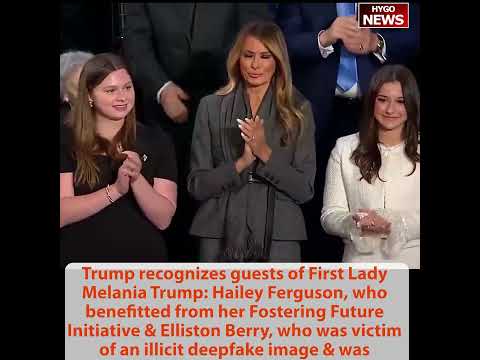
In segments from his March 2025 joint address, President Trump delivered the line that became one of the speech’s most applauded moments: “The media and our friends in the Democrat Party kept saying we needed new legislation to secure the border. But it turned out all we really needed was a new president.” He held up an executive order renaming the Anahuac National Wildlife Refuge in Texas as the “Jocelyn Nungaray National Wildlife Refuge” in honor of a girl murdered by illegal aliens. Trump noted that “21 million people poured into the United States” under Biden and recognized two guests of First Lady Melania: a young woman helped by Melania’s Fostering the Future initiative and a deepfake victim whose story inspired the Senate to pass the Take It Down Act.
”All We Really Needed Was a New President”
Trump set up the border segment with a framing that demolished the Biden administration’s primary excuse for failing to secure the border.
“The media and our friends in the Democrat Party kept saying we needed new legislation. We must have legislation to secure the border,” Trump said, mimicking the argument that Biden officials had used for four years to explain their inaction.
Then the punchline: “But it turned out that all we really needed was a new president.”
The line drew thunderous applause because it captured a truth that had been validated by the first month’s results. Biden had claimed that without new congressional legislation, the border could not be secured. Trump had secured it within weeks using executive authority alone — the same laws that had been on the books throughout Biden’s entire term.
The argument was factually irrefutable. The Laken Riley Act was the only new border-related legislation Trump had signed. Everything else — the military deployment, the Remain in Mexico reinstatement, the end of catch-and-release, the deportation operations that produced the lowest border crossings in 50 years — had been accomplished through executive orders and the enforcement of existing law.
The implication was devastating for Democrats: the border crisis had been a choice, not a constraint. Biden could have enforced the law at any time. He chose not to. Trump chose to, and the results were immediate.
”People Love Our Country Again”
Trump connected the border success to a broader restoration of national spirit.
“People love our country again. It’s very simple,” Trump said. “They love our country, and they love being in our military again.”
The military recruiting turnaround — from the crisis-level shortfalls under Biden to the surging enlistment under Trump — was presented as evidence that the restoration of border security and national pride had cascading effects across the entire fabric of American life. When the country was secure and its leaders projected strength, Americans wanted to serve. When the country’s borders were open and its leaders projected weakness, they didn’t.
”21 Million People”
Trump then delivered the statistics that quantified the Biden border disaster.
“If we truly care about protecting Americans’ children, no step is more crucial than securing America’s borders,” Trump said. “Over the past four years, 21 million people poured into the United States because of Joe Biden’s insane and very dangerous open border policies.”
He acknowledged the challenge of removal: “They are now strongly embedded in our country, but we are getting them out and getting them out fast.”
The 21 million figure was the administration’s comprehensive estimate of total illegal entries during the Biden term, including those who evaded detection (“gotaways”) as well as those who were encountered by Border Patrol. The number was larger than the population of most states and represented a demographic transformation that the Biden administration had facilitated without congressional authorization or public consent.
Jocelyn Nungaray Wildlife Refuge
In one of the speech’s most poignant gestures, Trump held up an executive order renaming a national wildlife refuge in honor of a murder victim.
Jocelyn Nungaray was a young girl who had been brutally murdered by illegal alien gang members in Texas. Her story had become one of the most emotionally powerful examples of the human cost of the Biden border crisis. By renaming the Anahuac National Wildlife Refuge in her home state as the “Jocelyn Nungaray National Wildlife Refuge,” Trump ensured that her name would be permanently inscribed on the American landscape.
The choice of a wildlife refuge rather than a building or highway was symbolically fitting. A refuge is a place of safety and protection — exactly what Jocelyn had been denied because her country’s borders were not secure. The renamed refuge would serve as a permanent reminder of what happens when a nation fails to protect its own.
First Lady’s Guests: Fostering the Future and the Take It Down Act
Trump recognized two young women who were guests of First Lady Melania, each representing a different dimension of the administration’s commitment to protecting children and young women.
“Melania’s work has yielded incredible results helping prepare our nation’s future leaders as they enter the workforce,” Trump said. “Our First Lady is joined by two impressive young women.”
The first was Hailey Ferguson, “who benefited from the First Lady’s Fostering the Future initiative and is poised to complete her education and become a teacher.” The Fostering the Future program, part of Melania’s expanded Be Best initiative, supported young people aging out of the foster care system.
The second was Elliston Berry, “who became a victim of an illicit deepfake image produced by a peer.” Trump connected her story to legislation: “With Elliston’s help, the Senate just passed the Take It Down Act.”
Trump acknowledged Senate Majority Leader John Thune’s role in passing the bill and previewed the next step: “Once it passes the House, I look forward to signing that bill into law.”
The Take It Down Act, which Melania had personally advocated for at a Capitol Hill roundtable days earlier, would criminalize the nonconsensual publication of intimate images, including AI-generated deepfakes. Elliston’s presence in the chamber connected the legislation to a real victim — a young woman who had been harmed by the very practice the bill was designed to prevent.
Democrats Refuse to Stand
Throughout these segments, the contrast between Republican enthusiasm and Democratic silence continued to define the visual dynamics of the evening. Democrats refused to stand for border security, for the deportation of dangerous criminals, and for the military’s recruiting recovery. The refusal to applaud the renaming of a wildlife refuge for a murdered girl was particularly stark — a gesture of remembrance for a crime victim that should have been beyond partisan politics.
Bernie Sanders was reportedly among the Democrats who walked out during Trump’s remarks about Americans loving their country and joining the military “in record numbers.” The departure of a senator during a passage about patriotism and military service reinforced the administration’s argument that the Democratic Party had become disconnected from the values that most Americans shared.
Key Takeaways
- Trump’s most applauded line: “The media kept saying we needed new legislation. But it turned out all we really needed was a new president.”
- He cited 21 million people entering the U.S. under Biden’s “insane open border policies,” saying “they are now strongly embedded but we are getting them out fast.”
- Trump signed an executive order renaming Texas’s Anahuac National Wildlife Refuge as the “Jocelyn Nungaray National Wildlife Refuge” in honor of a girl murdered by illegal aliens.
- He recognized Elliston Berry, a deepfake victim whose story helped pass the Senate’s Take It Down Act, which Trump pledged to sign once it passed the House.
- Democrats refused to stand for border security, deportations, or the military recruiting recovery, with Bernie Sanders reportedly walking out during remarks about patriotism.