 HYGO News
 Trump: Not too exciting, not good service; Bishop Attack on Trump During National Prayer Service
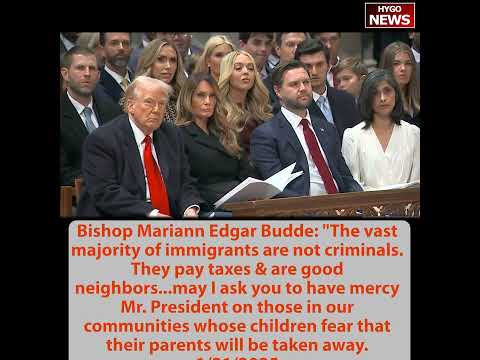
Trump: Not too exciting, not good service; Bishop Attack on Trump During National Prayer Service
The National Prayer Service Tradition
The National Prayer Service tradition:
- Held morning after every inauguration since 1933
- Interfaith ceremony
- Washington National Cathedral venue
- Typically apolitical
- Religious leaders representing various faiths
- New President and family attend
The 2025 service context:
- January 21, 2025
- Morning after Trump inauguration
- Trump and family present
- Cabinet members attending
- Bishop Mariann Edgar Budde leading
- Traditional format
Bishop Budde
Bishop Mariann Edgar Budde:
- Episcopal Bishop of Washington
- Washington National Cathedral leadership
- Progressive theological framework
- 2020 conflict with first-term Trump
- Known for political engagement
- LGBTQ+ advocate
Budde previously clashed with Trump in June 2020 when Trump held a Bible outside St. John’s Church after Lafayette Square clearing. Budde criticized Trump publicly.
The Plea
“Let me make one final plea, Mr. President.”
Budde’s framing:
- Direct address to Trump
- “Final plea” elevation
- Personal appeal
- Sermon format
“Millions have put their trust in you.”
Acknowledging Trump’s electoral mandate.
“And as you told the nation yesterday, you have felt the providential hand of a loving God.”
Citing Trump’s inaugural framework:
- Providential hand reference
- Loving God
- Trump’s personal faith
- Religious framework activated
“In the name of our God, I ask you to have mercy upon the people in our country.”
The core request — mercy.
“We’re scared now.”
The emotional framework:
- Americans scared
- Trump policies feared
- Personal vulnerability
- Emotional appeal
LGBTQ+ Reference
“There are gay, lesbian, and transgender children in Democratic, Republican, and independent families. Some who fear for their lives.”
Budde’s LGBTQ+ reference:
- Children framework
- Political cross-section
- Fear of physical harm
- Suicide implications
- Vulnerability claim
The reaction context:
- Trump’s executive orders on gender
- Women’s sports protection
- Gender ideology removal from military
- Schools parental notification
- Pediatric transition framework
Immigrant Workers
“And the people, the people who pick our crops and clean our office buildings, labor and poultry farms, and meat packing plants, who wash the dishes after we eat in restaurants and work the night shifts in hospitals.”
Budde’s workers framework:
- Crop pickers (agriculture)
- Office cleaners (service)
- Poultry farms (agriculture)
- Meat packing plants (food)
- Restaurant dishwashers (service)
- Hospital night shift (service)
The implicit framework:
- Essential workers
- Low-wage positions
- Americans dependent on
- Yet vulnerable legally
“They may not be citizens or have the proper documentation.”
Acknowledging illegal status:
- Not citizens
- Not properly documented
- Yet essential workers
- Trump policy targets
“But the vast majority of immigrants are not criminals. They pay taxes and are good neighbors.”
Budde’s framework:
- Not criminals (majority)
- Pay taxes (contribute)
- Good neighbors (community)
- Deserving protection
Religious Framework
“They are faithful members of our churches and mosques, synagogues, Wadara, and temples.”
Budde listing religious spaces:
- Christian churches
- Muslim mosques
- Jewish synagogues
- Hindu/Buddhist temples
- Gurdwaras (Sikh)
“I ask you to have mercy, Mr. President, on those in our communities whose children fear that their parents will be taken away.”
Deportation fear:
- Family separation
- Children’s fears
- Parents taken away
- Community disruption
- Emotional framework
War Zone Refugees
“And that you help those who are fleeing war zones and persecution in their own lands to find compassion and welcome here.”
Refugee framework:
- Fleeing war zones
- Facing persecution
- Need compassion
- Deserving welcome
- American tradition
Biblical Framework
“Our God teaches us that we are to be merciful to the stranger. For we will all want strangers in this land.”
Budde’s biblical citation:
- Merciful to stranger (Deuteronomy 10:19)
- “We were all strangers” (common biblical theme)
- Mercy obligation
- Religious framework for policy
“May God grant us the strength and courage to honor the dignity of every human being, to speak the truth to one another in love, and to walk humbly with each other and our God for the good of all people, for the good of all people in this nation and the world. Amen.”
The closing:
- Dignity framework
- Truth in love
- Walking humbly
- Good of all people
Trump’s Reaction
“What did you think of the service? What did you think of the service? What did you think?”
Reporters asking Trump immediately after service.
“Did you like it? Did you find it exciting? Not too exciting, was it? I didn’t think it was a good service, no.”
Trump’s blunt honest framework:
- Not exciting
- Not good service
- Direct critique
- No diplomatic cover
“Thank you very much. Thank you, press. Thank you, press.”
Moving past the question.
”They Can Do Much Better”
“They can do much better. Thank you, press. Inside, inside. Thank you. Thank you, press. Thank you, press. Inside, inside. Thank you. Thank you.”
Trump:
- Cathedral can improve
- Service quality critique
- Moving to next event
- Dismissive response
Political Framework
Budde’s sermon violated traditional:
- Apolitical inauguration framework
- Religious leader neutrality
- Interfaith ceremony norm
- Post-election unity
Budde’s choice:
- Deliberate political intervention
- Policy critique in religious framework
- Trump directly addressed
- National television audience
- Lasting reputation shaped
Media Response
The media coverage:
- Liberal press: Budde as courageous
- Conservative press: Inappropriate political intervention
- Social media division
- Viral moment generated
- Legacy debate
Evangelical Response
Evangelical and conservative Christian response:
- Budde using sermon for politics inappropriate
- Episcopal Church political framework acknowledged
- Religious left vs religious right
- Biblical mercy framework contested
Conservative Theological Framework
The conservative theological response:
- Mercy for illegal immigrants does not preclude law enforcement
- Biblical mercy for strangers applies to legal process
- LGBTQ+ framework separate from Christianity traditional teaching
- Budde’s interpretation questioned
- Episcopal vs Evangelical divergence
Trump’s Honest Response
Trump’s reaction — “not good service,” “they can do much better” — avoided detailed theological engagement while dismissing the sermon’s quality. The framework:
- Trump not pretending
- Honest assessment
- Avoiding political fight with Bishop
- Moving past the moment
- Not elevating opponent
Long-term Impact
The Bishop Budde incident:
- Viral moment generated
- Budde’s reputation in progressive circles elevated
- Trump’s base reinforced (hostile religious establishment)
- Episcopal Church politicization debate
- Future inauguration services reconsidered
Budde’s subsequent:
- Interview circuit
- Progressive celebration
- Trump counter-messaging
- Congressional responses
Significance
The Bishop Budde incident captured:
- Religious establishment politicization: Cathedral pulpit for political message
- LGBTQ+ advocacy: Framework from Episcopal leadership
- Immigration framework: Religious mercy claim
- Trump’s honest response: Not good service
- Tradition disruption: Apolitical ceremony politicized
The incident became defining moment for:
- Political role of religious leaders
- Episcopal Church trajectory
- Trump second-term religious framework
- National Prayer Service future
Budde’s political sermon at what was supposed to be uniting ceremony represented either:
- Courageous speaking truth to power
- Inappropriate politicization of sacred space
- Calculated media moment
- Authentic religious conscience
The framework depends on partisan perspective.
Key Takeaways
- Bishop Budde’s opening plea: “Let me make one final plea, Mr. President. Millions have put their trust in you. And as you told the nation yesterday, you have felt the providential hand of a loving God. In the name of our God, I ask you to have mercy upon the people in our country. We’re scared now.”
- Bishop Budde on LGBTQ+ children: “There are gay, lesbian, and transgender children in Democratic, Republican, and independent families. Some who fear for their lives.”
- Bishop Budde on immigrant workers: “The people who pick our crops and clean our office buildings, labor and poultry farms, and meat packing plants … They may not be citizens or have the proper documentation. But the vast majority of immigrants are not criminals. They pay taxes and are good neighbors.”
- Bishop Budde on deportation fears: “I ask you to have mercy, Mr. President, on those in our communities whose children fear that their parents will be taken away.”
- Trump’s assessment: “What did you think of the service? Not too exciting, was it? I didn’t think it was a good service, no … They can do much better.”