 HYGO News
 Liberation Day: 25-Year UAW Member Backs Trump 'Hundred Percent'; Farmers 'Brutalized' by Canada, Australia, EU Trade Barriers
Liberation Day: 25-Year UAW Member Backs Trump “Hundred Percent”; Farmers “Brutalized” by Canada, Australia, EU Trade Barriers
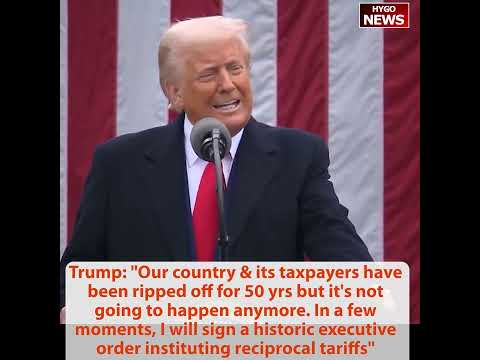
The Liberation Day ceremony on April 2, 2025, featured retired auto worker and 25-year UAW member Brian Pannebecker from Macomb County, Michigan, who told Trump: “I have watched plant after plant in Detroit and in the Metro Detroit area close. Donald Trump’s policies are going to bring product back into those plants. We support Donald Trump’s policies on tariffs 100 percent.” Trump then signed the reciprocal tariff executive order, declaring that “our country and its taxpayers have been ripped off for more than 50 years, but it is not going to happen anymore” — citing Canada’s 250-300% dairy tariffs, Australia’s ban on American beef, and the EU’s ban on American poultry.
The Reagan Democrat’s Testimony
Brian Pannebecker’s opening remarks established the human face of deindustrialization.
“I grew up just north of Detroit, Michigan, in Macomb County, known as the home of the Reagan Democrats,” Pannebecker said. “My first vote for president was for Ronald Reagan. I thought that was going to be the best president I ever saw in my lifetime — until Donald J. Trump came along.”
He described what he had witnessed over a lifetime in the auto industry: “I have watched my entire life. I have watched plant after plant in Detroit and in the Metro Detroit area close. There are now plants sitting idle. There are now plants that are underutilized.”
Pannebecker’s personal trajectory — from Reagan voter to Trump supporter, from active autoworker to witness of industrial decline — encapsulated the political journey of the American working class over four decades. The Reagan Democrats of Macomb County had been the swing voters who defined American politics since the 1980s. Their shift from union-aligned Democratic voters to Reagan Republicans, back to Obama Democrats, and finally to Trump Republicans tracked precisely with the promises made and broken by each era’s economic policies.
He looked forward with confidence: “Donald Trump’s policies are going to bring product back into those underutilized plants. There’s going to be new investment. There’s going to be new plants built.”
Then the endorsement that carried the weight of 25 years of union membership: “And the UAW members — and I brought 20 of them with me, they’re sitting right over here — we support Donald Trump’s policies on tariffs 100 percent.”
His conclusion carried the patience of someone who had waited decades for this moment: “Mr. President, we can’t thank you enough. And in six months or a year, we’re going to begin to see the benefits. I can’t wait to see what’s happening three or four years down the road."
"Ripped Off for More Than 50 Years”
Trump addressed the audience with language that matched the gravity of the occasion.
“For decades, our country has been looted, pillaged, raped, and plundered by nations near and far, both friend and foe alike,” he said.
He identified who had suffered: “American steelworkers, auto workers, farmers, and skilled craftsmen — we have a lot of them here with us today — they really suffered gravely.”
Trump described the emotional experience of watching American industry die: “They watched and anguished as foreign leaders have stolen our jobs, foreign cheaters have ransacked our factories, and foreign scavengers have torn apart our once beautiful American dream.”
He set the timeline: “Our country and its taxpayers have been ripped off for more than 50 years. But it is not going to happen anymore. It’s not going to happen.”
Then the action: “In a few moments, I will sign a historic executive order instituting reciprocal tariffs on countries throughout the world. Reciprocal. That means they do it to us, and we do it to them. Very simple. Can’t get any simpler than that.”
Standing Up for Farmers and Ranchers
Trump devoted a significant portion of the speech to the agricultural trade abuses that had devastated American farmers.
“With today’s actions, we’re also standing up for our great farmers and ranchers who are brutalized by nations all over the world,” he said.
Canada and Dairy: “Canada imposes a 250 to 300 percent tariff on many of our dairy products,” Trump said. “They do the first can of milk, the first little carton of milk at a very low price. But after that it gets bad, and then it gets up to 275 to 300 percent.”
He exposed the accounting trick: “So when they are figuring what is Canada charging, they say, ‘Oh, about 2 percent, 3 percent.’ But take a look at what happens down the road when you look a little bit. It’s not a pretty picture, and we don’t like it, and it’s not fair. It’s not fair to our farmers. It’s not fair to our country.”
The Subsidy Problem: “With countries like Canada, we subsidize a lot of countries and keep them going and keep them in business,” Trump said. “In the case of Mexico, it’s $300 billion a year. In the case of Canada, it’s close to $200 billion a year. And I say, why are we doing this?”
EU and Poultry: “Through non-tariff barriers, the European Union bans imports of most American poultry,” Trump said. “You understand? They say, ‘We want to send you our cars. We want to send you everything. But we’re not going to take anything that you have.’”
Australia and Beef: “Australia bans American beef, yet we imported $3 billion of Australian beef from them just last year alone,” Trump said. “They won’t take any of our beef. They don’t want it because they don’t want it to affect their farmers.”
He offered the most fair-minded assessment possible: “And you know what? I don’t blame them. But we’re doing the same thing right now — starting about midnight tonight, I would say."
"Starting About Midnight Tonight”
The “midnight tonight” line was the moment the speech shifted from rhetoric to reality. Everything that had been previewed, debated, and anticipated was about to become operational. At midnight on April 3, 2025, the reciprocal tariff schedule would take effect, and every trading nation would face the consequences of the barriers it had imposed on American products.
The specificity of “midnight tonight” made the tariffs real in a way that policy papers and press briefings could not. Trade representatives around the world were watching the speech and calculating the impact. Importers were placing last-minute orders. Financial markets were adjusting positions. Midnight was coming, and when it arrived, decades of asymmetric trade would end.
The Debt Connection
Trump connected the trade deficit to the national debt.
“This is why we have the big deficits,” he said. “This is why we have that amount of debt that’s been placed on our heads over the last number of years. And we’re really not taking it anymore.”
The argument was that trade deficits and fiscal deficits were related problems. When America ran massive trade deficits — importing far more than it exported — it sent hundreds of billions of dollars overseas annually. That money left the American economy, reducing the tax base, eliminating manufacturing jobs, and forcing the government to borrow to fund programs that a healthier economy would have funded through growth.
By reducing trade deficits through reciprocal tariffs, the administration aimed to bring manufacturing back, increase the tax base, create well-paying jobs that generated tax revenue, and reduce the need for deficit spending. The tariffs were not just a trade tool; they were part of the fiscal strategy.
The American Dream Restored
Trump’s observation about the American dream was both nostalgic and forward-looking.
“We had an American dream that you don’t hear so much about,” he said. “You did four years ago, and you are now. But for many years and decades even, you didn’t hear too much about it.”
The American dream — the idea that hard work and talent could produce prosperity regardless of one’s origins — had been the nation’s defining promise. That promise had faded as manufacturing communities collapsed, real wages stagnated, and housing became unaffordable. Liberation Day was, in Trump’s framing, the beginning of that promise’s restoration.
Key Takeaways
- 25-year UAW member Brian Pannebecker brought 20 union members to the Rose Garden: “We support Donald Trump’s policies on tariffs 100 percent.”
- He described Detroit’s decline: “Plant after plant closed. There are now plants sitting idle. Trump’s policies are going to bring product back.”
- Trump signed reciprocal tariffs effective “about midnight tonight” after declaring taxpayers had been “ripped off for more than 50 years.”
- Trade abuses cited: Canada 250-300% on dairy, EU bans American poultry, Australia bans American beef while exporting $3B to the U.S.
- Trump connected trade deficits to national debt: “This is why we have the big deficits. This is why we have that amount of debt.”