 HYGO News
 Trump Departs for Pope Francis Funeral: 'I've Spoken to Xi Many Times'; Trade Deals, Russia-Ukraine, Iran 'All Going Well'
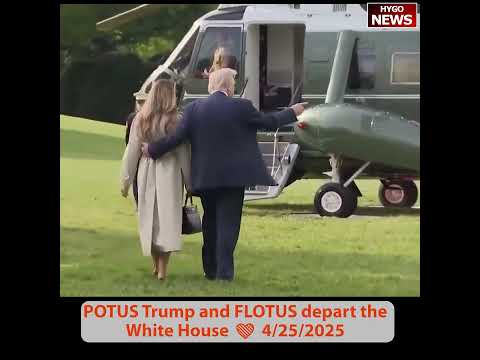
Trump Departs for Pope Francis Funeral: “I’ve Spoken to Xi Many Times”; Trade Deals, Russia-Ukraine, Iran “All Going Well”
President Trump and First Lady Melania departed the White House for Rome in April 2025 to attend Pope Francis’s funeral, with Trump using the departure to deliver a rapid-fire update on multiple foreign policy fronts. When asked if he had spoken to President Xi since tariffs were imposed, Trump said: “I don’t want to comment on that, but I’ve spoken to him many times.” He added: “Trade deals are going very well. I think Russia and Ukraine are coming along — very fragile. And Iran, I think, is going very well.” He confirmed the Rome trip would include meetings with “a lot of foreign leaders” and said the trip would be a quick turnaround: departing Friday, returning Saturday night. Separately, VP Vance toasted American troops at Ramstein Air Base in Germany.
”I’ve Spoken to Him Many Times”
A reporter pressed on the Xi question: “You said you spoke with President Xi. Have you spoken to him since the tariffs? When did you last speak to him?”
Trump’s response was calibrated: “I don’t want to comment on that, but I’ve spoken to him many times.”
The answer confirmed direct presidential-level communication with Xi while declining to specify the timing or content. This was significant on multiple levels. China had publicly claimed that no trade negotiations were taking place. Trump had contradicted that claim the previous day by revealing that meetings had occurred “this morning.” Now he was confirming that the communication went all the way to the top — that he and Xi had spoken “many times.”
The refusal to specify whether the conversations had occurred since the tariff escalation was itself a negotiating tactic. By keeping the details private, Trump maintained ambiguity that served both sides. China could continue its public posture of not negotiating under pressure while privately engaging at the highest level. The United States could maintain tariff pressure while signaling that a deal was achievable.
The “many times” formulation suggested an ongoing dialogue rather than a single call. Multiple conversations between the presidents indicated that both sides were working through issues at the leader level — bypassing the bureaucratic layers that often slowed or derailed negotiations.
The Five-Front Update
Trump delivered a compressed diplomatic briefing from the White House South Lawn as Marine One waited.
“We’re going to Rome, where we’ll be attending the funeral of Pope Francis,” Trump said. “We’re going to meet with a lot of the foreign leaders. They want to meet.”
He ticked through the fronts: “Trade deals are going very well.”
Russia-Ukraine: “I think Russia and Ukraine, I think they’re coming along, we hope. Very fragile.”
Iran: “And Iran, I think, is going very well.”
He blamed his predecessor: “We’re working on plenty of things that shouldn’t be worked on because none of this stuff should have happened. This should have been taken care of by Biden. It should have been fixed by Biden, but he couldn’t do it. Nor could he come close to doing so.”
He stated the schedule: “We’re going to Rome to pay respects, and we’ll be leaving that same day. We’ll be coming back home tomorrow night.”
The five-front summary — trade, China, Russia-Ukraine, Iran, and papal diplomacy — captured the scope of the administration’s foreign policy engagement at 100 days. No previous administration had been simultaneously managing trade negotiations with every major economy, a ceasefire effort between two warring nations, nuclear negotiations with Iran, and diplomatic meetings with dozens of world leaders at a papal funeral.
The “very fragile” assessment of the Russia-Ukraine situation was the most concerning note. It suggested that while progress had been made, the peace process could collapse at any moment. The overnight missile strikes that had prompted Trump’s “Vladimir, stop” message were the kind of events that could derail weeks of diplomacy.
The Rome Diplomatic Opportunity
The papal funeral was shaping up to be the most significant gathering of world leaders since the Queen’s funeral in 2022 — and potentially the most diplomatically productive.
Trump had confirmed “a lot of meetings” with foreign leaders, all of whom “want to meet.” The demand for presidential face time was itself evidence of American leverage. In a single day in Rome, Trump could advance trade negotiations, discuss security arrangements, and build personal relationships that would pay dividends for months.
The format was ideal for Trump’s style of personal diplomacy. Bilateral meetings on the margins of a papal funeral were informal enough to allow genuine conversation but significant enough to produce actionable outcomes. Leaders who might not schedule a formal White House visit could pull Trump aside in Rome for a ten-minute conversation that moved a trade deal forward.
The quick turnaround — departing Friday, returning Saturday night — reflected the administration’s operational tempo. Trump was not taking a European vacation; he was paying respects to the Pope and conducting a marathon of diplomacy in a single day.
Biden Blame
Trump’s attribution of current crises to Biden was both a political point and a policy observation.
“None of this stuff should have happened,” Trump said. “This should have been taken care of by Biden. It should have been fixed by Biden, but he couldn’t do it. Nor could he come close to doing so.”
The “this stuff” encompassed the full range of issues Trump was managing: the Russia-Ukraine war (which started under Biden), the Iranian nuclear program (which advanced under Biden’s ineffective diplomacy), the China trade imbalance (which worsened under Biden), and the global disorder that had metastasized during four years of weak American leadership.
Trump’s argument was that a competent predecessor would have prevented these crises from developing. The Russia-Ukraine war would not have started if Biden had maintained deterrence. Iran would not have advanced its nuclear program if Biden had maintained maximum pressure. China would not have expanded its trade advantages if Biden had enforced reciprocal trade standards. Trump was cleaning up messes that should never have been made.
VP Vance at Ramstein
While Trump headed to Rome, Vice President Vance made a stop at Ramstein Air Base in Germany — the largest American air base outside the United States.
“To the airmen of this base, the airwomen of this base, and all of our troops serving overseas, God bless you guys,” Vance said.
He offered to serve beer personally: “If you don’t have a beer, I’m happy to serve one.”
The Ramstein stop — VP toasting troops at a forward-deployed military base — served both diplomatic and morale purposes. It reminded European allies that America’s military commitment to NATO was backed by real forces stationed on European soil. It showed American service members that the vice president valued their sacrifice enough to stop during an international trip.
Vance’s beer-pouring offer was the kind of gesture that resonated with military personnel. It communicated that the vice president saw himself as a peer — a fellow American who appreciated their service — rather than a distant political figure making a ceremonial visit.
The 100-Day Moment
Trump’s departure for Rome came almost exactly 100 days into his second term. The compressed diplomatic update he delivered on the South Lawn was a snapshot of an administration managing more simultaneous foreign policy challenges than any in recent memory — and managing them with a combination of personal engagement, economic leverage, and military credibility that previous administrations had lacked.
The fact that Trump could casually confirm multiple conversations with Xi, describe trade deals as “going very well,” assess two separate military conflicts, and announce a dozen-plus bilateral meetings at a papal funeral — all while walking to his helicopter — illustrated the pace and scope of second-term governance.
Key Takeaways
- Trump confirmed speaking to Xi “many times” but declined to specify post-tariff timing: “I don’t want to comment on that.”
- Departing for Pope Francis funeral with Melania: “We’re going to meet with a lot of foreign leaders. They want to meet.”
- Five-front assessment: trade deals “very well,” Russia-Ukraine “coming along, very fragile,” Iran “going very well.”
- He blamed Biden: “None of this should have happened. It should have been fixed by Biden, but he couldn’t do it.”
- VP Vance toasted troops at Ramstein Air Base: “God bless you guys. If you don’t have a beer, I’m happy to serve one.”