 HYGO News
 Trump: give us ownership of land military base, meet Kim-Jong Un this year, eliminate cashless bail
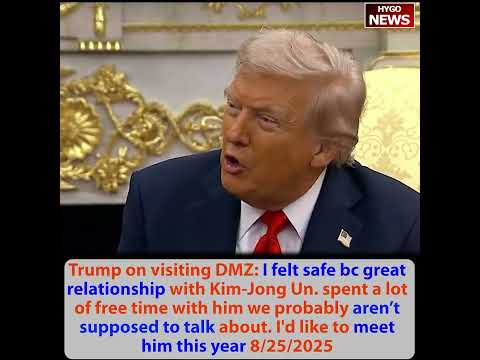
Trump: give us ownership of land military base, meet Kim-Jong Un this year, eliminate cashless bail
Trump addressed multiple substantive topics. South Korea specifically — 40,000 U.S. troops and Trump’s specific interest in converting the U.S. military base from leased land to owned land. Kim Jong-un — Trump specifically wants to meet him this year, citing his specific relationship and specific DMZ visit where rifles were specifically pointed at him. And a specific executive order eliminating cashless bail in DC, holding criminal defendants in federal custody. Trump on South Korea: “We have over 40,000 troops in South Korea. As you know, South Korea agreed to pay for that during my last term. And then when Biden came in, they complained to Biden that I wasn’t a nice person. And he agreed not to pay. He gave up billions of dollars.” On land ownership: “Maybe one of the things I’d like to do is ask them to give us ownership of the land where we have the big fort … I would like to see if we could get rid of the lease and get ownership of the land where we have a massive military base.” On Kim Jong-un: “I looked in and I saw more rifles pointing at me than you could. There were a lot of rifles in that building … And yet I felt safe. I felt safe because I have a great relationship with Kim Jong-un.” On meeting this year: “I’d like to meet him this year.” On cashless bail: “The objective is holding as many criminal defendants in federal custody and subjecting them to federal charges as possible … the prison they have in DC is horrible.”
40,000 Troops in South Korea
Reporter’s question. “Would you consider reducing the number of US forces in South Korea so that the United States can have more flexibility?”
Trump’s response. “I would say that we have over 40,000 troops in South Korea. As you know, South Korea agreed to pay for that during my last term.”
Specific numbers. 40,000+ U.S. troops stationed in South Korea. That is substantial deployment — specific force positioned specifically for Korean Peninsula contingency and broader regional strategic purposes.
“South Korea agreed to pay for that during my last term.” That is specific Trump first-term negotiation outcome. Trump pushed South Korea to pay specifically for the U.S. military presence. South Korea agreed to specific cost-sharing increase.
”Biden Gave Up Billions”
“And then when Biden came in, they complained to Biden that I wasn’t a nice person. And he agreed not to pay. He gave up billions of dollars. We were getting paid billions of dollars. Then Biden ended that for whatever reason. It’s unbelievable that he did.”
Specific financial sequence. Trump secured specific South Korean payments for U.S. forces. Biden specifically reversed those specific arrangements. The specific financial impact: billions of dollars in lost U.S. revenue.
“They complained to Biden that I wasn’t a nice person.” That is specific political attribution. South Korean officials specifically complained about Trump’s negotiating style. Biden specifically accommodated those complaints by eliminating the specific payment requirements.
The substantive framework Trump established: specific foreign military presence should have specific cost-sharing arrangements. Countries that host specific U.S. forces benefit from specific U.S. protection and should contribute specifically to the specific costs. Biden’s specific reversal eliminated that specific framework.
”Lease vs. Ownership”
“We have a very good relationship militarily. They would say, but we gave you land. I said, no, you didn’t. You lease us land. It’s a big difference between giving and leasing.”
Specific land arrangement clarification. South Korea claims they “gave” U.S. land for the base. Trump’s specific correction: South Korea leased land, not gave it. Specific legal difference.
Lease arrangement:
- U.S. pays specific rent to South Korea
- South Korea retains ownership
- Lease can be terminated under specific conditions
- U.S. must specifically comply with specific lease terms
Ownership arrangement:
- U.S. holds specific title to land
- No ongoing rent obligation
- No lease termination risk
- Full U.S. authority over specific use
”Give Us Ownership of the Land”
“And maybe one of the things I’d like to do is ask them to give us ownership of the land where we have the big fort. You know, we spent a lot of money building a fort, and there was a contribution made by South Korea.”
Specific Trump request. Convert lease to ownership. South Korea specifically transfers title rather than continuing specific lease arrangement.
“We spent a lot of money building a fort.” U.S. investment in the specific military base infrastructure is substantial. Bases cost billions to construct with specific buildings, specific runways, specific infrastructure. That U.S. investment deserves specific property protection.
“Contribution made by South Korea.” South Korea specifically contributed to base construction. That contribution provides specific justification for current lease arrangement. But the specific balance of U.S. construction investment vs. South Korean land contribution arguably favors U.S. ownership.
“I would like to see if we could get rid of the lease and get ownership of the land where we have a massive military base.”
Specific goal. Convert specific lease to specific ownership. That would specifically change U.S.-South Korea military relationship architecture. Specific negotiation would be required.
DMZ Walk
“Would you go back to the DMZ to meet with the North Korean leaders? I loved it. Remember when I walked across the line and everyone went crazy, especially Secret Service?”
Specific 2019 moment. Trump walked across the DMZ into North Korean territory. That was specifically unprecedented — first sitting U.S. president to enter North Korea.
“Especially Secret Service.” Specific security concern. Secret Service specifically opposed Trump’s movement across the DMZ. The specific risk — Trump in North Korean territory, beyond specific U.S. protection capability — was specifically extreme.
”Rifles Pointing at Me”
“I looked into those windows. You know the windows at glass? That you could only see if you looked directly. Because there was all sorts of stuff. But I looked in and I saw more rifles pointing at me than you could. There were a lot of rifles in that building.”
Specific DMZ experience. At the specific DMZ crossing point, specific buildings have specific observation windows. Looking through those windows at specific angles, Trump saw specific North Korean military personnel with specific rifles pointed at him.
“More rifles pointing at me than you could.” That is striking specific observation. Not few weapons. Many weapons. All specifically targeted on Trump during his specific moment at the DMZ.
“The Secret Service was not happy.” Specific security response. Secret Service specifically unhappy with Trump’s specific exposure to specific visible threats. That specific experience could have specifically gone badly if specific North Korean actor had specifically acted.
“You know the buildings I’m talking about? The two blue buildings on each side. And I walked up the middle and I looked in the window and I saw more guns in that room than I’ve ever seen in my life. I looked at the other side and it was the same thing.”
Specific structural description. Two blue buildings on either side of the DMZ line. Trump walked between them. Each side had specific armed personnel. Specific visible armed readiness.
”I Felt Safe”
“And yet I felt safe. I felt safe because I have a great relationship with Kim Jong-un.”
Specific Trump psychological framework. Despite specific visible threat (many rifles), Trump specifically felt safe. Why? Specific personal relationship with Kim Jong-un.
That specific framework is substantial. In typical foreign policy analysis, national-level military threat does not derive from specific personal leader relationships. Country A’s military does not shoot Country B’s leader because leaders have good relationships.
But Trump’s framework. Specific Kim Jong-un personal relationship overrides specific North Korean military capability. North Korean specific actors would not specifically fire on specific Trump because Kim Jong-un has specific personal relationship with Trump.
“I have a very good relationship. I understand and I spent a lot of free time with him talking about things that we probably aren’t supposed to talk about. I get along with him really well.”
Specific relationship details. Free time conversations. Topics “we probably aren’t supposed to talk about.” That specific hint at unusual personal engagement. Not formal diplomatic discussion. Specific personal rapport.
”I’d Like to Meet Him This Year”
“Did you possibly meet him this year or maybe next year? I’m meeting a lot of people. I mean it’s hard to say that, but I’d like to meet him this year.”
Specific intention. Trump wants specific Kim Jong-un meeting during 2025. Specific timing constraint. Trump is currently engaged with multiple specific diplomatic priorities. Adding specific Kim Jong-un meeting requires specific scheduling.
That meeting would be specifically significant. Kim Jong-un specifically reclusive. Specific meetings require specific diplomatic preparation. Trump’s specific intention to meet specifically soon represents specific administration priority on specific North Korea engagement.
“I think he has a country of great potential. Tremendous potential.” Trump’s specific characterization of North Korea’s economic potential. Significant natural resources. Specific industrial capacity. Specific human capital. If specific political circumstances permitted, North Korea could specifically develop substantially.
Cashless Bail Executive Order
Specific executive action. “Also on the issue of cashless bail, sir, this is a DC-specific executive order. In addition to the measures that we’re taking that are quite similar to what we’re doing around the country, in DC in particular, the objective is holding as many criminal defendants in federal custody and subjecting them to federal charges as possible.”
Specific policy shift. DC’s specific cashless bail policies have specifically released specific defendants pre-trial. Those specific defendants have specifically committed subsequent crimes. The specific executive order specifically addresses that specific problem.
“Holding as many criminal defendants in federal custody and subjecting them to federal charges as possible.”
Specific operational directive. DC criminal cases often have specific federal jurisdiction option. Federal charges specifically produce specific federal custody. Federal custody specifically does not have DC’s specific cashless bail framework.
”The Prison They Have in DC Is Horrible”
“That means that they’ll be held pre-trial in federal jail as opposed to just being cut back out on the streets due to a cashless bail policy. Okay. And we have the room. And by the way, the prison they have in DC is horrible. It’s horrible. People were subjected to live in that dog trap for so long, so unfairly. I have stories you’ll be hearing about them. The prison is horrible.”
Specific DC jail conditions. “Horrible.” “Dog trap.” Specific inhumane conditions. Specific prisoners specifically subjected to specific abusive conditions.
“I have stories you’ll be hearing about them.”
Specific future disclosures expected. Trump has specific information about specific DC jail conditions. Those specific stories will specifically be released. That specific framework suggests specific investigations and specific public disclosure forthcoming.
The specific DC jail concerns are substantial. January 6 defendants held in DC’s specific jail complained about specific conditions. Specific federal Inspector General investigations raised specific concerns. Specific improvements would be specifically appropriate.
Crockett: “Thuggery”
The segment ends with Rep. Jasmine Crockett. “Whether you hate their immigration policy or really it’s just immigration thundering because they’re not policy.”
Whisper’s garbled rendering. Likely Crockett saying “immigration thuggery because they’re not policy.” Characterizing specific immigration enforcement as specific “thuggery” rather than specific policy.
That framing is specifically consistent with Crockett’s specific prior vocabulary. She previously called ICE agents “thugs” and federal law enforcement a “fancy Uber driver.” The specific pattern of specific dehumanizing language toward specific federal personnel continues.
“Thuggery” specifically implies specific criminal violence. Applied to specific lawful federal enforcement, that specific characterization specifically incites specific violence against specific officers — as documented by specific 1000% increase in ICE officer assaults.
Four Distinct Policy Stories
South Korea military land ownership (specific structural shift). Kim Jong-un meeting intention (specific diplomatic priority). Cashless bail elimination (specific criminal justice reform). DC prison conditions (specific future disclosures). Crockett’s “thuggery” framing (specific continued rhetorical escalation).
Each reflects specific aspects of Trump administration posture. Reconsidering specific long-term military arrangements for specific U.S. advantage. Pursuing specific personal diplomacy with specific adversarial leaders. Implementing specific criminal justice changes with specific federal mechanisms. Preparing specific accountability disclosures. Democratic opposition continuing specific inflammatory framing.
Key Takeaways
- Trump on South Korea: “We have over 40,000 troops in South Korea. As you know, South Korea agreed to pay for that during my last term. And then when Biden came in, they complained to Biden that I wasn’t a nice person. And he agreed not to pay. He gave up billions of dollars.”
- On military base ownership: “Maybe one of the things I’d like to do is ask them to give us ownership of the land where we have the big fort … get rid of the lease and get ownership of the land where we have a massive military base.”
- On the DMZ: “I looked in and I saw more rifles pointing at me than you could. There were a lot of rifles in that building … And yet I felt safe. I felt safe because I have a great relationship with Kim Jong-un.”
- On meeting Kim this year: “I’ve spent a lot of free time with him talking about things that we probably aren’t supposed to talk about. I get along with him really well … I’d like to meet him this year.”
- On cashless bail: “The objective is holding as many criminal defendants in federal custody and subjecting them to federal charges as possible … the prison they have in DC is horrible … People were subjected to live in that dog trap for so long, so unfairly.”