 HYGO News
 TRUMP: Everybody's coming! I'm not used to it! CANADA lowest payer in NATO, Wayne Gretzky governor
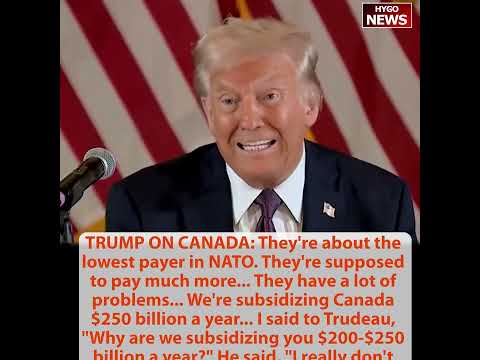
TRUMP: Everybody’s coming! I’m not used to it! CANADA lowest payer in NATO, Wayne Gretzky governor
In an interview ahead of his January 20 inauguration, President-elect Donald Trump discussed the parade of CEOs and business leaders visiting him, the mandate from his sweeping 2024 election victory, Facebook’s shift toward free speech, and his increasingly pointed comments about Canada, including suggesting it become the 51st state and telling hockey legend Wayne Gretzky he should serve as its governor.
CEOs Coming to Pay Respect
When asked about the wave of corporate executives who had been visiting him in the weeks before inauguration — including some who had censored him during his first term — Trump attributed the shift to a combination of respect for his electoral mandate and a pragmatic desire to get things done.
“Maybe we all changed,” Trump said when asked whether the CEOs had changed or he had. “I think they’ve gained a lot of respect. I think they looked at the mandate that we got.” He cited his victories in all seven swing states, noting: “I had to win three because I had a lot of early voting going on and we had to win three and we won all seven and we won them by a lot. We didn’t win them by a little.”
Trump also attributed the outreach to a broader desire for productive governance. “I also think it’s like, let’s get something done,” he said, pointing to Facebook’s recent policy changes as an example. “You look at what happened with Facebook today and yesterday, what they announced. That was a big concession from them.”
He described the shift at Facebook as moving from what he called “the unlock boxes” — his term for the company’s previous practices — to “a statement yesterday that’s really talking about free speech. What a difference that is.”
Trump then listed the parade of high-profile visitors. “Jeff Bezos came, Bill Gates came, Mark Zuckerberg came. Many of them came numerous times. The bankers have all come. Everybody’s coming,” he said. “I haven’t had anybody saying anything bad about me. I’m not used to it.”
The visits represented a dramatic reversal from Trump’s first term, when many of the same tech executives and corporate leaders had distanced themselves from him and, in some cases, actively worked to limit his reach on their platforms. The post-election pilgrimage to Mar-a-Lago signaled that the business world was preparing to work with the incoming administration rather than against it.
A Broader Republican Party
Trump used the interview to describe the transformation of the Republican Party under his leadership. “The Republican Party has become a much bigger party. It’s become a party for the worker,” he said, citing his performance with union voters as evidence.
“If you look at all of the union votes that I got — and when I say I, it’s really all of us together because it’s a whole thing — we won the Teamsters. We did great with the Auto Workers. We did all heavily union,” Trump said. He pointed to Florida as an example of the party’s expanded reach: “We won by millions of votes. The highest vote ever gotten.”
The claim about winning the Teamsters was notable. While the Teamsters union leadership had declined to make a formal presidential endorsement in 2024, internal polling had shown a majority of Teamsters members supported Trump, a significant shift for a union that had historically leaned Democratic.
Canada as the 51st State
Trump’s most provocative comments came in his discussion of Canada and its relationship with the United States. He began by calling Canadian Prime Minister Justin Trudeau “Governor Trudeau” — a deliberate reference to his proposal that Canada become the 51st state.
“I called them Governor Trudeau because they should be the 51st state, really. It would make a great state,” Trump said. “And the people of Canada like it. They pay lower taxes. They have virtually no military. They have a very small military.”
Trump zeroed in on Canada’s NATO spending, a longstanding grievance of his. “They pay less than 1%. They’re about the lowest payer in NATO. They’re supposed to pay much more. They haven’t been paying,” he said. NATO members had agreed to spend 2% of their GDP on defense, and Canada had consistently fallen short of that target, a point Trump had raised repeatedly during his first term.
The President-elect then detailed the economic subsidies he claimed the United States provided to Canada. “We’re subsidizing Canada $250 billion a year, we have massive deficits,” he said. “They’ve taken about 20% of our car business. I’d rather do it here. We could put tariffs on. We don’t have tariffs on them yet, but that will happen.”
Trump argued that the United States had no economic need for Canada. “We don’t need Canada for lumber because we have big forests that we have not utilized. In some cases, they’re protected, which I can take that protection off,” he said. “We don’t need their fuel. We don’t need their energy. We don’t need their oil and gas. We don’t need anything that they have.”
The Trudeau Exchange
Trump then recounted a conversation he said he had with Trudeau about the trade deficit. “I said, why are we subsidizing you $200 and $250 billion a year?” Trump recalled. “He said, ‘I really don’t know.’ And I said, well, I don’t know either.”
Trump said he then pressed Trudeau on what would happen if the subsidies stopped. “I said, what would happen to Canada if we didn’t? He said Canada would be obliterated if that happened,” Trump recounted. “I said, then Canada should be a 51st state. And that’s where we are now.”
The exchange, whether reproduced exactly or paraphrased, illustrated Trump’s negotiating approach: establish the other party’s dependence, then leverage that dependence into a dramatic proposal that shifts the entire framework of the discussion.
Wayne Gretzky as Governor
In one of the more colorful moments of the interview, Trump revealed that he had suggested to hockey legend Wayne Gretzky that the “Great One” should serve as governor of Canada, presumably in the hypothetical scenario where Canada became a U.S. state.
“I was with Wayne Gretzky. I said, Wayne, would you like to be the Governor of Canada? I can’t imagine anybody doing any better than Wayne,” Trump said. He noted that “Wayne was not too interested” but added, “I think he probably would have liked statehood. He’s a friend of mine. He’s a great guy. He’s the great one. We call him the great one, right? He’s a great hockey player.”
The Gretzky exchange added a lighthearted dimension to what was otherwise a pointed critique of Canada’s economic and defense posture. Whether Trump was genuinely serious about Canadian statehood or using the proposal as a rhetorical device to highlight the trade imbalance remained open to interpretation, though the video description noted: “He’s 100% serious.”
Key Takeaways
- Trump said CEOs including Jeff Bezos, Bill Gates, and Mark Zuckerberg had all visited him ahead of inauguration, attributing the outreach to his sweeping election mandate.
- He described Facebook’s policy shift toward free speech as “a big concession” and a major difference from the company’s previous approach.
- Trump called Trudeau “Governor Trudeau” and said Canada should become the 51st state, citing NATO underpayment and a $250 billion annual trade deficit.
- Trump recounted that Trudeau told him Canada would be “obliterated” without U.S. subsidies, and Trump replied that Canada should then become a state.
- Trump told Wayne Gretzky he should be the governor of Canada, though Gretzky was reportedly “not too interested.”
Transcript Highlights
The following is transcribed from the video audio:
- I think they looked at the mandate that we got. As you know, we won the popular vote. We won all seven swing states and we won them by a lot.
- I also think it’s like, let’s get something done. You look at what happened with Facebook today and yesterday, what they announced. That was a big concession from them.
- Everybody’s coming. I haven’t had anybody saying anything bad about me. I’m not used to it.
- I called them Governor Trudeau because they should be the 51st state, really. It would make a great state.
- They pay less than 1%. They’re about the lowest payer in NATO. They’re supposed to pay much more.
- I said, why are we subsidizing you $200 and $250 billion a year? He said, I really don’t know.
- I said, what would happen to Canada if we didn’t? He said Canada would be obliterated if that happened. I said, then Canada should be a 51st state.
- I was with Wayne Gretzky. I said, Wayne, would you like to be the Governor of Canada?
Full transcript: 783 words transcribed via Whisper AI.