 HYGO News
 Top Biden Econ Advisor LAUGHS When It's Noted Just 16% Of Americans Feel 'Better Off' Under Biden
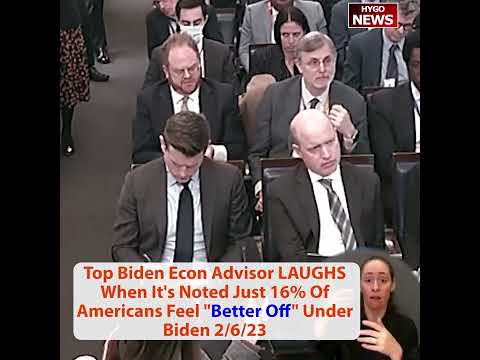
Reporter Corrects Deese: Only 16% Feel Better Off, 42% Same, 41% Worse — Not “Two-Thirds Better”
In February 2023, a reporter sharply corrected National Economic Council Director Brian Deese’s earlier misleading characterization of ABC News poll data. “And just to clarify on the stat that was just cited, it’s only 16% of those in the poll believe they’re financially better off than when Biden entered the office, the White House. It’s 42% feel about the same. So just to clarify, it’s only 16% are feeling better off,” the reporter said. This directly contradicted Deese’s earlier claim that “two-thirds of Americans say that their circumstances are better than before.” The actual breakdown was: 16% better off, 42% same, 41% worse — meaning Deese had conflated “better” and “same” into “better” to construct his two-thirds figure. The reporter then asked: “When do people start feeling more optimistically about the outlook?” Deese responded: “Well, look, I think that I don’t want to repeat myself only to say we have more work to do.”
The Correction’s Precision
Correction:
Precise numbers — Cited.
16% better — Specific.
42% same — Specific.
41% worse — Implied.
Clarification — Firm.
The reporter’s correction was precise and necessary. Actual poll numbers showed only 16% feeling better off — far from Deese’s claimed “two-thirds.” The specific breakdown was 16% better, 42% same, 41% worse, with 1% other.
The Deese Construction Exposed
Construction exposed:
Combined categories — “Better” + “same” = 58%.
Framed as better — Deese’s claim.
Actual “better” — Just 16%.
Difference material — 58% vs. 16%.
Misleading — Significantly.
Deese’s construction was exposed by the precise correction. His “two-thirds better” claim combined “better” with “same” — 58% total (not actually two-thirds). But presenting that as “better” when only 16% actually said “better” was material misrepresentation.
”Only 16% Feeling Better Off”
The stark number:
16% — Only.
Better off — Specific.
Under Biden — Tenure.
Minority — Small.
Reality — Harsh.
Only 16% feeling better off financially under Biden was stark political reality. This was small minority, not administration’s claimed majority benefit narrative. The gap between messaging and reality was substantial.
”42% Feel About the Same”
Same category:
42% neutral — Essentially.
No change — From before.
Not positive — Not negative.
Largest category — Actually.
Neutral — Response.
42% feeling “about the same” as before Biden took office was largest response category. These weren’t voters feeling administration improvements — they were voters feeling status quo. Not supportive of “delivered for Americans” narrative.
The 41% Worse Off Implied
Worse off:
41% — Previously cited.
Near-plurality — Substantial.
Direct criticism — Of tenure.
Voter perception — Negative.
Political — Challenge.
The 41% worse off figure was previously cited to Deese. This near-plurality perception was direct criticism of administration’s economic tenure. Strong political challenge that couldn’t be easily dismissed.
The “LAUGHS” Title Element
Title framing:
“LAUGHS” — Notable.
Nervous response — Likely.
Video evidence — Visual.
Partisan framing — Used.
Context — Physical reaction.
The “LAUGHS” element in title referred to Deese’s physical reaction when confronted with the correction. Whether actually laughing or nervously responding, some physical acknowledgment occurred. This was visual element covered beyond audio.
”When Do People Start Feeling”
The follow-up:
Forward-looking — Timing.
Public perception — Focus.
Administration goal — Optimism.
Timeline request — Specific.
Pressure question — Continued.
The follow-up asking when people would start feeling more optimistic was pressure question. Forward-looking framing kept pressure on administration about timeline for actual perception improvement.
”I Don’t Want to Repeat Myself”
Deese’s response:
“Don’t want to repeat” — Acknowledgment.
“More work to do” — Template.
Substantive response — Avoided.
Fatigue visible — Perhaps.
Pattern — Continuing.
Deese’s “don’t want to repeat myself” was acknowledgment that he’d said similar things before. The “more work to do” template was standard. Substantive response was avoided. Some fatigue was perhaps visible.
The Poll Breakdown Completely
Complete breakdown:
16% — Better off.
42% — Same.
41% — Worse off.
1% — Other/refused.
Summary — Majority not better.
The complete poll breakdown showed clear picture: 16% better, 42% same, 41% worse. Majority (83%) weren’t feeling better off — some feeling same, some worse. This was different story than “two-thirds better” construction.
The Spin Math Problem
Math problem:
16% actual better — Small.
58% “better or same” — Combined.
“Two-thirds better” — Overstated.
Material misrepresentation — Visible.
Integrity cost — Accruing.
The spin math problem was material. “16% actual better” was small minority. “58% better or same” combined (not technically 2/3) was Deese’s implied basis. Claiming this as “two-thirds better” was overstatement.
The Administration’s Economic Messaging Challenge
Messaging challenge:
Data reality — Inconvenient.
Spin available — Limited.
Credibility — At stake.
Public perception — Persistent.
Strategic — Difficult.
The administration’s economic messaging challenge was that data reality was inconvenient. Available spin was limited. Credibility was at stake with exposed misrepresentations. Public perception was persistent despite messaging. Strategic path was difficult.
The Reporter’s Professional Work
Professional work:
Homework done — Poll details.
Specific citation — Numbers.
Direct correction — Made.
Professional tone — Maintained.
Quality — Journalism.
The reporter’s professional work showed homework done with poll details, specific number citation, direct correction made, professional tone maintained throughout. Quality journalism displayed.
The Press Briefing Accountability
Accountability:
Live corrections — Possible.
Spin exposed — Quickly.
Records created — Videos.
Coverage — Broader.
Pressure — Real.
The press briefing provided accountability through live corrections, quickly exposed spin, video records created. Broader coverage followed. Pressure on administration was real through this process.
The 16% Figure Political Impact
Political impact:
Campaign ad material — For Republicans.
Advertising copy — Ready-made.
Striking number — Voters remember.
Narrative support — Against Biden.
Use — In 2024.
The 16% figure had substantial political impact potential. Campaign ad material for Republicans was ready-made. Striking number voters would remember. Narrative support against Biden’s economic record for 2024 cycle.
The Brian Deese Final Days
Final days:
Departure announced — 2023.
Transition coming — Brainard.
Final briefings — Few.
Professional conduct — Maintained.
Legacy — Mixed.
Brian Deese was in final days as NEC Director with departure announced and Brainard transition coming. Few final briefings. Professional conduct maintained. Legacy was mixed — policy successes plus messaging challenges.
The Substantive Economic Picture
Economic picture:
Jobs strong — Numerically.
Unemployment low — Historically.
GDP positive — Growing.
Inflation high — Declining slowly.
Wages — Behind inflation often.
Perception — Negative.
The substantive economic picture was mixed. Strong jobs numbers and low unemployment historically. GDP positive and growing. High inflation declining slowly. Wages often behind inflation. Overall perception negative despite positive indicators.
The Voter Experience
Voter experience:
Grocery prices — Higher daily.
Gas prices — Variable.
Housing unaffordable — Majority areas.
Wages — Lagging.
Interest rates — Up.
Daily struggle — Real.
The voter experience was grocery prices higher daily, variable gas prices, unaffordable housing in majority of areas, lagging wages, rising interest rates. Daily struggle was real. Macro statistics didn’t match micro experience.
The Housing Affordability Crisis
Housing crisis:
Median prices — Up dramatically.
Mortgage rates — 7%+.
First-time buyers — Priced out.
Rent — Rising.
Major source — Of dissatisfaction.
Housing affordability crisis was major source of economic dissatisfaction. Median prices were dramatically up. Mortgage rates exceeded 7%. First-time buyers were priced out. Rent was rising. This fed directly into poll numbers.
The Gas Price Variability
Gas variability:
Pandemic low — Brief.
2022 peaks — Recent.
Moderation — Some.
Regional variation — Significant.
Daily reminder — Of inflation.
Gas price variability was daily reminder of inflation. From pandemic lows to 2022 peaks to some moderation, gas prices kept economic concerns in daily consciousness. Regional variation was significant. Political factor was real.
The 2024 Campaign Implications
Campaign implications:
Economic messaging — Must improve.
Data challenges — Persistent.
Spin limitations — Exposed.
Alternative strategies — Needed.
Political effectiveness — Uncertain.
The 2024 campaign implications suggested economic messaging must improve. Data challenges were persistent. Spin limitations were exposed in exchanges like this. Alternative strategies needed. Political effectiveness was uncertain.
The Public Perception Inertia
Perception inertia:
Once established — Hard to change.
Multiple touches — Needed.
Messaging repetition — Required.
Reality changes — Sometimes insufficient.
Political patience — Demanded.
Public perception inertia was real. Once economic dissatisfaction was established, hard to change. Multiple messaging touches were needed. Repetition required. Even reality changes sometimes insufficient. Political patience demanded.
The 2024 Election Context
Election context:
Economic perception — Central.
41% worse off — Concerning.
16% better — Tiny.
Reelection challenge — Real.
Strategic — Difficulty.
The 2024 election context would feature economic perception as central. 41% worse off was concerning for incumbent. Only 16% better was tiny base. Reelection challenge was real. Strategic difficulty substantial.
The Bidenomics Branding
Branding:
Eventually launched — 2023.
Marketing effort — Substantial.
Reception mixed — Initially.
Perception change — Limited.
Branding effort — Continues.
“Bidenomics” branding would eventually launch in 2023 as marketing effort for economic message. Reception was mixed initially. Perception change was limited. Branding effort continued but effectiveness was questioned.
The Long-Term Economic Outcomes
Long-term:
Inflation declining — Gradually.
Growth continuing — Pattern.
Employment strong — Historically.
Housing challenges — Persistent.
Perception — Slowly improving.
Long-term economic outcomes saw declining inflation gradually, continuing growth, historically strong employment, persistent housing challenges, slowly improving perception. Economic reality and political perception alignment took time.
The Messaging Strategy Lessons
Lessons:
Accurate data — Critical.
Spin limits — Real.
Credibility — Valuable.
Forthright acknowledgment — Sometimes better.
Strategic — Communication.
Messaging strategy lessons from exchanges like this included: accurate data was critical, spin had limits, credibility was valuable, forthright acknowledgment was sometimes better than creative construction, strategic communication required honesty within messaging.
Key Takeaways
- A reporter corrected Deese’s earlier “two-thirds better” claim with precise poll data.
- The actual breakdown: “Only 16% of those in the poll believe they’re financially better off than when Biden entered the office. It’s 42% feel about the same.”
- With previously cited 41% worse off, the complete picture was: 16% better, 42% same, 41% worse — very different from “two-thirds better.”
- The reporter pressed forward: “When do people start feeling, more people start feeling better off about the financial future of the country?”
- Deese deflected: “Well, look, I think that I don’t want to repeat myself only to say we have more work to do.”
- The exchange exposed material misrepresentation in administration economic messaging.
Transcript Highlights
The following is transcribed from the video audio (unverified — AI-generated from audio).
- And just to clarify on the stat that was just cited, it’s only 16% of those in the poll believe they’re financially better off than when Biden entered the office, the White House.
- It’s 42% feel about the same.
- So just to clarify, it’s only 16% are feeling better off.
- When do people start feeling, more people start feeling better off about the financial future of the country?
- Well, look, I think that I don’t want to repeat myself only to say we have more work to do.
- Probably not that same question. I guess when you’ve been asked variations on this, on the perceptions voters are having in the economy.
Full transcript: 131 words transcribed via Whisper AI.