 HYGO News
 Southwest Airline: pay $3,800 coach flights, rental cars, trains, hotel, meals, to & from a hotel
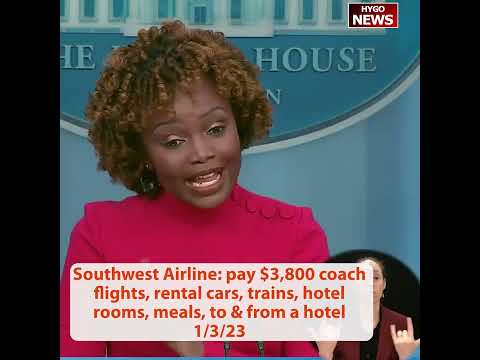
Administration Details Southwest Airlines Customer Obligations: Coach Flights, Rental Cars, Hotels, Meals, $3,800 Reimbursement
On 1/4/2023, a White House official detailed Southwest Airlines’s customer obligations following the company’s massive holiday season meltdown. “All major airlines except for one, which is Southwest, clearly, were able to recover quickly. So Southwest Airlines acknowledged that all cancellations starting December 24th were controllable, in other words, not weather-related,” the official said. “The Airlines assumes responsibility based on Southwest’s prior commitments to customers. The airline must cover rebooking hotel rooms, meals, and transportation to and from a hotel. What’s more, Southwest must make their customers whole by paying for coach flights, rental cars, and trains to get people to their final destinations. And Southwest must return baggage as quickly as possible and reimburse passengers up to $3,800 in provable damage.”
The Southwest Meltdown
The Southwest Airlines crisis had specific characteristics:
December 2022 — Holiday season.
Winter storm — Initial trigger.
System failures — Cascading breakdown.
Thousands stranded — At airports.
Multiple days — Of disruption.
Massive cancellations — Far exceeding others.
The crisis was:
Unusually severe — Among airlines.
Self-inflicted partly — By system issues.
Holiday-timed — Particularly bad.
Nationwide impact — Affecting many.
Economic consequences — Significant.
Southwest was the standout:
All other major airlines — Recovered quickly.
Southwest alone — Continued failing.
System architecture — Older and strained.
Scheduling software — Outdated.
Crew positioning — Problematic.
”All Cancellations Starting December 24th Were Controllable”
The administration cited Southwest’s admission. “Southwest Airlines acknowledged that all cancellations starting December 24th were controllable, in other words, not weather-related,” the official said.
This acknowledgment was important:
“Controllable” — DOT classification.
Not weather — Which would excuse.
Airline responsibility — Acknowledged.
Consumer protections trigger — Activated.
Legal obligations — Clear.
The distinction between:
Weather cancellations — Limited airline obligation.
Controllable cancellations — Airline fully responsible.
System failures — Clear airline fault.
Operational issues — Not natural.
Legal implications — Different treatment.
Southwest’s admission meant:
Customer protections applied — Fully.
Prior commitments binding — On airline.
Federal enforcement possible — With admission.
Customer rights clear — Legally.
Damages available — For claimants.
The Customer Obligations Detail
The administration listed specific obligations:
Rebooking hotel rooms — For stranded passengers.
Meals — During delays.
Transportation to/from hotels — Ground transport.
Coach flights — Alternative flights.
Rental cars — Alternative ground transport.
Trains — Alternative rail.
Baggage return — Expedited.
Reimbursement — Up to $3,800.
Each obligation:
Matched prior commitments — Southwest had made.
Federal-enforceable — DOT authority.
Specific dollar amounts — $3,800 limit.
Comprehensive coverage — Of consequences.
Consumer protection — Priority.
”Prior Commitments to Customers”
The obligations referenced Southwest’s own policies. “The Airlines assumes responsibility based on Southwest’s prior commitments to customers,” the official said.
The prior commitments:
Customer service plan — Published by airline.
Contract of carriage — Legal document.
Customer promises — For controllable cancellations.
Voluntary commitments — Beyond legal minimums.
Now federal-enforceable — Through DOT.
The administration was:
Enforcing Southwest’s own promises — Not new requirements.
Using DOT authority — For enforcement.
Building on prior commitments — Legally.
Protecting consumers — Directly.
Federal role — Appropriate.
The Reimbursement Specifics
The $3,800 figure was notable:
Specific maximum — Per passenger.
“Provable damage” — Required.
Southwest-specific — Maximum.
Passenger burden — To document.
Process complexity — For claims.
For affected passengers:
Documentation required — Receipts needed.
Claim process — Administrative.
Time delays — Before payment.
Burden of proof — On passengers.
Maximum limit — Could exclude some damages.
Many passengers had actual damages exceeding $3,800:
Missed events — Weddings, funerals.
Business impacts — Lost income.
Emotional distress — Not covered.
Time value — Missed.
Various consequences — Cumulative.
The $3,800 cap limited consumer recovery to direct monetary damages.
The Alternative Transportation
The list of alternatives was comprehensive:
Coach flights on other airlines — Primary.
Rental cars — If flights unavailable.
Trains — Rail alternatives.
To final destinations — Not just closer.
Airlines paying — Customers not out-of-pocket.
This was significant:
Comprehensive protection — For passengers.
Cross-modal coverage — Any transportation.
Airline financial responsibility — Fully.
Customer convenience — Priority.
Strong consumer protection — By federal standards.
The Administrative Enforcement
The administration was:
Enforcing these obligations — Through DOT.
Tracking compliance — Actively.
Issuing guidance — To consumers.
Responding to complaints — From passengers.
Monitoring Southwest — For performance.
The administrative role:
Consumer protection — Federal role.
Industry regulation — Over airlines.
Enforcement authority — Clear.
Political visibility — For administration.
Accomplishment claims — Available.
The Political Context
The Southwest crisis provided political opportunity:
Consumer protection role — For administration.
Corporate accountability — Theme.
Working Americans — Affected.
Administration response — Visible.
Political advantage — From action.
Secretary Pete Buttigieg:
Active engagement — With situation.
Public statements — Frequent.
Consumer advocacy — Framing.
Political positioning — Strong.
Media coverage — Extensive.
The administration’s response:
Appropriate — Given crisis.
Politically valuable — For visibility.
Consumer-friendly — Positioning.
Regulatory use — Of authority.
Policy priority — Demonstrated.
The Southwest Response
Southwest’s response included:
Public apologies — From CEO.
Compensation commitments — Beyond required.
System upgrade promises — For future.
Operational reforms — Announced.
Customer outreach — Direct.
Specific Southwest actions:
Reimbursement processing — For claims.
Free flights offered — As goodwill.
System investment — Announced.
Crew policies — Updates.
Customer compensation — Programs.
But:
Damage was done — To reputation.
Customer trust — Shaken.
Competitive disadvantage — Created.
Regulatory scrutiny — Continuing.
Financial impact — Significant.
The Industry Implications
The Southwest crisis had broader implications:
Airline accountability — Spotlighted.
Consumer rights — Emphasized.
Regulatory authority — Demonstrated.
System modernization — Needed.
Crisis preparation — Important.
Other airlines:
Benefited by comparison — Better performance.
Still faced scrutiny — Similarly.
Had to maintain — Customer commitments.
Faced regulatory attention — Increased.
Invested in systems — Preventively.
The Contract of Carriage
Airlines’ contracts of carriage:
Legal documents — Setting customer rights.
Voluntary provisions — Beyond law.
Consumer protections — Varied by airline.
DOT enforcement — Of written terms.
Customer rights — Clarified.
The DOT role:
Enforced written commitments — Of airlines.
Tracked performance — Against standards.
Responded to complaints — Systematically.
Issued guidance — To consumers.
Regulatory pressure — On industry.
The Holiday Travel Context
Holiday travel dynamics:
Peak demand — December through January.
Weather complications — Typical.
Stress on systems — High.
Customer expectations — Important events.
Airline capacity — Stretched.
The Southwest crisis during:
Christmas travel period — Worst timing.
Family gatherings — Missed.
Emotional impact — Multiplied.
Media attention — Maximized.
Political significance — Amplified.
The Consumer Education
The administration was:
Educating consumers — About rights.
Providing specific dollar figures — For claims.
Listing alternative transportation — Options.
Explaining processes — For claims.
Empowering passengers — With information.
Consumer education:
Valuable long-term — Beyond this crisis.
Regulatory accomplishment — For administration.
Consumer advocacy — Role.
Political benefit — From visibility.
Trust building — With public.
The Enforcement Challenge
Enforcement required:
Consumer claims — To be filed.
Documentation — By passengers.
Administrative processing — By Southwest.
DOT oversight — Of compliance.
Political pressure — Continuing.
Many passengers:
Didn’t file claims — Process complexity.
Settled for less — Than entitled.
Lost time — To claims process.
Received partial compensation — Eventually.
Faced delays — In processing.
The Systemic Issues
Southwest’s crisis revealed systemic issues:
Legacy technology — Problematic.
Scheduling complexity — Point-to-point unique.
Crew positioning — Cascading failures.
System limitations — Under pressure.
Investment deficiency — Historical.
Industry-wide lessons:
Technology modernization — Needed.
System redundancy — Important.
Crisis preparation — Essential.
Customer communication — Critical.
Regulatory relationships — Valuable.
Key Takeaways
- The administration detailed Southwest Airlines’s obligations to customers after the company’s holiday season meltdown.
- Southwest acknowledged all cancellations starting December 24th were “controllable” — not weather-related — triggering full airline responsibility.
- Required coverage included: rebooking, hotel rooms, meals, transportation to/from hotels.
- Required alternative transportation: coach flights on other airlines, rental cars, trains to final destinations.
- Required reimbursement up to $3,800 in provable damages under Southwest’s care.
- The obligations were based on Southwest’s own prior commitments to customers, now federally enforceable.
- The administration used the crisis to demonstrate consumer protection role and regulatory authority.
Transcript Highlights
The following is transcribed from the video audio (unverified — AI-generated from audio).
- All major airlines except for one, which is Southwest, clearly, were able to recover quickly.
- Southwest Airlines acknowledged that all cancellations starting December 24th were controllable, in other words, not weather-related.
- The Airlines assumes responsibility based on Southwest’s prior commitments to customers.
- The airline must cover rebooking hotel rooms, meals, and transportation to and from a hotel.
- Southwest must make their customers whole by paying for coach flights, rental cars, and trains to get people to their final destinations.
- Southwest must return baggage as quickly as possible and reimburse passengers up to $3,800 in provable damage under Southwest care.
Full transcript: 135 words transcribed via Whisper AI.