 HYGO News
 Sen Manchin & House Speaker negotiate over cutting spending in exchange for raising the debt limit
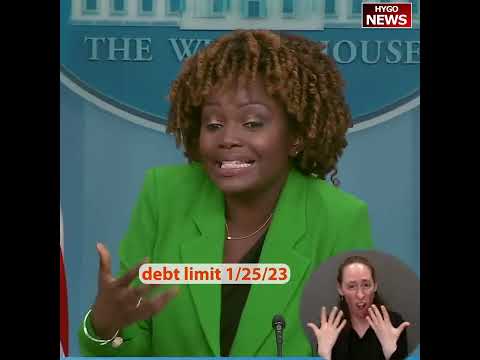
Manchin Meets McCarthy, Wants White House to Negotiate Debt Ceiling — KJP: “Should Be Done Without Conditions”
In January 2023, a reporter asked White House Press Secretary Karine Jean-Pierre about Senator Joe Manchin’s meeting with Speaker Kevin McCarthy and Manchin’s subsequent call for the White House to negotiate. “Senator Manchin, he had a meeting with the House Speaker and reportedly said after that meeting that he wants the White House to negotiate over cutting spending in exchange for raising the debt limit. Has he conveyed that position to the White House and does the White House have any response to Senator Manchin about that?” the reporter asked. KJP maintained the administration’s firm position: “I’ve been asked this question over the last two days in different variations. We see this as a separate matter. We see this very differently and it should be done without conditions. We’ve been very clear about that. So again it should be done without conditions.”
The Manchin Position
Joe Manchin’s position was significant:
Senate Democrat — Key swing vote.
Met with McCarthy — Across aisle.
Negotiation position — Advocated.
Spending cuts — For debt ceiling.
Against administration — Position.
Manchin publicly supporting GOP negotiating position was notable break from administration. As most conservative Senate Democrat, his position carried weight and suggested some Democratic support for GOP framework.
The McCarthy-Manchin Meeting
The cross-aisle meeting:
Speaker McCarthy — New leader.
Senator Manchin — Moderate Democrat.
Debt ceiling focus — Primary.
Bipartisan suggestion — Of framework.
Public statements — Post-meeting.
Meetings between House Republicans and moderate Senate Democrats were part of legislative process. The Manchin-McCarthy meeting suggested some bipartisan framework exploration on debt ceiling was happening.
The Reporter’s Question
Two-part question:
Position conveyed — To White House?
White House response — To Manchin?
Substantive engagement — Sought.
Direct answer — Requested.
Political dynamic — Examined.
The reporter wanted to know both whether Manchin had directly communicated with White House and what administration thought of his position. Both questions were legitimate.
”Asked This Question Over the Last Two Days”
KJP noted pattern. “I’ve been asked this question over the last two days in different variations,” KJP said.
The acknowledgment:
Multiple questioning — Recent.
Same topic — Recurring.
Pattern note — Explicit.
Template response — Coming.
Fatigue signal — Slightly.
KJP was acknowledging the topic’s persistent presence in briefings. Her deflection pattern was being tested repeatedly. The acknowledgment was somewhat weary.
”We See This as a Separate Matter”
KJP’s core position. “We see this as a separate matter. We see this very differently and it should be done without conditions,” KJP said.
The position:
Separate matter — Debt ceiling vs. spending.
Different view — From GOP framework.
“Without conditions” — Core phrase.
Clear commitment — To position.
Consistent line — Administration.
The “separate matter” framing was administration’s defense. Spending cuts and debt ceiling were separate issues, should be handled separately. This reasoning rejected GOP leverage framework.
”Without Conditions”
KJP repeated key phrase. “So again it should be done without conditions. We’ve been very clear about that,” KJP said.
The repetition:
“Without conditions” — Twice.
Core phrase — Administration mantra.
Firm position — Maintained.
No flexibility — Shown.
Political stance — Clear.
“Without conditions” was the administration’s core phrase throughout debt ceiling debate. Repeating it reinforced firm position. Whether it would hold through actual negotiations was different question.
”Whoever Wants to Listen”
KJP’s concluding comment. “We’ll continue to share to share that with whoever wants to listen,” KJP said.
The conclusion:
Verbal repetition — “Share to share.”
Open messaging — To all.
Position repeated — Endlessly.
Whoever listens — Inclusive.
Characteristic conclusion — Template-like.
The “whoever wants to listen” framing was almost plaintive. It suggested that administration had position and was committed to repeating it regardless of whether anyone was persuaded.
The Position Reality
The “no conditions” position reality:
Political posturing — Partly.
Eventually negotiated — Historically.
Leverage preservation — Tactical.
Democratic messaging — Consistent.
Actual flexibility — Behind scenes.
Every prior debt ceiling crisis had been resolved through negotiation. The “no conditions” stance was political posture more than actual policy. Administration would eventually negotiate, but stating so upfront would undermine position.
The Manchin Problem
Manchin publicly supporting GOP framework was problem because:
Party discipline — Broken.
Democratic unity — Undermined.
McCarthy support — Given.
Administration isolated — Somewhat.
Political cover — For GOP.
Manchin’s break made it harder for administration to unify Democrats behind “no conditions” stance. If Democrats were split, McCarthy’s negotiating position was strengthened.
The Senate Dynamics
Senate dynamics:
Democratic majority — 51-49.
Manchin independence — Historical.
Sinema — Also unpredictable.
Leadership pressure — Limited.
Internal tensions — Visible.
With 51-seat majority, every Democratic senator mattered. Manchin and Sinema were particularly independent. Administration couldn’t easily pressure them. Their public statements affected political dynamics.
The House Dynamics
House dynamics:
Narrow GOP majority — 222-213.
McCarthy challenges — From Freedom Caucus.
Committee structure — New.
Legislative priorities — GOP.
Negotiation need — Recognized.
McCarthy faced his own caucus challenges. He had to deliver spending cuts to satisfy Freedom Caucus but also had to negotiate realistically. Finding Democrats willing to support spending deal was helpful.
The Debt Ceiling Deadline
Debt ceiling context:
Hit January 19 — Reached.
Extraordinary measures — In use.
Estimated deadline — Summer 2023.
Treasury calculations — Ongoing.
Political timing — Approaching.
The actual default deadline would come sometime summer 2023. Between January and then, negotiations would have to happen. Both sides were maneuvering for eventual deal.
The Manchin Strategy
Manchin’s strategy:
Position as bipartisan — Broker.
Seek middle ground — On spending.
Force negotiations — To happen.
Maintain independence — From party.
Political positioning — For himself.
Manchin was playing familiar role as bipartisan broker. His position wasn’t just negotiating tactic but genuine policy view. He believed debt ceiling should involve spending discussions.
The Administration Response
Administration response to Manchin:
Public disagreement — Mild.
No personal attack — On him.
Position maintained — Firmly.
Coordination limited — Visible.
Private communication — Possibly.
Administration couldn’t attack Manchin too harshly — they needed him for other votes. But they couldn’t agree with his debt ceiling position either. The result was maintaining their position while not directly criticizing him.
The GOP Messaging
GOP messaging:
Spending cuts needed — Insisted.
Fiscal responsibility — Framed.
Biden irresponsibility — Charged.
Negotiation willingness — Claimed.
Default responsibility — Shifted.
Republicans were positioning themselves as fiscally responsible party. They claimed willingness to negotiate but insisted on spending cuts. This framing was working for their base.
The Public Opinion
Public opinion on debt ceiling:
Default bad — Consensus.
Negotiations — Preferred by many.
Spending cuts — Popular in abstract.
Specific cuts — Often unpopular.
Blame assignment — If default.
Polling suggested public preferred negotiations over default. They generally supported spending cuts in theory but specific cuts were often opposed. This created complex political environment.
The Market Response
Market response was mounting:
Treasury yields — Sensitive.
Equity markets — Monitoring.
Credit default swaps — On US debt.
Financial concerns — Growing.
International worries — Increasing.
As deadline approached, markets would react to political positioning. Current “no conditions” stance was creating market anxiety. Eventually something would need to change.
The Treasury Perspective
Treasury Department position:
Janet Yellen — Secretary.
Extraordinary measures — Used.
Deadline approach — Warning.
Congressional action — Urged.
No default — Essential.
Treasury needed Congress to act to avoid default. Yellen’s public warnings were part of pressure. Treasury technically worked with whatever Congress provided but political dynamics affected timing.
The Historical Comparison
Historical parallels:
2011 crisis — Similar dynamics.
Obama negotiated — Eventually.
Democratic lesson — From 2011.
GOP strategy — Leverage-based.
Pattern — Recurring.
The 2011 situation was closest parallel. Then-VP Biden had led negotiations. Democrats’ current insistence on not negotiating was partly reaction to 2011 experience where negotiations produced poor outcome.
The Eventual Resolution
The eventual resolution:
Fiscal Responsibility Act — June 2023.
Bipartisan deal — Between Biden and McCarthy.
Some spending cuts — Included.
Debt ceiling raised — As needed.
Compromises both sides — Made.
In June 2023, Biden and McCarthy reached deal. Both sides compromised. Administration got debt ceiling raise; GOP got some spending limits. “No conditions” stance was abandoned in negotiations.
The Political Theater
The months between January and June:
Political positioning — Continuous.
Public statements — Firm.
Private discussions — Happening.
Market pressure — Building.
Deadline approach — Inexorable.
Several months of political theater preceded the actual deal. Both sides maintained public positions while behind-scenes work continued. The “no conditions” stance was for public; private reality was different.
The Long-Term Dynamics
Long-term dynamics:
Debt ceiling returns — Cyclically.
Political leverage — Used repeatedly.
Resolution pattern — Eventually negotiated.
Crisis management — Developed.
System design — Flawed.
The debt ceiling as regular crisis point was systemic. Every few years, the same pattern played out. Permanent reform was discussed but never implemented. This was structural issue with current political system.
The Constitutional Question
Constitutional debate:
14th Amendment theory — Some argued.
Public debt — “Shall not be questioned.”
Biden option — Unilateral action.
Courts — Uncertain.
Crisis possibility — Real.
Some scholars argued Biden could bypass ceiling under 14th Amendment. Administration wasn’t embracing this publicly but it existed as option. Whether Biden would take this route if negotiations failed was uncertain.
Key Takeaways
- A reporter asked KJP about Senator Manchin’s meeting with Speaker McCarthy and Manchin’s public support for debt ceiling negotiations.
- Manchin reportedly wanted the White House to negotiate over cutting spending in exchange for raising the debt limit.
- KJP acknowledged topic persistence: “I’ve been asked this question over the last two days in different variations.”
- She maintained firm administration position: “We see this as a separate matter. We see this very differently and it should be done without conditions.”
- KJP repeated: “It should be done without conditions. We’ve been very clear about that.”
- She concluded with characteristic verbal stumble: “We’ll continue to share to share that with whoever wants to listen.”
Transcript Highlights
The following is transcribed from the video audio (unverified — AI-generated from audio).
- Senator Manchin, he had a meeting with the House Speaker and reportedly said after that meeting that he wants the White House to negotiate over cutting spending in exchange for raising the debt limit.
- Has he conveyed that position to the White House and does the White House have any response to Senator Manchin about that?
- I’ll say a couple of things and I’ve been asked this question over the last two days in different variations.
- We see this as a separate matter. We see this very differently and it should be done without conditions.
- We’ve been very clear about that. So again it should be done without conditions.
- We’ll continue to share to share that with whoever wants to listen.
Full transcript: 128 words transcribed via Whisper AI.