 HYGO News
 Rubio: Zelensky Should 'Apologize'; Jennings: 'Put on a Tie, Say Thank You -- He Couldn't Do That'; Dem Agrees
Rubio: Zelensky Should “Apologize”; Jennings: “Put on a Tie, Say Thank You — He Couldn’t Do That”; Dem Agrees
The aftermath of the Trump-Zelensky confrontation produced a remarkable consensus across the political spectrum on March 1-2, 2025. Secretary of State Rubio said Zelensky “should apologize for wasting our time” and that “there was no need to become antagonistic.” CNN’s Scott Jennings delivered the most quoted assessment: “All Zelensky had to do was put on a tie, show up, smile, say thank you, sign the papers, and have lunch. That’s it — and he couldn’t do that.” Even the Washington Post’s Josh Rogin — a defender of Ukraine aid — admitted “I actually agree” with Jennings. Ukrainian-American Rep. Victoria Spartz called Zelensky’s behavior “such a disservice to the Ukrainian people” and “so insulting to the American people.” Press Secretary Leavitt said Zelensky “blew the deal up in his own face.”
Rubio: “He Should Apologize”
Secretary of State Rubio provided the State Department’s assessment in his characteristic direct style. When asked what specifically Zelensky should apologize for, Rubio was explicit.
“Apologize for turning this thing into the fiasco for him that it became,” Rubio said. “There was no need for him to go in there and become antagonistic.”
Rubio identified the specific moment the meeting derailed. “It went off the rails when he said, ‘Let me ask you a question’ to the Vice President — ‘what kind of diplomacy are you talking about?’” Rubio recalled. “Well, this is a serious thing.”
He acknowledged the legitimacy of Zelensky’s grievances while arguing the Oval Office was the wrong venue. “Thousands of people have been killed, thousands. And he talks about all these horrible things that have happened to prisoners of war and children — all true, all bad,” Rubio said. “This is what we’re dealing with here. It needs to come to an end. We are trying to bring it to an end.”
Rubio then described the diplomatic dynamic that Zelensky’s behavior had disrupted. “The way you bring it to an end is you get Russia to the table to talk,” he said. “Attacking Putin, no matter how anyone may feel about him personally, forcing the president into a position where you’re trying to goad him into attacking Putin, calling him names, maximalist demands about Russia having to pay for the reconstruction — all the sorts of things that you talk about in a negotiation.”
He delivered the critical assessment: “When you start talking about that aggressively, and the president’s a deal maker — he’s made deals his entire life — you’re not going to get people to the table. And so you start to perceive that maybe Zelensky doesn’t want a peace deal. He says he does, but maybe he doesn’t.”
Rubio concluded: “I think he should apologize for wasting our time for a meeting that was going to end the way it did.”
Jennings: “Put on a Tie, Show Up, Smile, Say Thank You”
CNN commentator Scott Jennings distilled the entire episode into a single devastating observation.
“All Zelensky had to do today was put on a tie, show up, smile, say thank you, sign the papers, and have lunch,” Jennings said. “That’s it. And he couldn’t do that.”
He then provided the context that made the failure even more inexplicable: “And this followed 10 days of being difficult in private. And now one day of being stupid in public.”
The assessment was brutal in its simplicity. The minerals deal was ready. The lunch was prepared. The signing ceremony was staged. All Zelensky had to do was execute the easiest diplomatic playbook imaginable — express gratitude to the country that had spent $350 billion defending his — and he could not bring himself to do it.
Jennings added the forward-looking concern: “However you feel about why it started, why it’s going on, who’s right and who’s wrong, we can help them in this and come out okay on the other side. And he’s making it hard.”
The Washington Post Agrees
The most surprising reaction came from Josh Rogin of the Washington Post, who had been one of the most consistent voices in mainstream media advocating for continued Ukraine support.
A CNN panelist asked Rogin whether Zelensky had been “antagonized or baited” into the confrontation or whether he had simply been ungrateful.
“Well, I can’t believe I’m about to say this, but I actually agree with Scott,” Rogin said. “And everything that he said was basically right.”
The room reacted: “Wow.”
Rogin acknowledged the social media consequences: “I know I’m going to get killed on social media for admitting that, but so be it.”
The concession from a pro-Ukraine journalist at the Washington Post was arguably more significant than any of the administration’s statements. When the outlet that had been most sympathetic to Zelensky’s position acknowledged that he had handled the meeting poorly, the bipartisan consensus was complete. The debate was no longer about whether Zelensky had been wrong — it was about what came next.
Rep. Spartz: “A Disservice to the Ukrainian People”
Ukrainian-American Congresswoman Victoria Spartz (R-IN) brought a perspective that no other commentator could match. Born in Ukraine, Spartz spoke with the authority of someone who understood both the Ukrainian and American sides of the relationship.
“I don’t even understand why the president of a foreign country would insult the American people and the president of the country that is the only hope to save them from complete destruction,” Spartz said.
She directed her criticism at Zelensky’s motives: “It’s such a disservice to the Ukrainian people — to play hero and politics and try to increase his rating that miserably fell in the country because he failed to defend his country.”
Spartz’s assessment that Zelensky was playing to domestic Ukrainian politics rather than engaging genuinely with the peace process added a dimension that non-Ukrainian commentators could not provide. If Zelensky’s confrontational posture was designed to boost his domestic approval rating rather than to advance Ukraine’s interests, then his behavior was not merely diplomatic malpractice but a cynical sacrifice of his country’s best chance at peace for personal political gain.
“Being so insulting to the American people after how much was done by us for Ukraine and for Europe — I can’t believe it. This is outrageous,” Spartz concluded.
Leavitt: “He Blew the Deal Up in His Own Face”
Press Secretary Leavitt provided the administration’s closing assessment.
“President Zelensky was in the White House today and had a real chance to sign an economic agreement that would have been great for the American people — to recoup our tax dollars — and great for the Ukrainian people to rebuild their country,” Leavitt said. “And unfortunately, he blew the deal up in his own face.”
She noted that Zelensky had refused to apologize even afterward: “His comments on Brett Baier, refusing to apologize for disrespecting the president and the American people in the Oval Office” had reinforced the administration’s assessment that he was “not in the right mindset to negotiate peace.”
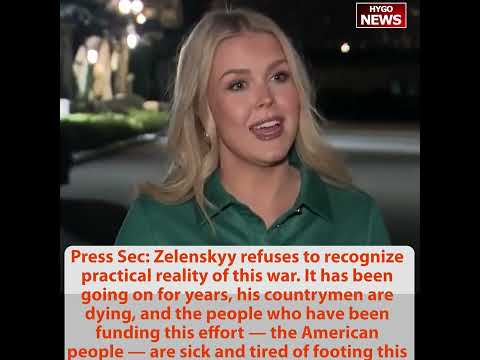
Leavitt connected the episode to the broader framing: “He refuses to recognize the practical reality of this war. It has been going on for years, his countrymen are dying, and the people who have been funding this effort — the American people — are sick and tired of footing this bill.”
Key Takeaways
- Secretary Rubio said Zelensky “should apologize for wasting our time” and that the meeting “went off the rails” when Zelensky challenged Vance’s diplomacy.
- CNN’s Jennings delivered the defining assessment: “All Zelensky had to do was put on a tie, show up, smile, say thank you, sign the papers, and have lunch — and he couldn’t do that.”
- Washington Post’s Josh Rogin said “I actually agree with Scott — everything he said was basically right,” marking bipartisan consensus that Zelensky had mishandled the meeting.
- Ukrainian-American Rep. Spartz called Zelensky’s behavior “a disservice to the Ukrainian people” driven by domestic politics rather than national interest.
- Leavitt said Zelensky “blew the deal up in his own face” and “refuses to recognize the practical reality” that “the American people are sick and tired of footing this bill.”