 HYGO News
 Scalise: jettison Pelosi not allowing rank-and-file members the ability to have an input
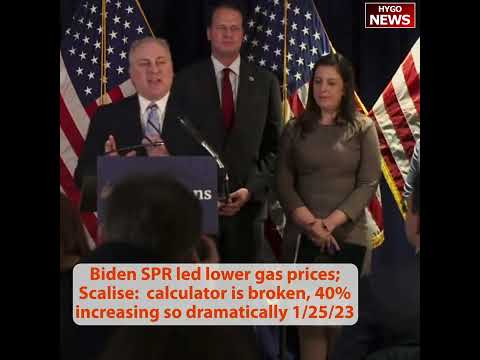
House Majority Leader Scalise: “Jettison the Pelosi Approach” — Biden’s Calculator Is “Broken” on Gas Prices
In January 2023, House Majority Leader Steve Scalise addressed both procedural reforms under new GOP majority and Biden administration veto threat. “We wanted to jettison the approach that Speaker Pelosi took where she shut down the ability for even committee chairs to be involved in addressing problems. Bills were written out of her office. She wouldn’t even let chairman amend major pieces of legislation and committees, not allowing rank and file members the ability to have an input in how the process works,” Scalise said. On Biden’s veto threat: “In the veto threat, he actually said that his policies of rating SPR have led to lower gas prices. Now, I don’t know if the calculator is broken at the White House, but since Joe Biden’s been in office, we’ve seen a 40% increase in gas prices. It’s not lowering, it’s actually increasing so dramatically that it’s hurting hard work and families.”
The Procedural Reform
House GOP procedural reform:
Open rules — Implemented.
Amendment opportunities — Restored.
Committee chair authority — Enhanced.
Rank and file input — Allowed.
Process reform — From leadership.
The procedural changes were part of McCarthy’s deal with Freedom Caucus. Open rules, more amendments, and reduced Speaker power were concessions to win Speakership. Scalise framed them as positive reforms.
The Pelosi Criticism
Pelosi-era criticism:
Bills written in Speaker’s office — Characterized.
Chairmen bypassed — Process.
Amendments limited — Often.
Closed rules common — Under Pelosi.
Centralized power — Speaker-concentrated.
The criticism of Pelosi’s approach had some basis. Major legislation had often been crafted centrally with limited committee input. This had been efficient but democratically criticized.
”Rank and File Members”
The rank and file framing:
Regular members — Democratic argument.
Participation enhanced — Restored.
Process democratization — Claimed.
Political messaging — Effective.
Reform brand — Established.
By framing changes as helping rank and file, Scalise was making democratic procedural argument. This appealed to broader House members beyond leadership.
The Biden Veto Threat
Biden’s veto threat:
Issued previous day — Specific.
Against SPR bill — Topic.
Administration position — Formalized.
Political battle — Escalated.
Veto power — Wielded.
The formal veto threat was administrative escalation. It made Biden’s position official and committed him to rejecting legislation. This created clear political confrontation.
”Read the Veto Threat”
Scalise invited scrutiny. “It’s important that you read the veto threat to understand just how misguided President Biden’s approach to energy is,” Scalise said.
The framing:
Reading recommended — To understand.
“Misguided” — Biden approach.
Evidence cited — From veto statement.
Administration’s words — Used against them.
Attack technique — Effective.
Using administration’s own veto statement against them was effective tactic. If the veto statement contained claims that could be disputed, it became source of attack material.
”Lower Gas Prices” Claim
The Biden claim. “In the veto threat, he actually said that his policies of rating SPR have led to lower gas prices,” Scalise said.
The claim quoted:
Administration position — Policies lowered prices.
SPR drawdown — Credit claimed.
Price impact — Asserted.
Policy vindication — Attempted.
Political messaging — Reinforced.
The administration had consistently claimed SPR drawdown lowered gas prices. In veto statement, they formalized this claim. Scalise was exploiting the claim for political attack.
”Calculator Is Broken”
Scalise’s mocking response. “I don’t know if the calculator is broken at the White House,” Scalise said.
The mockery:
“Calculator broken” — Mockery.
Basic math — Questioned.
Administration capacity — Mocked.
Humor in attack — Effective.
Memorable phrase — Created.
The “calculator broken” framing was rhetorical device. It suggested administration couldn’t even do basic math on its own claims. This was effective political mockery.
”40% Increase in Gas Prices”
The counter-data. “Since Joe Biden’s been in office, we’ve seen a 40% increase in gas prices,” Scalise said.
The statistic:
40% increase — Specific number.
Biden tenure — Since taking office.
Base price — Pre-Biden.
Political framing — Comparison.
Attack data — Strong.
The 40% figure was roughly accurate. Gas prices were higher under Biden than under Trump. The framing contradicted Biden’s “lowered prices” claim by using different timeframe.
The Time Frame Differences
Different time frames:
Biden claim — Vs. summer 2022 peak.
Scalise claim — Vs. pre-Biden baseline.
Both — Factually supportable.
Political manipulation — Both sides.
Honest comparison — Complicated.
Both claims could be factually accurate with different baselines. Biden was right that prices were lower than summer 2022 peak. Scalise was right that prices were higher than pre-Biden. Each framed data to their advantage.
”Hurting Hard Work and Families”
The impact framing. “It’s actually increasing so dramatically that it’s hurting hard work and families,” Scalise said.
The framing:
Families suffering — From prices.
Economic impact — Personal.
Voter concerns — Direct.
Policy blame — Biden.
Political resonance — Strong.
By focusing on family impact, Scalise was making issue personal. Gas prices affected household budgets directly. This framing connected policy to voter experience.
The House Majority Leader Role
Scalise’s role:
Majority Leader — Second ranking.
Floor management — Primary.
Legislation — Shepherded.
Party messaging — Delivered.
Coordination — With Speaker.
As Majority Leader, Scalise was responsible for floor action and legislative strategy. His messaging reflected coordinated GOP leadership position.
The Floor Speech Context
Floor speech purposes:
Official record — Permanent.
Media coverage — Intended.
Base energizing — Target.
Opposition framing — Attacking.
Policy support — Building.
Floor speeches served multiple purposes beyond immediate debate. They became official record and media content. Scalise was maximizing these multiple purposes.
The Veto Power Context
Biden’s veto power:
Constitutional authority — Executive.
Political tool — Used.
Override requirement — 2/3.
GOP majority insufficient — Alone.
Democratic vote needed — For override.
With narrow House majority, GOP couldn’t override vetoes without Democratic support. Biden’s veto power was real constraint on GOP legislative ambition. Legislation was therefore often messaging rather than policy.
The Open Rule Implementation
Open rule implementation:
Amendment votes — Multiple.
Member participation — Enhanced.
Process length — Increased.
Democratic appearance — Created.
Political advantages — For members.
Open rules had been implemented on SPR bills. This allowed multiple amendments to be offered. Members could participate more actively. The process showed GOP commitment to procedural reform.
The Calculator Metaphor
The “broken calculator” metaphor:
Memorable — Sticky.
Viral potential — For clips.
Administrative mockery — Effective.
Political attack — Sharp.
Simple message — Clear.
Good political rhetoric often produces memorable phrases. “Broken calculator” was likely to be reused and clipped. This was effective attack rhetoric.
The Economic Frame
Economic framing:
Family impact — Central.
Gas prices — Specific.
Broader prices — Implied.
Biden blame — Direct.
GOP alternative — Implied.
By focusing on economic impact on families, Scalise was connecting to broader GOP economic messaging. Gas prices were symbol of larger economic concerns. The framing was consistent with party themes.
The Policy Substance
Policy substance of GOP position:
SPR restoration — Goal.
Domestic production — Increase.
Energy independence — Goal.
Consumer prices — Reduce.
Strategic reserve — Maintain.
The substantive GOP position had policy coherence. SPR restoration, domestic production, energy independence, price reduction, and reserve maintenance were integrated policy framework.
The Energy Crisis Context
Energy context:
Russia war — Disruptive.
Global markets — Affected.
U.S. policy — Responding.
Prices elevated — Still.
Political attention — High.
The broader energy environment created context for specific bill debates. Russia-Ukraine war had disrupted global energy markets. Administration and Congress both had to respond to these disruptions.
The Biden Administration Defense
Administration defense:
Gas prices down — From peak.
SPR helped — Claimed.
Production high — Actually.
Climate goals — Maintained.
Balanced approach — Described.
Administration would defend its approach on multiple grounds. Prices had come down from peaks. SPR had contributed (debated amount). Production was actually high. Climate goals were being pursued. Balance was claimed.
The Political Theater
Political theater elements:
Floor speeches — Dramatic.
Legislative battles — Symbolic.
Veto threats — Political.
Mockery — Used.
Base appeals — Continuous.
The entire debate had theatrical elements. Actual policy change was unlikely through this legislation. But political messaging was real and intended. Both sides performed for multiple audiences.
The 2024 Election Setup
2024 setup:
Energy — Major issue.
Gas prices — Voter concern.
Biden record — Being built for attack.
Republican alternatives — Being offered.
Campaign ammunition — Developing.
Every SPR debate and veto threat contributed to 2024 campaign ammunition. Both sides were building records for the coming election.
The Procedural Significance
Procedural changes significance:
Member empowerment — Real.
Speaker power — Reduced.
Legislative process — Changed.
Committee role — Enhanced.
Democratic improvement — Some would argue.
The procedural changes, whatever their origins in McCarthy’s deal-making, represented significant reforms to House operation. They would affect how future legislation was developed.
The Energy Policy Debate
Energy policy debate:
Multiple dimensions — Complex.
Short-term prices — Consumer focus.
Long-term transition — Climate.
Security concerns — Strategic.
Economic competitiveness — Industrial.
The debate encompassed multiple complex issues. Reducing it to gas prices was political simplification. Both sides were engaging in such simplification for political effectiveness.
Key Takeaways
- House Majority Leader Steve Scalise announced procedural reform: “Jettison the approach that Speaker Pelosi took where she shut down the ability for even committee chairs to be involved.”
- He criticized Pelosi approach: “Bills were written out of her office.”
- On Biden veto threat, Scalise used effective rhetoric: “I don’t know if the calculator is broken at the White House.”
- Scalise cited data: “Since Joe Biden’s been in office, we’ve seen a 40% increase in gas prices.”
- He framed impact: “It’s actually increasing so dramatically that it’s hurting hard work and families.”
- The speech combined procedural reform messaging with economic attack lines against Biden administration.
Transcript Highlights
The following is transcribed from the video audio (unverified — AI-generated from audio).
- We wanted to jettison the approach that Speaker Pelosi took where she shut down the ability for even committee chairs to be involved in addressing problems.
- Bills were written out of her office. She wouldn’t even let chairman amend major pieces of legislation and committees, not allowing rank and file members the ability to have an input in how the process works.
- The president issued a veto threat on this bill yesterday. It’s important that you read the veto threat to understand just how misguided President Biden’s approach to energy is.
- In the veto threat, he actually said that his policies of rating SPR have led to lower gas prices.
- I don’t know if the calculator is broken at the White House, but since Joe Biden’s been in office, we’ve seen a 40% increase in gas prices.
- It’s not lowering, it’s actually increasing so dramatically that it’s hurting hard work and families.
Full transcript: 164 words transcribed via Whisper AI.