 HYGO News
 Q: you told me “The search is complete', But since then more docs have found. still confident in
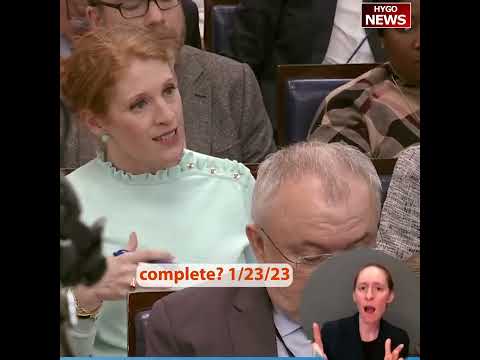
Reporter Confronts KJP: “On January 12th You Told Me Search Is Complete” — But More Documents Keep Being Found
In January 2023, a reporter sharply confronted White House Press Secretary Karine Jean-Pierre about her previously-stated “search is complete” claim, which had been contradicted by subsequent document discoveries. “On January 12th in response to my question, you told me the search is complete. He, the president, is confident in this process. But since then, the searches have continued. More documents have found. Is the president still confident in this process and how his lawyers have carried out the search for material in his residence?” the reporter asked. KJP’s response defended the approach: “He’s confident in this process. And my colleague has talked about this. This is an ongoing process. And we’ve continued to provide the information that we’ve had at the time. Anything else, anything specific underlying issues on this or questions that you may have, I would refer you to the White House Counsel’s Office.” The exchange highlighted a specific factual issue — KJP’s earlier “complete” claim contradicted by subsequent events.
The January 12 Statement
The reporter had specific date. “On January 12th in response to my question, you told me the search is complete,” the reporter said.
The specific reference:
Date — January 12, 2023.
Reporter’s question — Prior.
KJP response — Documented.
“Search is complete” — Specific claim.
Public record — Established.
The reporter was holding KJP accountable for a specific prior statement. Administrative statements at specific dates were part of public record. The “search is complete” claim on January 12 could be directly compared with subsequent events.
The Subsequent Events
Events after January 12:
January 14 — Additional documents reported at Wilmington.
January 20 — FBI search of Wilmington.
More documents found — In FBI search.
Ongoing discoveries — Pattern.
“Complete” contradicted — By events.
The claim that the search was complete was directly contradicted by what happened afterward. More documents were found. FBI conducted new search. The “complete” characterization was either premature or inaccurate.
”President Confident in This Process”
The reporter quoted KJP’s previous confidence claim. “You told me the search is complete. He, the president, is confident in this process,” the reporter said.
The quote:
Confidence claim — Prior.
Process confidence — Biden’s.
Administrative assertion — Public.
Now testable — Against events.
Credibility stake — Real.
The “confidence in process” claim was now being tested. If Biden had been confident in a process that was generating ongoing discoveries, either the process was poor or the confidence was misplaced. Either interpretation was problematic.
The Reporter’s Precision
The reporter was precise:
Specific date cited — January 12.
Exact prior response — Quoted.
Current contradictions — Noted.
Confidence question — Repeated.
Administrative accountability — Sought.
This was high-quality journalism. Holding spokespeople accountable for specific prior statements was legitimate function. The precision prevented deflection to vague generalities.
”He’s Confident in This Process”
KJP repeated the claim. “He’s confident in this process,” KJP said.
The repetition:
Same claim — As before.
No adjustment — For evidence.
Confidence maintained — Nominally.
Template response — Deployed.
Evidence ignored — Deliberately.
Despite subsequent events contradicting the “complete” claim and challenging “confidence” in process, KJP repeated the confidence assertion. This was stubborn messaging rather than responsive engagement.
”My Colleague Has Talked About This”
KJP referenced others. “And my colleague has talked about this,” KJP said.
The reference:
Colleague (likely Sams) — Deployed.
Outside briefing — Statements.
Responsibility distributed — Among spokespeople.
Ownership shared — Messaging.
Standard pattern — Used.
Referring to colleagues was typical deflection. It suggested that the topic was being covered by others, without specifying what they had said. This was information management technique.
”This Is an Ongoing Process”
KJP acknowledged ongoing nature. “This is an ongoing process,” KJP said.
The acknowledgment:
Ongoing process — Contradicts “complete.”
Implicit correction — Of prior claim.
Current reality — Admitted.
Previous statement — Not addressed directly.
Quiet revision — Of characterization.
The “ongoing process” framing was implicit acknowledgment that the previous “complete” claim was wrong. But KJP didn’t explicitly address or correct the earlier statement. The correction was buried in new framing.
”Information We’ve Had at the Time”
KJP referenced timing. “And we’ve continued to provide the information that we’ve had at the time,” KJP said.
The framing:
Time-specific information — Provided.
Knowledge evolved — Over time.
Changes explained — By new discoveries.
No malicious — Withholding.
Due diligence — Implied.
This framing tried to justify the contradictory claims through temporal change. At each moment, administration said what it believed was true. As new information emerged, the story updated. This was defensible framing if the sequence was genuinely discovery-based.
The Credibility Question
Credibility issues remained:
Claims made confidently — Each time.
Events contradict — Repeatedly.
Pattern emerges — Of premature claims.
Trust erodes — Naturally.
Future claims — Treated skeptically.
Even if each claim was accurate at the moment made, the pattern of claims being contradicted eroded credibility going forward. When administration said something “complete” now, reasonable observers would discount the claim.
The Counsel Deflection
KJP deflected as usual. “Anything else, anything specific underlying issues on this or questions that you may have, I would refer you to the White House Counsel’s Office,” KJP said.
The deflection:
“Anything else” — Broad.
“Specific underlying issues” — Scope.
Counsel referral — Standard.
Pattern maintained — Consistently.
Engagement avoided — On specifics.
Despite the specific challenge about her prior statement, KJP didn’t engage substantively. Instead, standard deflection was deployed. The Counsel referral was inappropriate for the question about KJP’s own prior statement.
The Process Confidence Analysis
What “confidence in process” meant:
Process definition — Document search.
Lawyer-led — Search.
Voluntary — Cooperation.
Iterative discovery — Emerging.
Pattern concerning — Nonetheless.
Biden’s legal team had been conducting searches of his properties. The process had produced ongoing discoveries. Whether this was evidence of thoroughness (finding everything) or inadequacy (missing things initially) was interpretive.
The Trump Comparison Again
Trump comparison remained relevant:
Trump documents — Found during search.
Different process — Warrant-based.
Political framing — Different.
Both problematic — Arguably.
Biden positioning — Defensive.
Biden team’s cooperation contrasted with Trump’s reported resistance to DOJ. But cooperation hadn’t prevented ongoing discoveries. The comparison had multiple dimensions — cooperation vs. process quality vs. ultimate findings.
The Messaging Strategy Strain
The messaging strategy was under strain:
Confidence claims — Contradicted.
“Complete” characterizations — Wrong.
“Takes seriously” — Template empty.
Counsel referrals — Dead-ends.
Pattern unsustainable — Long-term.
Each element of the messaging strategy was showing strain. The contradictions were accumulating. The template was becoming more hollow. The deflections were more obvious. A strategic adjustment was needed but wasn’t occurring.
The Document Discovery Pattern
Document discoveries:
Penn Biden Center — November.
Wilmington first — December/January.
Wilmington more — Subsequent.
FBI search — January 20.
Pattern — Multiple locations, multiple discoveries.
The pattern of discoveries across multiple locations over time undermined any “complete” or “contained” framing. Each new discovery extended the story. The cumulative effect was significant political damage.
The Public Perception
Public perception was shifting:
Initial — Isolated incident view.
Emerging — Broader pattern.
Current — Systemic concern.
Future — Uncertain.
Trend — Negative for administration.
As discoveries continued, public perception shifted from “single instance to deal with” to “pattern of concerning behavior.” This shift was politically costly. Polls were beginning to show increased skepticism.
The Ian Sams Deployment
Ian Sams’s role continued:
Classified documents spokesperson — Specialized.
Press engagement — Handling.
KJP deflection target — For referrals.
Also deflecting — Similar patterns.
Buffer function — For KJP.
Sams served as buffer between KJP and documents questions. But his responses were also deflections. The system had two layers of non-response rather than one. This was process elaboration without substance improvement.
The Administrative Confidence Claims
The “confidence” messaging was becoming notable:
Biden confident — In process.
Administration confident — In handling.
Counsel confident — In approach.
Reality contradicting — Claims.
Credibility gap — Growing.
The repeated “confidence” claims despite ongoing problems created credibility gap. Confident statements were becoming harder to believe. Each new discovery undercut confidence claims further.
The January 12 Baseline
January 12 was significant date:
Hur appointment — Day.
Special Counsel — Named.
Major escalation — Moment.
Administrative statements — From that day.
Baseline established — For tracking.
KJP’s statements on January 12 when Hur was appointed set a baseline. “Search is complete” and “confident in process” were part of the appointment-day messaging. These statements became testable against subsequent events.
The Strategic Communication Limits
Strategic communication had limits:
Pre-planned messaging — Couldn’t anticipate all events.
Template responses — Couldn’t adapt.
Discipline — Couldn’t substitute for accuracy.
Credibility — Required responsiveness.
Strategy updates — Necessary eventually.
The administration’s approach of sticking to planned messaging regardless of events was losing effectiveness. Events were outpacing the script. Updates to messaging weren’t happening quickly enough.
The Sustained Pattern
The sustained pattern showed:
Weeks of deflection — Continuing.
Multiple developments — Each deflected.
Same templates — Deployed.
Media fatigue — Setting in.
Administrative consistency — Maintained.
The administration’s commitment to the pattern was admirable in discipline terms but problematic in effectiveness. Sustained deflection without adaptation was producing sustained criticism. The cost-benefit equation was shifting unfavorably.
Key Takeaways
- A reporter confronted KJP about her January 12 statement: “You told me the search is complete. He, the president, is confident in this process.”
- The reporter noted the contradiction: “But since then, the searches have continued. More documents have found.”
- KJP repeated the confidence claim: “He’s confident in this process.”
- She shifted framing to acknowledge reality: “This is an ongoing process. And we’ve continued to provide the information that we’ve had at the time.”
- KJP didn’t directly address or correct her earlier “complete” characterization.
- She deflected follow-ups: “I would refer you to the White House Counsel’s Office” — despite the question being about her own prior statement.
Transcript Highlights
The following is transcribed from the video audio (unverified — AI-generated from audio).
- On January 12th in response to my question, you told me the search is complete.
- He, the president, is confident in this process. But since then, the searches have continued. More documents have found.
- Is the president still confident in this process and how his lawyers have carried out the search for material in his residence?
- He’s confident in this process. And my colleague has talked about this. This is an ongoing process.
- And we’ve continued to provide the information that we’ve had at the time.
- Anything else, anything specific underlying issues on this or questions that you may have, I would refer you to the White House Counsel’s Office.
Full transcript: 110 words transcribed via Whisper AI.