 HYGO News
 Q: why now is finally right time to southern border? Biden: Because GOPs not serious, wait Court
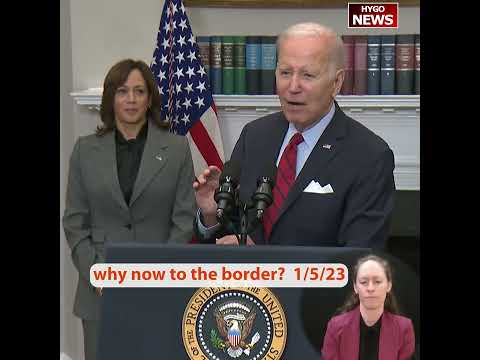
Biden on Border Visit Timing: “Because Republicans Haven’t Been Serious” — Waited for Title 42 Supreme Court Decision
On 1/5/2023, President Biden responded to a reporter’s question about why he was finally visiting the southern border after nearly two years of avoidance. A reporter asked: “Now is finally the right time to visit the southern border? Republicans have been calling on you to do this in the beginning.” Biden responded: “Because Republicans haven’t been serious about this at all. Come on. They haven’t been serious about this at all.” He then provided a procedural explanation: “I wanted to make sure that I knew what the outcome, at least the near outcome was on Title 42 before I went down… I don’t like Title 42. And so I wanted to make sure there was a rational way in which we could begin to announce.” Biden added the Supreme Court’s ruling timeline expected in “probably not till June in that range.”
The Context of Finally Visiting
Biden’s first border visit:
January 8, 2023 — El Paso trip.
Nearly two years — After taking office.
Sustained pressure — Led to visit.
Limited scope — Brief and managed.
Political necessity — Not enthusiasm.
Republican criticism:
Calling for border visit — For two years.
Accusations of detachment — Sustained.
Border state governors — Demanding attention.
Political weapon — Used regularly.
Biden resistance — Until now.
The “finally” framing:
Reporter acknowledgment — Of pattern.
Political reality — Visit was delayed.
Implied criticism — Of delay.
Substantive question — About timing.
Expected answer — About reasoning.
”Because Republicans Haven’t Been Serious”
Biden’s primary response blamed Republicans. “Because Republicans haven’t been serious about this at all. Come on. They haven’t been serious about this at all,” Biden said.
Biden’s response:
Deflected to Republicans — From reasoning.
Double repetition — For emphasis.
“Come on” — Verbal response.
Dismissive of criticism — About delay.
Political attack — Rather than explanation.
The “not serious” framing:
Standard administration line — About Republicans.
Political characterization — Of opposition.
Defensive positioning — For own inaction.
Blame displacement — From administration.
Rhetorical response — To logical question.
But this didn’t answer the question:
Why now — If Republicans still not serious.
What changed — In seriousness.
Why waited — Given constant criticism.
Administrative reasoning — Required.
Personal explanation — From Biden.
Blaming Republicans for Biden’s own decision timing:
Logically problematic — Republicans didn’t control Biden’s schedule.
Administration choice — To visit now vs. earlier.
Presidential decision — About personal engagement.
Political calculation — Independent of opposition.
Blame misplacement — Rhetorically.
The Title 42 Reasoning
Biden provided procedural reasoning. “I wanted to make sure that I knew what the outcome, at least the near outcome was on Title 42 before I went down,” Biden said.
The Title 42 reasoning:
Timing linked to policy — Clear connection.
Pending Supreme Court — Decision.
Administrative planning — Coordinated.
Practical consideration — For visit content.
Logical timing — Argued.
This reasoning suggested:
Biden wanted clarity — Before visiting.
Policy uncertainty — Complicated visits.
Communication needs — Required clarity.
Administrative coordination — Important.
Visit timing — Policy-dependent.
But this reasoning had issues:
Title 42 had been ongoing — For nearly two years.
Uncertainty existed — Throughout.
Biden hadn’t visited — In that time.
Policy clarity — Not required for visit.
Timing connection — Post-hoc rationalization.
Previous opportunities:
Multiple border state trips — Without border stops.
Various policy moments — Without visits.
Pressure points — Not followed by visits.
Political windows — Not used.
Pattern of avoidance — Established.
”I Don’t Like Title 42”
Biden expressed his policy view. “I don’t like Title 42. And so I wanted to make sure there was a rational way in which we could begin to announce,” Biden said.
The Title 42 position:
Administration opposition — Clear.
Legal challenges — Throughout.
Policy objection — Stated.
Rational end — Desired.
Political positioning — Against policy.
But Biden’s position:
Opposed Title 42 — Supposedly.
Ended only by courts — Eventually.
Administration attempts — To end blocked.
Supreme Court intervention — Continuing.
May 2023 actual end — After court resolution.
The tension:
Administration against — Publicly.
Administration benefited — Privately.
Court intervention — Providing cover.
Policy continuation — Under legal shield.
Political convenience — Despite stated opposition.
The Supreme Court Timing
Biden referenced Court timing. “Probably not till June in that range,” Biden said.
The June 2023 expectation:
Supreme Court decision — Anticipated.
Final resolution — On Title 42.
Policy clarity — Would come.
Administrative timing — Affected.
Political calendar — Considered.
The actual resolution:
Case became moot — As public health emergency ended.
Title 42 ended — May 11, 2023.
Court didn’t fully rule — On merits.
Administration continued — Other policies.
Regional approach — Developed.
Biden’s “June” estimate:
Roughly accurate — Timing.
Court deliberation — Was ongoing.
Final answer — Eventually came.
Policy transition — Followed.
Administrative planning — Required.
”I Couldn’t Wait”
Biden said he couldn’t wait. “I couldn’t wait once the Supreme Court ruled that they’re not going to make the final decision on Title 42 for some time,” Biden said.
The “couldn’t wait” framing:
Implied urgency — For visit.
Court uncertainty — As factor.
Decision made — To proceed.
Administrative response — To situation.
Timing rationalized — Post-hoc.
But Biden had:
Waited nearly two years — Already.
Multiple opportunities — To visit.
Various policy moments — Passed.
Pressure sustained — Without action.
“Couldn’t wait” — Questionable.
The pattern:
Sustained avoidance — For years.
Court creates window — Politically.
Sudden urgency — Emerges.
Political necessity — Finally acknowledged.
Framing as organic — Rather than forced.
The Political Reality
The actual political drivers:
Republican House control — Starting January.
Hearings planned — On border.
Political accountability — Increasing.
2024 considerations — Emerging.
Democratic pressure — Growing.
Media coverage — Sustained.
These factors:
Forced the visit — Effectively.
Not Title 42 timing — Specifically.
Not Republican seriousness — Ultimately.
Political calculation — Primary.
Damage control — Secondary.
The Biden explanation:
Focused on procedural — Rather than political.
Avoided admitting — Forced timing.
Blamed Republicans — For continuing issues.
Claimed strategic timing — Retrospectively.
Managed narrative — For coverage.
The El Paso Trip
The actual January 8 trip:
El Paso location — Strategic choice.
Brief duration — Few hours.
Managed exposure — To chaos.
Official meetings — With local officials.
No direct migrant contact — Controlled.
El Paso was chosen because:
Democratic mayor — Accepting.
Less chaotic — Than other areas.
Infrastructure exists — For presidential.
Political manageable — For coverage.
Symbolic value — As border.
The trip details:
Press pool access — Limited.
Photo opportunities — Controlled.
Political messaging — Coordinated.
Brief engagement — Tactical.
Political checkmark — Achieved.
The Follow-Up to Mexico
After El Paso, Biden went to Mexico:
North American Leaders’ Summit — In Mexico City.
Previously scheduled — Meeting.
El Paso combined — With trip.
Trip efficiency — Multiple purposes.
Limited border exposure — Minimized.
The combined trip:
Justified border stop — Through Mexico visit.
Reduced political isolation — Of border visit.
Efficient scheduling — Politically.
Multiple objectives — In single trip.
Press coverage focus — Varied.
The Question’s Pointed Nature
The reporter’s question was sharp:
“Now is finally” — Acknowledging delay.
“The right time” — Implying choice.
“Republicans calling in beginning” — Prior criticism.
Implicit critique — Of timing.
Required explanation — From Biden.
Biden’s response:
Defensive — From start.
Deflecting to Republicans — First.
Procedural reasoning — Second.
Policy views — Third.
Court timing — Fourth.
Each element:
Avoided personal choice — Acknowledgment.
Externalized factors — For delay.
Administrative framing — Rather than personal.
Political positioning — Maintained.
Accountability limited — Through framing.
The Border Context January 2023
By January 2023:
Title 42 continuing — Under court stay.
Migrant numbers high — Despite policy.
Border state concerns — Intensifying.
Republican House taking over — Imminent.
Political pressure — Mounting.
The visit context:
After holiday season — Timing.
Before Republican House — Political.
During court consideration — Legal.
Amid ongoing crisis — Operational.
Political necessity — Forced.
The Biden Explanations
Biden offered multiple explanations:
Republican seriousness — Questionable logic.
Title 42 decision timing — Procedural.
Supreme Court — Waiting.
Policy clarity — Desired.
“Couldn’t wait” — Urgency.
These explanations:
Didn’t fully cohere — Logically.
Conflicted with pattern — Of avoidance.
Retrospective rationalization — Apparent.
Political construction — Of narrative.
Standard deflection — Techniques.
The Press Conference Context
Biden was holding a press conference:
After El Paso visit — Presumably.
Press engagement — Occurring.
Questions asked — Substantively.
Reporter persistence — Evident.
Administration pressure — Navigated.
The exchange:
Part of broader briefing — Longer conversation.
Substantive question — Deserved answer.
Biden deflection — Observed.
Multiple issues covered — In discussion.
Press patience — Required.
The 2024 Implications
The visit had 2024 implications:
Biden border engagement — On record.
Political response — To criticism.
Republican attack lines — Partially addressed.
Campaign messaging — Affected.
Voter perception — Impacted.
By 2024:
Visit would be cited — As engagement.
Limited visit — Could be criticized.
Subsequent visits — Rare.
Pattern continued — Largely.
Political utility — Variable.
The Sustained Pressure Effect
The pressure-visit pattern:
Criticism sustained — For years.
Eventually forced action — Minimal.
Political response — Required.
Continued criticism — Despite visit.
Incremental engagement — At best.
This pattern suggested:
Administration preferred avoidance — Structurally.
Pressure required — For action.
Minimum engagement — When forced.
Strategic timing — Maintained.
Political management — Prioritized.
Key Takeaways
- Biden responded to a reporter’s question about why he was “finally” visiting the southern border after nearly two years.
- Biden’s primary response blamed Republicans: “Because Republicans haven’t been serious about this at all.”
- He provided procedural reasoning: “I wanted to make sure that I knew what the outcome, at least the near outcome was on Title 42 before I went down.”
- Biden stated his position: “I don’t like Title 42.”
- He cited Supreme Court timing: “Probably not till June in that range” for the final decision.
- The explanations retrospectively rationalized a visit that had been sustained under pressure rather than strategically timed.
- The January 8 El Paso trip was brief, managed, and largely symbolic — meeting the minimum political requirement for border engagement.
Transcript Highlights
The following is transcribed from the video audio (unverified — AI-generated from audio).
- Now is finally the right time to visit the southern border? Republicans have been calling on you to do this in the beginning.
- Because Republicans haven’t been serious about this at all. Come on.
- I wanted to make sure that I knew what the outcome, at least the near outcome was on Title 42 before I went down.
- I don’t like Title 42. And so I wanted to make sure there was a rational way in which we could begin to announce.
- I couldn’t wait once the Supreme Court ruled that they’re not going to make the final decision on Title 42 for some time.
- Probably not till June in that range.
Full transcript: 139 words transcribed via Whisper AI.