 HYGO News
 Q: why Biden I'm suggesting worth being looked at Musk/Twitter? A: defer to ...
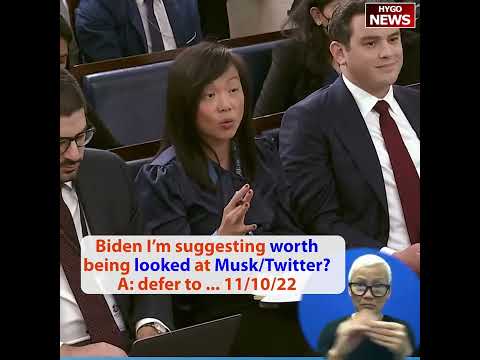
Reporter Asks Why Biden Suggested Musk’s Twitter Acquisition Was “Worth Being Looked Into” as National Security Threat — Official Defers to CFIUS Process
On 11/10/2022, the day after President Biden suggested that Elon Musk’s acquisition of Twitter was “worth being looked at” as a potential national security threat, a reporter asked a White House official to explain why and how that examination would occur. The official declined to elaborate on Biden’s comments, instead deferring to the Committee on Foreign Investment in the United States (CFIUS): “The CFIUS process is the normal process through which transactions that might have a national security nexus get reviewed. And I will defer to the CFIUS process rather than comment on it further from this podium.” The response neither confirmed nor denied that any review was underway, but the mere mention of CFIUS in connection with Twitter sent ripples through the business and tech communities.
Biden’s “Worth Being Looked At” Comment
The reporter was following up on Biden’s remarks from the previous day, November 9, 2022, during his post-midterm press conference. When asked about Elon Musk’s business dealings, including his Twitter acquisition, Biden had said: “I think that Elon Musk’s cooperation and/or technical relationships with other countries is worthy of being looked at, whether or not he is doing anything inappropriate. I’m not suggesting that. I’m suggesting it’s worth being looked at.”
The remarks were remarkable coming from a sitting president. By saying Musk’s business relationships were “worth being looked at,” Biden had signaled what sounded like a potential investigation — or at minimum, a suggestion that one should happen. The language carried implicit government pressure regardless of Biden’s qualification that he wasn’t “suggesting” Musk was “doing anything inappropriate.”
Musk had just completed his acquisition of Twitter in late October 2022, and he had been increasingly vocal about his political views — including his November 7 tweet recommending that voters choose Republican candidates. Biden’s “worth being looked at” comment came just days after Musk’s high-profile political intervention, creating the appearance that the administration was contemplating action against a political opponent.
”CFIUS Is the Normal Process”
The reporter asked for specifics. “The president yesterday said that Elon Musk’s acquisition of Twitter should be looked into as a potential threat to national security. Can you offer anything about why? And he also said there are many ways to look into that. How would you look into that?” the reporter asked.
The official’s response was carefully hedged. “Well, you heard the president yesterday, and the CFIUS process is the normal process through which transactions that might have a national security nexus get reviewed. And I will defer to the CFIUS process rather than comment on it further from this podium,” the official said.
The mention of CFIUS was significant. The Committee on Foreign Investment in the United States is an interagency committee chaired by the Treasury Department that reviews certain foreign investments in U.S. businesses for national security implications. It has the authority to block, modify, or unwind transactions that pose national security concerns.
CFIUS had previously reviewed Chinese investments, Russian technology acquisitions, and other cross-border deals. Its jurisdiction typically extended to transactions involving foreign investors in sectors with national security implications — telecommunications, defense contractors, critical infrastructure, and sensitive technology.
Why Twitter Might Be Subject to CFIUS
The question was whether Musk’s Twitter acquisition fell under CFIUS jurisdiction. On its face, Musk was a U.S. citizen acquiring a U.S. company, which would typically fall outside CFIUS review. But the deal’s financing had included investment from foreign sources, including reportedly from Saudi Arabia’s Prince Alwaleed bin Talal, Qatari investment funds, and investors with ties to Chinese business interests.
If foreign investors held significant stakes in the acquisition, CFIUS could potentially examine whether those interests created national security vulnerabilities — access to user data, influence over content moderation, or leverage over a platform used by political leaders, activists, and media organizations.
Critics of the CFIUS approach argued it was a politically motivated pretext. They pointed out that the administration had not shown similar concern about foreign investment in other U.S. tech platforms, and that the Twitter review was being floated only after Musk took public political positions the White House opposed. The timing suggested the national security concerns were being raised in response to Musk’s political speech rather than as part of routine investment review.
The Defer Technique
The White House official’s “I will defer to the CFIUS process” was a classic government dodge. It maintained plausible deniability — neither confirming that a review was underway nor denying that one might be coming — while allowing the implication of possible action to hang over Musk and Twitter.
The technique served multiple purposes. It created uncertainty that might affect Musk’s decision-making. It signaled to other business leaders that the White House was willing to raise national security concerns about politically active opponents. And it allowed the administration to maintain pressure without committing to specific action that could be scrutinized or reversed.
The First Amendment Implications
Biden’s comments about Musk and Twitter raised significant First Amendment concerns. The government cannot constitutionally retaliate against private citizens for exercising protected speech. Musk’s political endorsements, his criticism of the administration, and his announced changes to Twitter’s content moderation were all protected expression.
If the government used national security review as a vehicle for punishing protected speech, it would constitute a First Amendment violation regardless of whether any formal action was taken. The chilling effect on other business leaders who might hesitate to criticize the administration would harm free expression broadly.
The CFIUS Question Eventually Faded
In the weeks and months following this exchange, no formal CFIUS review of the Twitter acquisition was announced. The suggestion that one might occur — floated by Biden and implied by White House officials — produced no visible investigation. Musk completed the Twitter acquisition without government intervention, rebranded it as X, and continued operating the platform according to his own content moderation preferences.
Whether the initial “worth being looked at” comments constituted a genuine consideration of review or merely political pressure was unclear. The lack of follow-through suggested the latter — that Biden’s remarks were designed to create uncertainty and apply pressure rather than to initiate actual regulatory action. But the technique left an uncomfortable precedent: a sitting president could publicly suggest national security scrutiny of a private citizen based on that citizen’s political speech, and the resulting uncertainty would serve its intended function even without formal action.
Key Takeaways
- A reporter asked why Biden suggested Musk’s Twitter acquisition was “worth being looked at” as a national security threat; a White House official deferred to the CFIUS process.
- The mention of CFIUS — a formal investment review committee — implied possible government action against a U.S. citizen’s acquisition.
- Biden’s comments came days after Musk publicly recommended voters choose Republican candidates, raising concerns about retaliation for protected speech.
- The “defer to CFIUS” response neither confirmed nor denied that a review was underway, creating deliberate uncertainty.
- No formal CFIUS review was ever announced, suggesting the “worth being looked at” comments were political pressure rather than genuine regulatory consideration.
Transcript Highlights
The following is transcribed from the video audio (unverified — AI-generated from audio).
- The president yesterday said that Elon Musk’s acquisition of Twitter should be looked into as a potential threat to national security.
- Can you offer anything about why?
- He also said there are many ways to look into that. How would you look into that?
- You heard the president yesterday.
- The CFIUS process is the normal process through which transactions that might have a national security nexus get reviewed.
- I will defer to the CFIUS process rather than comment on it further from this podium.
Full transcript: 104 words transcribed via Whisper AI.