 HYGO News
 Q: Which 4-Letter Word Did You Use When you found out that FBI located even more classified docs
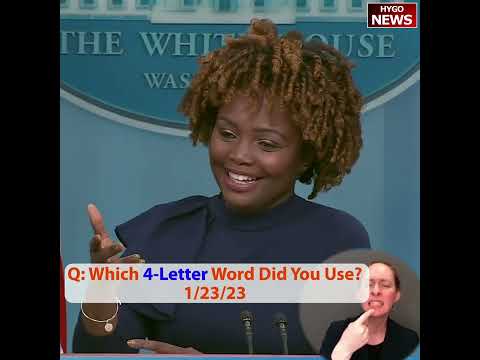
Peter Doocy to KJP: “Which Four-Letter Word Did You Use?” — Asks About Precedent for Post-FBI-Search Presidential Candidacies
In January 2023, Fox News reporter Peter Doocy asked a pointed and colorful question of White House Press Secretary Karine Jean-Pierre about the FBI search of President Biden’s Wilmington home. “When you found out that the FBI had located even more classified materials in Wilmington, which four-letter word did you use?” Doocy asked. KJP exclaimed “Oh my goodness, Peter,” not answering the provocative question. Doocy then asked a substantive follow-up: “Is there a precedent for people running for president after FBI agents searched their software?” When KJP asked for clarification, Doocy repeated. KJP responded: “It sounds like you already know the answer to that question. Look, here’s what I… I don’t know the answer to that question. An FBI search of a president’s residence is a big, big deal. Here’s what the president’s going to focus on. He’s going to focus on continuing to deliver for the American people.” The exchange captured both Doocy’s confrontational style and KJP’s admission — “a big, big deal” — about the search’s significance.
The Peter Doocy Approach
Doocy had distinctive briefing style:
Fox News reporter — Outlet affiliation.
Provocative questions — Often.
Sharp framing — Typical.
Political pressure — Applied.
Media attention — Generated.
Doocy’s briefing presence was unique. His questions were designed to generate engagement — both KJP’s responses and media coverage. His approach made him prominent but also drew criticism about briefing decorum.
The “Four-Letter Word” Question
The opening question was colorful. “When you found out that the FBI had located even more classified materials in Wilmington, which four-letter word did you use?” Doocy asked.
The question’s elements:
Humor attempt — “Four-letter word.”
Presumption — KJP’s reaction.
Emotional admission — Sought.
Political pressure — Applied.
Coverage generation — Achieved.
The question essentially assumed KJP had reacted with profanity — a presumption that could only be answered by denial or joking dismissal. This was classic Doocy approach — questions designed to generate response regardless of specific answer.
”Oh My Goodness, Peter”
KJP’s response was dismissive but mild. “Oh my goodness, Peter,” KJP exclaimed.
The reaction:
Mild exclamation — Rather than profanity.
Personal address — “Peter.”
Surprise expressed — At question.
No substantive answer — Provided.
Composure maintained — Despite provocation.
“Oh my goodness” was deliberately tame response. KJP was implicitly denying using profane language by giving non-profane reaction. This was skilled handling of a gotcha-style question.
The Substantive Follow-Up
Doocy pivoted to substantive question. “Is there a precedent for people running for president after FBI agents searched their software?” Doocy asked.
The substantive question:
Precedent question — Historical.
FBI searches — Specific event.
Presidential candidacy — Post-search.
“Software” — Likely “home” or similar, mistranscribed.
Political implication — 2024 campaign.
This question had more substantive content. Whether sitting presidents had run for reelection after FBI searches of their homes was historical question. The answer was essentially no — such searches were essentially unprecedented in modern presidential history.
KJP’s “Say That Again”
KJP asked for repetition. “Say that one more time. Say that beginning part,” KJP said.
The request:
Clarification sought — Or time.
“Beginning part” — Specific.
Processing delay — Possibly.
Briefing pattern — Common.
Stall tactic — Potentially.
Asking reporters to repeat questions was common KJP pattern. Sometimes genuine clarification need. Sometimes time to formulate response. Sometimes both. In this case, Doocy’s question was relatively clear so repeating was possibly processing time.
The Repeated Question
Doocy repeated. “Is there a precedent for people running for president after FBI agents?” Doocy asked.
The repetition:
Same substance — As original.
Slight compression — Shorter.
Direct inquiry — About precedent.
Political implication — Clear.
No evasion — Accepted.
Doocy didn’t soften or change the question. The precedent question remained the same. This was tactical — establishing that the question was being clearly asked and repeated, creating record of KJP’s response.
”It Sounds Like You Already Know”
KJP deflected with accusation. “It sounds like you already know the answer to that question,” KJP said.
The deflection:
Implicit accusation — Of gotcha.
Shifting focus — To reporter motivation.
Not answering — Substantive question.
Deflection tactic — Common.
Rhetorical response — Rather than substantive.
This was pushback against what KJP characterized as a loaded question. By suggesting Doocy already knew the answer, she was implying the question was rhetorical rather than inquisitive. This was meta-commentary rather than engagement.
”I Don’t Know the Answer”
KJP then professed ignorance. “Look, here’s what I… I don’t know the answer to that question,” KJP said.
The admission:
Ignorance claimed — Of historical precedent.
Possible truthfulness — Or tactical.
Substantive gap — Exposed.
Information burden — Avoided.
Brief honesty — Perhaps.
Admitting ignorance was interesting move. KJP could have attempted historical review of presidential searches. Instead she simply said she didn’t know. This avoided answering substantively but also showed limits of briefing preparation.
”An FBI Search Is a Big, Big Deal”
KJP made significant admission. “An FBI search of a president’s residence is a big, big deal,” KJP said.
The acknowledgment:
Search significance — Admitted.
“Big, big deal” — Emphasized.
Unusual nature — Conceded.
Political weight — Recognized.
Unprecedented implication — Acknowledged.
This was notable admission. Previously, administration had tried to minimize the search’s significance. KJP calling it “a big, big deal” was departure from downplay strategy. Whether this was strategic admission or moment of candor was unclear.
”Here’s What the President’s Going to Focus On”
KJP pivoted to standard messaging. “Here’s what the president’s going to focus on. He’s going to focus on continuing to deliver for the American people,” KJP said.
The pivot:
Standard framing — Used.
“Continue to deliver” — Administration line.
American people focus — Messaging.
Topic shift — From investigation.
Forward looking — Away from present.
This pivot was automatic deflection. When questions became difficult, KJP pivoted to “focus on delivery” framing. This was messaging technique to redirect conversation away from problematic topics toward administration’s preferred talking points.
The Precedent Reality
Historical precedent for the situation:
No modern parallel — For sitting president.
Nixon — Different circumstances.
Clinton — Different issues.
Trump — Post-presidency.
Biden — During term.
Biden’s situation was essentially unprecedented. A sitting president cooperating with FBI search of his home while running for reelection had no clear parallel. KJP’s “I don’t know” was technically answerable as “essentially no precedent” but she didn’t engage at that level.
The Trump Parallel
Trump’s Mar-a-Lago situation was closest comparison:
August 2022 search — FBI warrant.
Post-presidency — Trump.
Different circumstances — Legally.
Political parallel — Apparent.
Ongoing investigations — Both.
Trump had faced FBI search while actively pursuing 2024 candidacy. This was recent precedent, though of different kind. Whether this counted as “precedent” depended on definitions.
The 2024 Implications
The precedent question had 2024 implications:
Biden candidacy — Complicated.
Democratic concerns — Growing.
Campaign dynamics — Affected.
Voter perceptions — Shifting.
Nomination pressure — Possible.
Whether Biden could effectively campaign amid ongoing FBI investigation was legitimate question. Doocy’s precedent inquiry touched on this. The political realities of running with active investigation were part of campaign calculation.
The Doocy Effectiveness
Doocy’s approach had mixed effectiveness:
Coverage generated — Consistently.
Substantive answers — Rarely gotten.
Clips produced — For partisan media.
Other reporters — Sometimes resentful.
KJP patterns — Revealed.
His approach produced lots of briefing content for Fox News coverage but less substantive information than more policy-focused questioning might. Whether this was appropriate journalism depended on perspective.
The “Big, Big Deal” Admission Context
KJP’s acknowledgment was significant:
Departure from messaging — Briefly.
Real assessment — Revealed.
Political cost — Minimal if brief.
Journalistic value — Substantial.
Administration position — Exposed.
Getting administrative official to acknowledge the search was serious was journalistic achievement. This contradicted the broader downplay strategy. The admission had political implications even if KJP immediately pivoted to standard messaging.
The Administrative Messaging Strain
The administration’s messaging was under strain:
Downplay failing — With each new development.
Credibility affected — By contradictions.
Reality intruding — On narrative.
Public perception — Shifting.
Strategy needed — Adjustment.
As the situation developed, the “no there there” framing became untenable. KJP’s “big, big deal” admission reflected the tension between messaging and reality. Eventually, a strategic adjustment would be needed.
The Press Briefing Dynamics
The Doocy exchange showed briefing dynamics:
Confrontational questions — Generating engagement.
KJP responses — Patterned.
Substantive information — Limited.
Coverage generated — Extensive.
Mutual benefit — Each gets something.
Both Doocy and KJP got something from exchanges. Doocy got content for Fox News. KJP got to practice deflection techniques. The substantive information value for public understanding was smaller than the dynamic suggested.
The Biden Campaign Considerations
Biden’s team had to consider:
Campaign messaging — On investigation.
Media strategy — For sustained story.
Democratic unity — Maintaining.
Alternative candidates — Monitoring.
Timing of decisions — Strategic.
Every day of investigation-related coverage affected campaign calculations. Whether Biden would announce 2024 run in coming weeks or months was partly dependent on investigation trajectory.
The Historical Significance
The exchange would be historical reference:
Documented moment — Captured.
Administration admission — Rare.
Press pressure — Effective briefly.
Policy context — Shaping.
Political record — Building.
As the classified documents saga continued, moments like this would be referenced. The “big, big deal” acknowledgment would be cited as administration recognition of seriousness they had otherwise tried to downplay.
Key Takeaways
- Fox News’s Peter Doocy opened with colorful question: “When you found out that the FBI had located even more classified materials in Wilmington, which four-letter word did you use?”
- KJP responded mildly: “Oh my goodness, Peter” — avoiding profanity admission.
- Doocy pivoted to substantive precedent question: “Is there a precedent for people running for president after FBI agents searched their software?”
- KJP admitted ignorance: “I don’t know the answer to that question.”
- KJP made significant admission: “An FBI search of a president’s residence is a big, big deal.”
- She then pivoted to standard messaging: “Here’s what the president’s going to focus on. He’s going to focus on continuing to deliver for the American people.”
Transcript Highlights
The following is transcribed from the video audio (unverified — AI-generated from audio).
- When you found out that the FBI had located even more classified materials in Wilmington, which four letter word did you use?
- Oh my goodness, Peter.
- Is there a precedent for people running for president after FBI agents searched their software?
- It sounds like you already know the answer to that question.
- Look, here’s what I… I don’t know the answer to that question. An FBI search of a president’s residence is a big, big deal.
- Here’s what the president’s going to focus on. He’s going to focus on continuing to deliver for the American people.
Full transcript: 117 words transcribed via Whisper AI.