 HYGO News
 Q: what went wrong? A: We don't think anything went wrong!
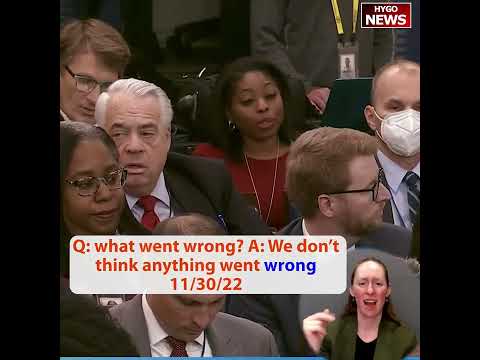
Reporter: What Went Wrong With the Railroad Negotiations? KJP: “We Don’t Think Anything Went Wrong”
On 11/30/2022, a reporter asked White House Press Secretary Karine Jean-Pierre what had gone wrong with the railroad contract negotiations — specifically pointing to criticism from some representatives that “it should have never come to this.” The reporter was asking the White House to reflect on its handling of the September tentative agreement that had since been rejected by four unions, putting the country on the brink of a nationwide rail strike. KJP’s response was unequivocal and remarkable: “We don’t think anything went wrong.” She cited the “24% pay increase” and “$5,000 bonus” in the rejected agreement as evidence that the deal was good, despite workers having democratically voted against it. Her framing reflected an administration that couldn’t acknowledge its own role in creating the current crisis.
”What Went Wrong?”
The reporter’s question was direct and appropriate. “On the potential rail strikes, some representatives today putting blame on the Biden administration saying that it should have never come to this, what went wrong from the administration’s point of view in September?” the reporter asked.
The question was asking for retrospective analysis. Something had clearly gone wrong in the negotiating process — four unions had rejected an agreement that the administration had declared a “big win” just months earlier. Reasonable analysis would examine what the administration could have done differently. Were the sick leave provisions inadequate? Should the administration have pushed the railroads harder on that issue? Did the administration misjudge worker sentiment by accepting the railroads’ position on sick leave?
These were all legitimate questions. Any competent review of the negotiations would have produced some analysis of what could have been done better. The reporter was asking for that analysis — not to embarrass the administration but to inform public understanding of the situation.
”We Don’t Think Anything Went Wrong”
KJP’s response was a flat denial. “We don’t think anything went wrong,” KJP said.
This was extraordinary. The negotiation had produced an agreement that a third of the participating unions had rejected. The country was days away from a nationwide rail strike that would cause massive economic damage. The administration was asking Congress to impose the agreement on rejecting workers, overriding their democratic decision. And KJP’s assessment was that “nothing went wrong.”
The denial required a specific definition of “going wrong” that excluded everything that had actually happened. Under this definition:
- The September agreement hadn’t gone wrong because it was negotiated (regardless of whether it addressed workers’ concerns)
- The union rejection didn’t represent anything going wrong because it was a democratic process (regardless of what the rejection meant for the deal’s viability)
- The impending strike didn’t represent anything going wrong because it could still be averted by legislation (regardless of why legislation was necessary)
- The sick leave inadequacy wasn’t going wrong because the deal included other benefits (regardless of why workers rejected it)
This framing allowed the administration to maintain that everything had gone according to plan, even as it scrambled to prevent a crisis its own negotiation had failed to prevent.
The “24% Pay Increase” Defense
KJP pointed to the economic terms. “We believe that on September 15th he came through with a temporary agreement that had an increase in pay by 24%. It had a 5,000 bonus. It has a 5,000 bonus for workers,” KJP said.
The 24% pay increase and $5,000 bonus were the most favorable aspects of the agreement for workers. They were also real — the deal did include these benefits. KJP was emphasizing them to create an impression that the deal was substantively generous.
But the emphasis on these specific terms obscured what workers actually cared about. The unions hadn’t rejected the agreement because the pay increase was too small. They had rejected it because it failed to address their concerns about sick leave and scheduling — issues that affected their daily working lives more than the dollar amount of annual raises.
Presenting the 24% pay increase as evidence of a good deal was similar to a company arguing it provided good benefits by pointing to the free coffee in the break room while ignoring complaints about mandatory overtime. The headline benefit was real but beside the point of the actual disagreement.
”Lauded and Praised by the Unions”
KJP added historical context about the deal’s initial reception. “Let’s not forget, when that agreement came out on September 15th, it was lauded and praised by the unions and union leadership,” KJP said.
This was partially true and partially misleading. Union leadership had initially supported the tentative agreement — leadership had participated in the negotiations and believed they had secured the best deal possible. But “union leadership” and “workers” were not the same thing. The agreement still had to be ratified by rank-and-file members, and that ratification process was how the disagreement emerged.
The distinction between leadership support and worker approval is fundamental to labor relations. Union leaders can negotiate agreements that workers reject when those agreements fail to address worker concerns adequately. The workers’ rejection of the deal despite leadership support indicated that leadership had misjudged what workers would accept.
Pointing to initial leadership praise as evidence that the deal was good ignored what had happened since. The workers had examined the agreement and concluded it wasn’t good enough. Their judgment — not the initial leadership reception — was what determined whether the deal would be ratified.
”Pro-Union President”
KJP concluded with the administration’s standard framing. “This is a president that has delivered for the union and he sees himself as a pro-union president. That term has been given to him by labor,” KJP said.
The “pro-union president” claim had been central to Biden’s political identity. He had repeatedly described himself as the most pro-union president in modern history, and labor organizations had often supported his candidacy and agenda.
But the railroad strike situation was testing that framing. The rejecting unions were democratically expressing their view that the deal wasn’t adequate for workers. Biden’s response — asking Congress to impose the deal on them — was the opposite of pro-union. It was using federal power to override workers’ democratic decisions in favor of corporate interests.
The gap between Biden’s “pro-union” self-identification and his actual policy response to the railroad situation was significant. Being pro-union in good times (when no conflict exists) is easy. Being pro-union in difficult times (when workers’ demands conflict with other political or economic considerations) is the test. Biden was failing that test with his handling of the railroad dispute.
What Actually Went Wrong
A more honest answer to the reporter’s question would have acknowledged several things:
The sick leave provisions were inadequate. The tentative agreement had essentially no paid sick leave for workers — a critical issue for workers who had been forced to work while ill under harsh scheduling policies. The administration had accepted the railroads’ position on this issue, and the inadequacy of the sick leave provisions was the primary reason for worker rejection.
The administration misjudged worker sentiment. The administration had praised the deal as a “big win” without adequately assessing whether workers would ratify it. This reflected a failure of intelligence gathering and political analysis.
The administration prioritized the railroads. The deal the administration negotiated was more favorable to the railroad companies than to the workers on the specific issue (sick leave) that mattered most to workers. The administration had effectively chosen the railroads’ interests over workers’ interests, even while claiming to represent workers.
None of these honest answers appeared in KJP’s response. Instead, she insisted that “nothing went wrong” — a position that required ignoring everything that actually happened.
Key Takeaways
- A reporter asked KJP what went wrong with the railroad contract negotiations given union rejection and impending strike.
- KJP’s response: “We don’t think anything went wrong” — denying that anything had gone wrong despite the evident crisis.
- She defended the agreement by citing the 24% pay increase and $5,000 bonus — while ignoring the sick leave inadequacy that drove worker rejection.
- KJP argued the agreement had been “lauded and praised by union leadership” — without acknowledging the distinction between leadership and rank-and-file workers.
- The “pro-union president” framing was being tested by the administration’s response, which would impose the rejected agreement on workers via legislation.
Transcript Highlights
The following is transcribed from the video audio (unverified — AI-generated from audio).
- On the potential rail strikes, some representatives today putting blame on the Biden administration saying that it should have never come to this.
- What went wrong from the administration’s point of view in September?
- We don’t think anything went wrong.
- On September 15th he came through with a temporary agreement that had an increase in pay by 24%. It had a $5,000 bonus.
- When that agreement came out, it was lauded and praised by the unions and union leadership.
- This is a president that has delivered for the union and he sees himself as a pro-union president.
Full transcript: 137 words transcribed via Whisper AI.