 HYGO News
 Q: what to do over budget? Trump: I'd FIRE HIM! Meta on AI: incredibly important; free bus rides
Q: what to do over budget? Trump: I’d FIRE HIM! Meta on AI: incredibly important; free bus rides
A reporter at the Fed renovation site asked Trump a pointed hypothetical. As a real estate developer, what would he do with a project manager so far over budget? “I’d fire him.” Trump, asked whether that applied to Powell, stayed diplomatic: “I’m here just really with the chairman … I don’t want to be personal. I just would like to see it get finished. In many ways, it’s too bad it started, but it did start.” Meta executive Joel Kaplan validated the Trump AI agenda: “When a U.S. administration comes together with great American companies around a shared mission, winning the AI race against China … America is impossible to beat.” Gavin Newsom confirmed on camera that Democrats engaged in a “phone tree … text tree, phone tree, email … total full fledged panic” pressuring Biden to step aside in 2024. And the Zohran Mamdani free-bus-fare proposal for New York City — $650 million in annual losses — got contextualized with Kansas City’s failed experiment: “$18 million a year” in losses forcing Kansas City to reinstate fares in October.
”I’d Fire Him”
The reporter’s hypothetical was direct. “That’s a real estate developer. What would you do with a project manager who would be over budget?”
Trump’s response. “Generally speaking, what would I do? I’d fire him.”
That is the blunt developer answer. When a project is dramatically over budget, the project manager is responsible. In private real estate, the project manager gets fired. Trump is stating the norm.
“Do you think this is he was the president who used to come up to do that?”
The reporter’s follow-up tried to push Trump toward applying the standard to Powell. Trump declined the bait.
“Well, I’m here just really with the chairman. He’s showing us around, showing us the work. And so I don’t want to get that. I don’t want to be personal. I just would like to see it get finished.”
That is Trump’s diplomatic posture. He is at the Fed with Powell. He is being shown the project by Powell. Under those circumstances, he is not going to publicly declare Powell should be fired. He is offering the general principle (I’d fire a project manager in this situation) without making the specific application (therefore I’d fire Powell).
“In many ways, it’s too bad it started, but it did start. It’s been under construction for a long time. It’s going to be a real long time because it looks like it’s got a long way to go.”
That is the operational reality. Started. Under construction. A long way to go. Trump’s position: finish it, but with clearer eyes about how it got here.
Joel Kaplan’s Meta Endorsement
The segment then pivoted to a Meta executive’s validation of the administration’s AI agenda. Joel Kaplan, Meta’s chief global affairs officer and a former Bush administration official, offered a strong endorsement.
“I think yesterday’s announcements were incredibly important when a U.S. administration comes together with great American companies around a shared mission, winning the AI race against China.”
Kaplan’s framing positions the Trump AI executive orders within a larger strategic project: winning against China. That framing aligns Meta with the administration’s broader positioning. It also validates the AI executive orders as the kind of policy that Big Tech is willing to publicly endorse.
“As the president said later in that speech, America is impossible to beat. And at the end of the day, what this is about is putting our country first, creating good jobs, strengthening our economy and safeguarding our national security.”
“Impossible to beat” is Trump’s phrasing that Kaplan is quoting back. American competitive strength, in the Kaplan-Trump framing, is the natural outcome of American institutional and corporate capabilities when they align. The alignment the Trump AI orders create — fast permitting, export promotion, anti-woke standards — is what Meta (and by extension, the rest of the AI industry) is publicly validating.
”The Failure Award”
An unusual moment of Trump’s personal management style. “We created the failure award and I gave the biggest screw up every single month a bonus.”
Wait. The biggest screw-up got a bonus? That framing is startling, but Trump continues.
“And at the end of the year, we put them all together. January screw up, February screw up, and we’d have the failure of the year award.”
That is Trump describing what sounds like a management practice from his pre-presidential business. Monthly recognition of the biggest failure. End-of-year compilation. A “failure of the year” award.
The framing is paradoxical. Most management cultures treat failure as something to minimize and punish. Trump’s “failure award” treats it differently — acknowledging failures openly, even celebrating them in a sense. The underlying theory may be that acknowledged failures produce learning, while hidden failures persist. Whether that was a genuine management practice or Trump’s characterization for rhetorical effect is ambiguous.
Newsom Confirms the Biden Coup
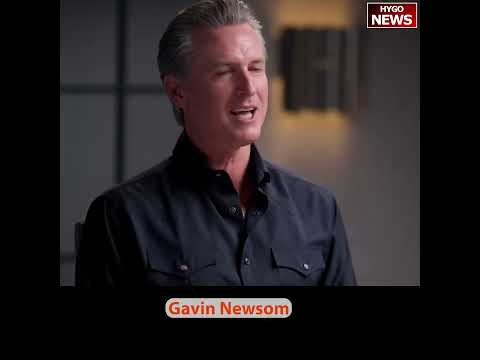
The segment cut to Gavin Newsom, the California governor, confirming a significant internal Democratic Party story. “Internal desire to overthrow him around that time because you could see on TV, he was struggling and in the polls and Donald Trump was reveling in it. And then I heard this narrative coming up that Nancy Pelosi and the Democratic Party were having private conversations and telling him to step down and forcing him out. All cards on the table, 100% truth. Is there any truth in that?”
Then Newsom’s answer. “Yeah. No, a lot of that was happening. I mean, a lot of people were, I mean, there was a phone tree that lit up that night. There was a text tree, phone tree, email just blew up saying people are in panic. Total full fledged panic.”
That is Newsom confirming, on camera, that the Democratic Party operated a coordinated effort to force Biden out in 2024. “Phone tree that lit up that night. Text tree, phone tree, email just blew up.” “People in panic.” “Total full fledged panic.”
The events Newsom is describing are the post-debate panic in June 2024, when Biden’s debate performance against Trump triggered the internal Democratic Party conversation about whether to push him aside. Those conversations ultimately produced Biden’s decision to withdraw from the race.
“Democrats lied to the American people and hand-picked Crooked Kamala without a single vote” is the administration’s framing of the outcome. Biden was pushed out. Kamala Harris was installed as the nominee. No primary was held. The voters who had cast primary ballots for Biden did not get a second chance to choose.
Newsom’s on-camera confirmation — “yeah, no, a lot of that was happening” — validates the characterization that was previously the subject of denial and rebuttal by Democratic officials.
The Mamdani Free-Bus-Fare Problem
The final segment addressed the Zohran Mamdani free-bus-fare proposal for New York City and put it in context with the Kansas City experience.
“Kansas City was the first major city in the U.S. to implement a policy like this. And now that experiment is coming to an end almost five years later. In April, Kansas City’s City Council decided that they’re going to return to paid fairs once again and that will happen this October. And that’s because of one unavoidable reason, money.”
Kansas City’s experiment began in 2020 with fare-free bus rides. After five years, the experiment is ending. The reason: financial unsustainability.
“The program originally cost $9 million to launch, but as ridership grew, so did the bill. The challenge is financial. Ideally, when you’re looking at the total cost that we potentially could lose in a year, we’ve calculated cost is upwards of $18 million a year. We are not breaking in.”
$9 million to launch. $18 million a year in ongoing losses. For Kansas City’s budget, that level of ongoing loss was unsustainable. The experiment is ending.
Mamdani’s Pilot Data
“Meanwhile, New York City is considering a much bigger move. City Council member, Zohar Mamdani, wanted to eliminate city, excuse me, bus fare citywide something no other city has done at this scale. Last year, he piloted the idea on five MTA bus routes. And when he did that ridership jumped, it increased 30% on weekdays and 38% on weekends, according to the MTA.”
30% weekday ridership increase. 38% weekend ridership increase. That is a significant ridership response to fare elimination.
“The result of that pilot was that ridership was up and conflicts and assaults with bus operators are down. So that’s a big achievement.”
Ridership up. Assaults on drivers down. Those are real benefits.
”$650 Million a Year”
“But the price tag is staggering. The New York City Independent Budget Office estimates going fare free would cost $650 million a year in a system that’s already under financial strain.”
$650 million a year. Every year. In perpetuity. For a transit system already dealing with multi-billion-dollar budget pressures and deferred maintenance on aging infrastructure.
For New York City, which Mamdani hopes to lead as mayor, $650 million in annual transit losses is an enormous fiscal commitment. Where would the money come from? Higher city taxes. Fare increases on trains (to offset bus fare elimination). Service cuts. Deferred maintenance. Some combination of those trade-offs would be required.
“Who will be left to pay for that loss? New Yorkers.”
That is the administration’s framing. The “free” in “free bus rides” is illusory. Someone pays. In this case, the New Yorkers who do not ride the bus (or who pay commuter taxes, property taxes, and other city revenue sources) would be subsidizing the Mamdani program.
Kansas City’s Lesson
The Kansas City case study is specifically relevant. A city tried fare-free buses. It worked for ridership. It did not work for finances. After five years, it is being rolled back.
If Kansas City’s smaller-scale experiment was unsustainable at $18 million per year, New York City’s larger-scale version at $650 million per year is almost certainly unsustainable. The math does not work.
Mamdani’s case may be that New York City’s scale, visibility, and economic base can absorb the cost where Kansas City could not. That argument would require specific fiscal analysis showing where the $650 million would come from without breaking other city commitments.
Four Items, One Pattern
Trump at the Fed. Meta on AI. Newsom on the Biden pressure campaign. The Mamdani free-bus-fare math. Four stories, each revealing something about how the current administration operates and how its opponents are positioning.
The Trump-Powell dynamic is the cost-accountability story. The Meta endorsement is the industry-alignment story. Newsom’s confession is the Democratic-internal-process story. The Mamdani math is the progressive-fiscal-unreality story.
Each item will be in circulation for days. Each adds to the cumulative picture the administration is building about the choices American voters have in front of them.
Key Takeaways
- At the Fed renovation site, asked what he’d do with a project manager so far over budget, Trump: “I’d fire him” — before declining to personalize it to Powell: “I don’t want to be personal. I just would like to see it get finished.”
- Meta’s Joel Kaplan validated the Trump AI agenda: “When a U.S. administration comes together with great American companies around a shared mission, winning the AI race against China … America is impossible to beat.”
- Gavin Newsom confirmed on camera that Democrats ran a coordinated pressure campaign on Biden in 2024: “There was a text tree, phone tree, email just blew up saying people are in panic. Total full fledged panic.”
- Kansas City’s fare-free bus experiment is ending in October after five years: “$9 million to launch … calculated cost is upwards of $18 million a year. We are not breaking in.”
- Mamdani’s pilot in NYC showed “30% on weekdays and 38% on weekends” ridership increases — but a citywide program would cost “$650 million a year in a system that’s already under financial strain.”