 HYGO News
 Q: What is plan to fight inflation, rail strike? A: confident to avert a railway shutdown
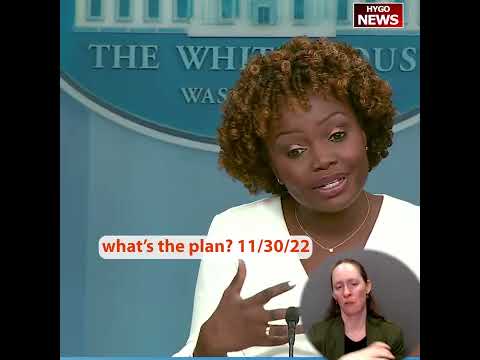
Reporter: What’s the Plan to Protect American Consumers From Inflation If the Rail Strike Happens? KJP: “Confident Congress Will Act”
On 12/1/2022, a reporter asked White House Press Secretary Karine Jean-Pierre what the administration was doing to protect American consumers from inflation impacts if the railroad strike happened. The reporter framed the question around the broader inflation fight: “You are fighting inflation, this White House is fighting inflation, and it sounds like the numbers will go up again. What is in place? What are you guys working on in case there is a strike?” KJP’s response was confident but contingent: “President is confident that Congress is going to act on this, that we are going to work to avert a railway shutdown.” Rather than providing a contingency plan for consumer protection, KJP’s answer rested entirely on the assumption that Congress would pass legislation imposing the tentative agreement — avoiding the strike rather than preparing for its effects.
The Inflation Connection
The reporter’s question linked the railroad strike to the broader inflation fight. “But at the end of the day, you are fighting inflation, this White House is fighting inflation, and it sounds like the numbers will go up again,” the reporter said.
The connection was economically real. A nationwide railroad strike would have cascading effects on supply chains, consumer goods availability, and prices. Estimates suggested a rail strike could cost the U.S. economy approximately $2 billion per day. Every day the strike continued would push consumer prices higher as supply disruptions rippled through the economy.
By late 2022, the administration was deeply invested in the narrative that inflation was “coming down.” Administration officials regularly pointed to gradual declines in monthly CPI data as evidence of progress. But a rail strike would reverse any progress and push inflation back up. The reporter was asking whether the administration had a plan to protect consumers from this foreseeable risk.
”What Is in Place?”
The reporter’s specific question was about consumer protection. “What is in place? What are you guys working on in case there is a strike in understanding those numbers and all the things that you qualify and quantify — what is in place to cushion the American taxpayers’ pocketbook or the American consumers’ pocketbook?” the reporter asked.
This was a reasonable question. If the administration was concerned about the inflation impacts of a rail strike, it should have had contingency plans to protect consumers. Such plans might include:
- Strategic Petroleum Reserve releases to offset fuel price impacts
- Food distribution contingencies to protect vulnerable populations
- Price monitoring and enforcement against price gouging
- Consumer assistance programs for families disproportionately affected
- Supply chain alternatives using trucking and shipping
Any of these would have been legitimate responses to the reporter’s question. The administration should have been working on multiple fronts to prepare for the strike’s effects if prevention failed.
”President Is Confident That Congress Is Going to Act”
KJP’s response didn’t address consumer protection at all. “President is confident that Congress is going to act on this, that we are going to work to avert a railway shutdown,” KJP said.
The response was a statement of prevention, not preparation. KJP was saying the strike wouldn’t happen because Congress would prevent it. Therefore, there was no need to discuss consumer protection measures.
This answer was problematic for several reasons:
It assumed success. KJP’s confidence that Congress would act didn’t guarantee that Congress would act. Legislation had to pass both chambers, and while the House was expected to pass the bill, the Senate was less certain. Multiple senators had indicated opposition to imposing the deal without sick leave provisions. The legislative outcome wasn’t predetermined.
It avoided contingency planning. Good governance requires planning for failure scenarios. Even if the administration was confident Congress would prevent the strike, prudent leadership would have prepared for the scenario where it didn’t. KJP’s answer suggested the administration had only one plan — pass legislation — and no backup.
It didn’t address the inflation question. The reporter had asked specifically about consumer protection from inflation impacts. KJP’s answer was about strike prevention, not inflation protection. Even if Congress acted and prevented the strike, the underlying inflation concerns remained. But KJP didn’t discuss those broader concerns at all.
”He Complimented the House”
KJP added specific legislative praise. “That’s why you saw the house today. He complimented the house, the speaker, and the leadership to getting the moving the bill forward, and it includes…” KJP said before the transcript cut off.
The reference was to Biden’s statement praising the House for advancing the legislation to impose the tentative agreement. The House had acted quickly on Biden’s request, passing the imposition bill along with a separate bill adding paid sick leave (which the Senate would later reject).
Biden’s praise of “the Speaker” (Nancy Pelosi at the time) and House leadership was notable because it reinforced the dynamic where the administration was thanking Democrats for doing what it had asked. There was no mention of bipartisan cooperation, no acknowledgment that Republicans might support the legislation, and no recognition of the political complexity involved.
The Sick Leave Trade-Off
The exchange occurred in the context of a broader political drama about the sick leave provisions. The House had passed two separate bills:
- The main bill — imposing the tentative agreement’s economic terms on all unions
- A sick leave amendment — adding paid sick leave provisions the original agreement lacked
Both bills passed the House, but the Senate would later split on them. The Senate passed the main imposition bill but rejected the sick leave amendment. The result was that workers got the rejected agreement without the sick leave protections they had demanded.
Biden had praised the House for passing both bills, but his actual priority was clear: he wanted the main bill passed to prevent the strike, and he was willing to accept the final legislation without sick leave if necessary. The sick leave bill was a political fig leaf — it gave Democrats something to point to as evidence of pro-labor effort — but its rejection by the Senate was not a deal-breaker for Biden.
The Missing Consumer Protection
The reporter’s original question about protecting consumers went unanswered. KJP didn’t discuss:
- How administration policy would shield consumers from strike-related price increases if the strike happened
- What emergency measures were being prepared in case Congress failed to act
- How the administration would mitigate inflation impacts even if the strike were averted
- What the administration was doing to address the underlying supply chain vulnerabilities the strike threat had exposed
The failure to address these questions was part of a broader pattern of the Biden administration’s communication about inflation. Officials regularly said the administration was “laser focused” on inflation, “working every day” on the issue, and “taking every step” to protect consumers. But when pressed for specifics about actual consumer protection measures, the answers typically deflected to general claims about legislation or economic progress.
Key Takeaways
- A reporter asked what the administration was doing to protect American consumers from inflation impacts of a potential rail strike.
- KJP’s response addressed only strike prevention, not consumer protection — “President is confident that Congress is going to act.”
- The answer assumed legislation would pass successfully, without discussing contingency plans if Congress failed to act.
- KJP praised the House for moving the imposition legislation forward, without addressing the Senate’s likely rejection of the sick leave amendment.
- The consumer protection question remained unanswered, fitting a broader pattern of administration communication about inflation that deflected specific questions with general claims.
Transcript Highlights
The following is transcribed from the video audio (unverified — AI-generated from audio).
- You are fighting inflation, this White House is fighting inflation, and it sounds like the numbers will go up again.
- What is in place? What are you guys working on in case there is a strike?
- What is in place to cushion the American taxpayers’ pocketbook or the American consumers’ pocketbook?
- President is confident that Congress is going to act on this.
- We are going to work to avert a railway shutdown.
- That’s why you saw the house today. He complimented the house, the speaker, and the leadership to getting the moving the bill forward.
Full transcript: 124 words transcribed via Whisper AI.