 HYGO News
 Q: What did admin do between failures? A: seek fines
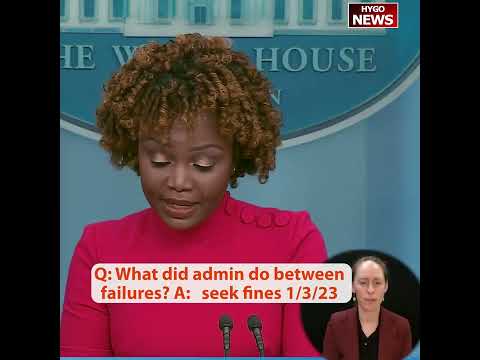
Reporter to KJP: What Did Admin Do Between Airline Failures? KJP Points to “Largest Consumer Protection Fines in US History” and Pending Southwest Action
On 1/4/2023, a reporter asked White House Press Secretary Karine Jean-Pierre what the administration had done between prior airline failures and the recent Southwest holiday meltdown to prevent recurrence. “You’re pressing the airlines for better service. What did the administration do between those failures and the failures we saw over the holidays to try to make things better?” the reporter asked. KJP pointed to enforcement action: “Since 2020, our administration has made it a priority to help people get their money back from airline disruptions. That aggressive work has brought real results for the American people. In 2022, DOT issued the largest consumer protection fines against airlines in US history. The Department of Transportation will seek fines from Southwest… to make sure that they cover cost as required.”
The Substantive Question
The reporter asked about preventive action. “What did the administration do between those failures and the failures we saw over the holidays to try to make things better?” the reporter asked.
The question addressed:
Preventive action — Between incidents.
Administrative role — In prevention.
Regulatory effectiveness — Between crises.
Learning from failures — Policy adjustment.
Consumer protection — Long-term.
This was a legitimate policy question:
Multiple airline failures — Had occurred.
Pattern existed — Requiring response.
Administration authority — To prevent.
Consumer protection duty — Ongoing.
Accountability question — Substantive.
The “Help People Get Money Back” Framing
KJP’s primary answer focused on consumer recovery. “Since 2020, our administration has made it a priority to help people get their money back from airline disruptions,” KJP said.
This framing:
Consumer focus — Post-failure recovery.
Reactive approach — After problems occurred.
Money recovery — Specific outcome.
Administration priority — Claimed.
Real results — Asserted.
But the “get money back” focus was:
Post-failure only — Not preventive.
Reactive rather than preventive — Different from question.
Individual transactions — Not systemic.
Compensation not prevention — Distinction.
Partial answer — To question asked.
The reporter’s question had been about prevention between failures. KJP answered about compensation after failures. These were different policy areas.
”Aggressive Work” Claim
KJP characterized administration effort. “That aggressive work has brought real results for the American people,” KJP said.
The “aggressive work” framing:
Claimed intensity — Of effort.
Without specifics — About scope.
Results claimed — Without metrics.
Political framing — Rather than substantive.
Vague characterization — Throughout.
Administration advocacy pattern:
Claim aggressive effort — Regularly.
Limited specifics — About actions.
Claim results — Without measurement.
Position positively — Politically.
Deflect specifics — From reporters.
”Largest Consumer Protection Fines in US History”
KJP cited specific accomplishment. “In 2022, DOT issued the largest consumer protection fines against airlines in US history,” KJP said.
The “largest in history” claim:
Specific superlative — Defensible if accurate.
2022 specific year — Timeframe.
Consumer protection focus — Specific policy.
Historic comparison — Throughout DOT history.
Administration accomplishment — Claim.
The fines the administration cited:
Multiple major airlines — Affected.
Various violations — Addressed.
Substantial amounts — Individually.
Consumer recovery — Associated.
Regulatory action — Demonstrated.
The fines were:
Factually verifiable — As enforcement actions.
Substantial in aggregate — Dollar terms.
Administrative achievement — Defensible claim.
Political messaging — Usable for coverage.
Accomplishment concrete — Rather than vague.
The Pending Southwest Action
KJP mentioned Southwest. “The Department of Transportation will seek fines from Southwest, as I just mentioned, to make sure that they cover cost as required,” KJP said.
The Southwest action:
Pending at briefing time — Promised future action.
Specific to Southwest — Targeted.
Enforcement focus — Clear.
Consumer protection — Priority.
Cost coverage — Objective.
Eventually:
Southwest faced various — Regulatory actions.
DOT investigations — Completed.
Fines issued — Various amounts.
Consumer protections — Enforced.
Corporate accountability — Pursued.
The Prevention Gap
The reporter’s question about prevention wasn’t fully answered:
Prior failures occurred — Creating pattern.
Between failures — Period existed.
Preventive action — What was done.
Systemic improvements — Required.
Industry regulation — Needed.
KJP’s answer focused on:
Post-failure compensation — Not prevention.
Consumer recovery — Individual.
Enforcement fines — Punishment.
Reactive response — To incidents.
Limited preventive — Content.
The preventive question was about:
System oversight — Continuous.
Regulatory guidance — Between incidents.
Infrastructure investment — Federal role.
Standards setting — Proactive.
Industry requirements — Updated.
The Administrative Challenge
Preventing airline system failures was difficult:
Private industry — Infrastructure.
Technology decisions — By companies.
Regulatory limits — On intervention.
Market forces — Dominant.
Federal role — Constrained.
The administration could:
Set standards — For operations.
Require reporting — Of issues.
Issue guidance — On practices.
Enforce violations — When found.
Create incentives — For improvement.
But couldn’t:
Force system upgrades — Directly.
Require specific technology — Easily.
Prevent corporate decisions — On investment.
Mandate perfect performance — Realistically.
Eliminate failures — Entirely.
The Market Response
Between major failures, airlines faced:
Market incentives — For reliability.
Customer loyalty — Consideration.
Competitive pressure — From others.
Technology investment — Decisions.
Regulatory watching — Oversight.
These market factors:
Affected decisions — On improvement.
Provided incentives — For reliability.
Created pressure — For investment.
Drove competition — On service.
Supplemented regulation — With market.
Administration policy worked alongside:
Market forces — Driving decisions.
Consumer choices — Affecting companies.
Media attention — On failures.
Regulatory pressure — Increasing.
Political visibility — High.
The Pattern of Airline Failures
Airlines had various failures:
Summer 2022 disruptions — Various airlines.
Staffing shortages — Industry-wide.
Technology issues — Periodic.
Weather events — Compounding.
Customer service failures — Regular.
Southwest specifically:
Holiday 2022 meltdown — Most severe.
Prior issues — Accumulating.
System specific — Vulnerabilities.
Technology legacy — Problematic.
Operational choices — Contributing.
The pattern of failures:
Continued despite administration — Efforts.
Required sustained response — Over time.
Limited effective prevention — By government.
Consumer protection reactive — Largely.
Regulatory tools limited — In scope.
The Consumer Rights Development
Post-failure, consumer rights had expanded:
DOT guidance — Enhanced.
Enforcement actions — Increased.
Media coverage — Growing.
Public awareness — Improving.
Corporate responses — Adapting.
The administration’s role:
Enforcement authority — Using.
Public education — Consumer rights.
Media attention — Generating.
Political pressure — Applying.
Corporate accountability — Demanding.
These efforts had:
Real effects — On compensation.
Consumer recovery — Actual.
Corporate behavior — Modified.
Industry practices — Evolved.
Political accomplishments — Claimed.
The DOT Leadership
Secretary Pete Buttigieg:
Active engagement — With airline issues.
Public statements — Frequent.
Enforcement support — For DOT.
Media appearances — Regular.
Consumer advocacy — Positioning.
The Buttigieg role:
Visible leadership — On transportation.
Consumer-friendly — Framing.
Political positioning — For future.
Regulatory authority — Using.
Administration accomplishment — Demonstrating.
The Southwest Specific
The Southwest response was:
Coordinated approach — DOT and White House.
Investigation initiated — Of failure.
Fines planned — For violations.
Consumer protection — Priority.
Corporate accountability — Demanded.
Southwest eventually faced:
$140 million settlement — December 2023.
Consumer refunds — Substantial.
Regulatory reforms — Required.
System upgrades — Promised.
Accountability — Demonstrated.
The Political Communication
KJP’s messaging served political purposes:
Administration accomplishment — Claims.
Consumer protection — Emphasis.
Corporate accountability — Theme.
Working Americans — Affected party.
Political positioning — For administration.
The consumer protection framing:
Democrats traditionally — Advocated.
Populist positioning — Against corporations.
Cross-party appeal — Consumer rights.
Political effective — For base and middle.
Policy accomplishment — Demonstrable.
The Regulatory Expansion
The administration had been:
Expanding consumer protections — Through regulation.
Enforcing existing laws — More aggressively.
Increasing penalties — For violations.
Issuing new guidance — On rights.
Public education — About protections.
These efforts:
Built on existing authority — Rather than new laws.
Administration choice — To prioritize.
Regulatory creativity — Within bounds.
Political popularity — Generally.
Industry response — Complex.
The 2024 Messaging
The consumer protection messaging:
Positioned administration — As working for people.
Against corporations — Populist theme.
Accomplishment demonstrable — Through fines.
Political benefit — Clear.
Campaign material — Available.
For 2024:
Consumer accomplishments — Would be cited.
Corporate accountability — Theme emphasized.
Working families — Focus.
Contrast with opposition — Drawn.
Political positioning — Established.
Key Takeaways
- A reporter asked KJP what the administration had done between airline failures to prevent recurrence.
- KJP’s answer focused on post-failure compensation rather than prevention.
- She cited: “Since 2020, our administration has made it a priority to help people get their money back from airline disruptions.”
- Specific accomplishment claimed: “In 2022, DOT issued the largest consumer protection fines against airlines in US history.”
- KJP confirmed DOT would “seek fines from Southwest… to make sure that they cover cost as required.”
- The answer emphasized reactive enforcement rather than proactive prevention.
- The administration’s limited preventive tools meant enforcement was the primary consumer protection mechanism.
Transcript Highlights
The following is transcribed from the video audio (unverified — AI-generated from audio).
- You’re pressing the airlines for better service. What did the administration do between those failures and the failures we saw over the holidays to try to make things better?
- Since 2020, our administration has made it a priority to help people get their money back from airline disruptions.
- That aggressive work has brought real results for the American people.
- In 2022, DOT issued the largest consumer protection fines against airlines in US history.
- The Department of Transportation will seek fines from Southwest.
- To make sure that they cover cost as required.
Full transcript: 105 words transcribed via Whisper AI.