 HYGO News
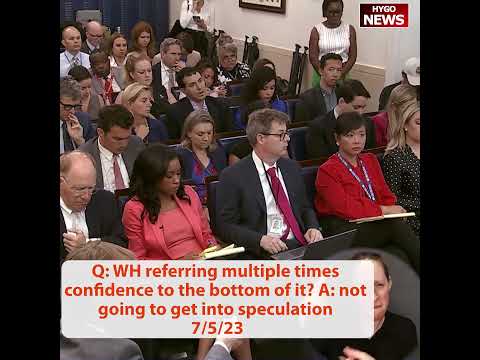
 Q: WH referring multiple times confidence to the bottom of it? A: not going to get into speculation
What Does “Getting to the Bottom of It” Mean? Reporter Asks If Cocaine Investigation Aims for Criminal Prosecution
On July 5, 2023, a reporter delivered one of the most precisely constructed questions of the White House cocaine briefing, challenging Press Secretary Karine Jean-Pierre to define what she actually meant by the phrases she had been repeating. After Jean-Pierre had cited the White House’s “confidence” in the Secret Service investigation and its determination to “get to the bottom of it” multiple times during the briefing, the reporter asked bluntly: Was this a fact-finding mission, or was it aimed at criminal prosecution? And would there be consequences for the individual or for any White House staffer who had brought a guest? Jean-Pierre dismissed the question as “speculation.”
The Most Substantive Question of the Briefing
The reporter’s question was carefully constructed to pin down the scope and purpose of the investigation that Jean-Pierre had been referencing throughout the briefing without ever defining.
“As you’ve now been referring multiple times to this investigation and to the White House’s confidence that they will get to the bottom of it, I’m wondering if you can be a bit clearer about what exactly the scope and mission of the investigation is and what exactly getting to the bottom of it means,” the reporter said.
The reporter then laid out the specific possibilities: “Is this simply a fact-finding mission to determine whether potential security protocols were either insufficient or violated in this case? Or is this with an eye towards potential criminal prosecution of an individual who’s bringing a banned substance into the West Wing? And would there then be consequences either for that individual or, if they were a guest of a White House staffer, that staffer?”
The question was significant because it forced a distinction that Jean-Pierre had been carefully avoiding. There are fundamentally different types of investigations, with different scopes, different levels of rigor, and different outcomes. A security review examines whether protocols were adequate. A criminal investigation seeks to identify a perpetrator and build a case for prosecution. A fact-finding inquiry simply documents what happened. Jean-Pierre’s repeated assurances about “getting to the bottom of it” could have meant any of these things — or none of them.
KJP Calls Consequences “Speculation”
Jean-Pierre’s response revealed that the White House had no intention of defining the investigation’s scope or its potential outcomes.
“So, look, the second part of your question is speculation, and I’m just not going to get into speculation from here. What I can say is, again, Secret Service is looking into this. They’re looking into what happened,” she said.
The characterization of consequences as “speculation” was remarkable. The reporter had asked a direct policy question: if someone brought cocaine into the White House, would there be consequences? This was not speculation about who did it or why — it was a question about the administration’s expectations for accountability. Would a person caught bringing illegal drugs into the West Wing face criminal charges? Would a staffer who invited a guest who brought drugs face disciplinary action?
By labeling these questions as “speculation,” Jean-Pierre avoided establishing any standard of accountability. If the investigation identified someone, there would be no previously stated expectation against which the administration’s response could be measured. The White House had reserved maximum flexibility by refusing to commit to any framework for consequences.
The Empty Phrase: “Getting to the Bottom of It”
The reporter’s question exposed the emptiness of the phrase Jean-Pierre had been relying on throughout the briefing. “Getting to the bottom of it” sounds definitive — it implies a thorough investigation that will produce clear answers and appropriate consequences. But without defining what the phrase meant in practice, it functioned as a talking point rather than a commitment.
Several possible meanings existed:
A security review would examine whether screening protocols were adequate, whether tours should be modified, and whether additional detection equipment was needed. This would produce institutional recommendations but no individual accountability.
A fact-finding inquiry would document the timeline of events, identify who had access to the area, and determine how the substance entered the building. This might or might not lead to identifying a specific individual.
A criminal investigation would use forensic evidence, surveillance footage, and witness interviews to identify the person who brought cocaine into the West Wing, with the goal of prosecution under federal drug laws.
Jean-Pierre’s refusal to specify which of these the Secret Service was conducting — or whether the investigation combined elements of multiple approaches — left the public unable to evaluate whether the investigation was adequate or whether its eventual conclusion was satisfactory.
The Consequences Question the White House Avoided
The reporter’s question about consequences for White House staffers who might have invited the guest responsible for the cocaine was particularly incisive. West Wing tours are “staff-led,” meaning a White House employee is responsible for the visitors on each tour. If the cocaine was brought in by a tour visitor, as Jean-Pierre’s narrative implied, a specific staff member would have been responsible for that visitor’s presence in the building.
In most government and corporate settings, employees who sponsor visitors bear some responsibility for their guests’ conduct on the premises. If an employee’s guest committed a crime at a government facility, the employee would typically face at minimum an internal review and potentially disciplinary action.
By calling this line of questioning “speculation,” Jean-Pierre ensured that no one would be held accountable even in the hypothetical. The White House was not merely refusing to identify the responsible party — it was refusing to acknowledge that anyone should be held responsible at all.
The Investigation’s Predetermined Conclusion
The reporter’s question, viewed in retrospect, foreshadowed the investigation’s outcome. By refusing to define the investigation’s scope, establish expectations for accountability, or commit to any specific standard for what “getting to the bottom of it” meant, the White House set the conditions for the investigation to conclude without meaningful results.
When the Secret Service eventually closed the case without identifying a suspect, the administration could claim that the agency had done its work and that the matter was resolved. No one could argue that the investigation had fallen short of expectations, because the White House had never established any expectations.
The reporter’s attempt to force the administration to define its terms — to say what “getting to the bottom of it” actually meant and what consequences would follow — was an effort to create accountability before the investigation concluded. Jean-Pierre’s refusal to engage ensured that no such accountability was ever established.
The Cocaine Briefing in Context
This exchange came near the end of a briefing that had produced a consistent pattern of deflection. Jean-Pierre had refused to identify the location of the cocaine, the entrance involved, the timing of tours, the White House’s cooperation with the investigation, and the President’s specific actions in response to the incident. The cumulative effect was a White House that professed concern while providing no information and taking no action.
The reporter’s question represented the press corps’ most sophisticated attempt to break through the stonewalling by challenging the administration’s language itself. If Jean-Pierre was going to keep saying the White House had “confidence” the Secret Service would “get to the bottom of it,” the least she could do was define what those words meant. Her refusal to do so was perhaps the most honest moment of the briefing.
Key Takeaways
- A reporter asked KJP to define what “getting to the bottom of it” actually meant — was the cocaine investigation a security review, a fact-finding mission, or a criminal prosecution?
- Jean-Pierre dismissed the question about potential criminal prosecution and consequences for responsible individuals as “speculation,” refusing to establish any framework for accountability.
- The reporter specifically asked whether White House staffers who invited guests would face consequences if their guest was found responsible, a question that went directly to the staff-led tour narrative Jean-Pierre had been promoting.
- By refusing to define the investigation’s scope or expected outcomes, the White House ensured that no standard of success could be applied when the investigation later concluded without identifying a suspect.
- The exchange represented the press corps’ most pointed challenge to the administration’s use of reassuring but undefined phrases to deflect substantive questions about the cocaine discovery.