 HYGO News
 Q: WH felt confident but also preparing contingency, how surprised? A: continue to fight
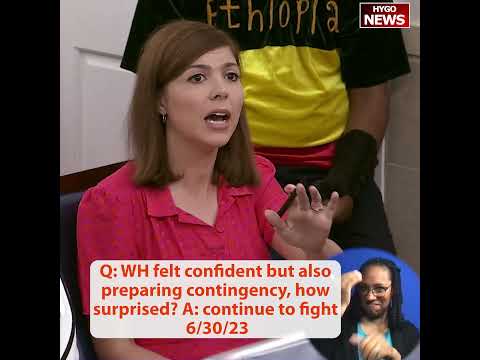
White House Felt Confident but Prepared Contingency Plans — How Surprised Were They by the Supreme Court Ruling?
On June 30, 2023, following the Supreme Court’s 6-3 ruling striking down President Biden’s student loan forgiveness program, a reporter confronted Education Secretary Miguel Cardona with a pointed question about credibility: for months, the White House had publicly expressed confidence that the law was on their side, yet behind the scenes they had been preparing contingency plans for exactly this outcome. The exchange exposed the gap between the administration’s public messaging and its private assessment of the legal risks.
The Confidence-Contingency Contradiction
The reporter’s question zeroed in on a tension that had been building throughout the legal challenge. White House officials had repeatedly told the press and the public that they were confident the student loan forgiveness program would survive legal scrutiny. At the same time, as had become public knowledge by the day of the ruling, the administration had been quietly developing alternative plans in case the Supreme Court ruled against them.
The reporter asked: “And for months, the White House had said they felt confident about the law being on their side. But then also, of course, you guys were preparing different scenarios, as we’ve now learned. So what were you bracing for today? How surprised were you both about this outcome? Or is this really what you expected, given some of the work that was put into the contingency?”
The question was significant because it challenged the administration’s narrative on two fronts. First, if officials truly believed the program was legally sound, why invest resources in contingency planning? Second, if they expected the ruling might go against them, why had they so publicly assured borrowers that relief was coming?
Cardona’s Defiant but Vague Response
Secretary Cardona’s answer avoided directly addressing whether the administration had been surprised by the ruling. Instead, he pivoted to expressing disagreement with the decision and vowing to continue the fight.
Cardona said: “I want to remind folks is we got a decision from SCOTUS. I thought — I think it’s the wrong decision. Forty-three million people were waiting for some relief. We recognize that this decision today, we had to read it very carefully to make sure we know which path we’re going to go forward. But the bottom line is: The President is going to continue to fight; we’re going to continue to fight.”
The response was notable for what it did not say. Cardona did not claim the ruling was unexpected. He did not explain why the administration had expressed confidence if they foresaw this possibility. And he did not provide specifics on what the “path forward” would look like. The statement was crafted for maximum defiance with minimum commitment to concrete next steps.
The reference to reading the decision “very carefully” suggested the administration was already looking for legal openings or narrow interpretations that might allow alternative forms of relief. This careful reading would eventually inform the SAVE income-driven repayment plan and other regulatory measures the administration pursued in the following months.
43 Million Borrowers and a Broken Promise
Cardona’s mention of “forty-three million people waiting for some relief” underscored the massive scale of the political fallout. The forgiveness program had been one of the Biden administration’s highest-profile domestic policy initiatives, and its invalidation left tens of millions of borrowers who had been counting on debt cancellation without a clear alternative.
The program had promised up to $10,000 in forgiveness for borrowers earning under $125,000 annually and up to $20,000 for Pell Grant recipients. At an estimated cost of over $400 billion, it would have been one of the largest executive actions in American history. The Supreme Court found that this scale of spending required explicit congressional authorization under the major questions doctrine, not just a creative interpretation of the HEROES Act’s emergency powers.
The Legal Battle Timeline
The path to the Supreme Court ruling had been months in the making. Biden announced the forgiveness program in August 2022, just months before the midterm elections. Six Republican state attorneys general promptly challenged the program, arguing it violated the separation of powers by unilaterally committing hundreds of billions in federal spending without congressional approval. A separate suit, Department of Education v. Brown, was filed by two borrowers who did not qualify for forgiveness under the program’s terms.
The 8th U.S. Circuit Court of Appeals issued an injunction blocking the program in November 2022. The Department of Justice asked the Supreme Court to lift the injunction, but the Court declined. When the case was argued on its merits, the 6-3 majority found that the administration had overstepped its statutory authority. Chief Justice Roberts wrote for the majority that the HEROES Act authorized the Secretary of Education to “waive or modify” loan provisions during emergencies, not to create an entirely new forgiveness program affecting tens of millions of borrowers.
Reading Between the Lines of the Contingency
The administration’s decision to prepare contingency plans while publicly projecting confidence was a standard political calculation, but one that carried risks. By maintaining the public posture that the program would survive, the White House kept borrowers engaged and politically invested in the outcome. The contingency planning, meanwhile, ensured the administration would not be caught flat-footed if the Court ruled against them.
The downside of this dual approach became apparent on the day of the ruling. Borrowers who had taken the administration at its word felt not just disappointed but misled. The revelation that officials had been preparing for this very scenario while telling the public everything would be fine eroded trust at a moment when the administration needed public patience for whatever came next.
The SAVE plan, announced on the same day as the ruling, was clearly the product of this contingency planning. It offered a different type of relief — restructured repayment rather than outright forgiveness — and operated under a different legal framework that did not require the same sweeping interpretation of executive authority.
Key Takeaways
- A reporter challenged the White House on the contradiction between publicly expressing confidence in the student loan forgiveness program’s legality while simultaneously preparing contingency plans for an adverse Supreme Court ruling.
- Education Secretary Cardona called the 6-3 decision “the wrong decision” but notably did not claim it was unexpected, instead pivoting to a vow that the President would “continue to fight.”
- The exchange highlighted the credibility gap created by the administration’s dual messaging strategy: reassuring borrowers publicly while preparing for defeat privately.
- Cardona referenced 43 million borrowers waiting for relief, underscoring the massive political fallout of the Supreme Court’s invalidation of the $400 billion forgiveness program.
- The contingency planning Cardona alluded to produced the SAVE income-driven repayment plan, announced the same day, which offered restructured payments rather than outright debt cancellation.