 HYGO News
 Q: sorry, I didn’t have a question A: Wait... You don’t have a question, James? Are you kidding me?
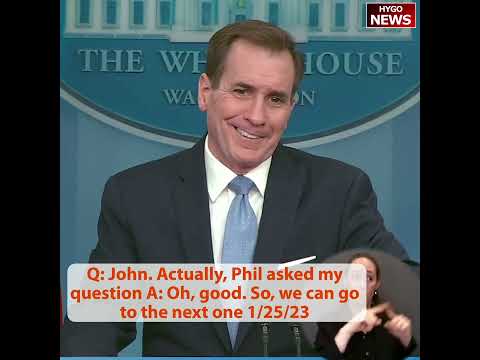
Briefing Banter: James Rosen “Doesn’t Have a Question” — KJP and Kirby Mock His Loquacity
In late January 2023, a lighthearted briefing moment developed when reporter James Rosen (Newsmax) said he didn’t have a question. “I’m sorry. I have a question. Thank you. Thank you. Wait, wait, wait. You don’t have a question, James? Are you kidding me?” KJP responded. Kirby joked: “I’m going to frame that transcript. Holy map.” Rosen then said: “I have two questions. This is simply a tribute to your own loquacity and thoroughness in briefing. Loquacity is… Jane Drosun for eloquence. I have two questions for you.” The exchange showed rare moment of light humor in briefing room before transitioning to substantive questions about tank training and intelligence missions in Ukraine.
The Briefing Banter
Briefing banter:
Light moment — Rare.
Multiple participants — Involved.
Humor — Shared.
Professional relationship — Evident.
Transcript-worthy — Noted.
The briefing had rare moment of genuine humor. Multiple participants engaged. Professional relationships evident. Moment was notable enough to be mentioned for transcript.
James Rosen Context
Rosen context:
Newsmax correspondent — Conservative outlet.
Known for loquacity — Long questions.
Professional reporter — Experienced.
Regular briefing — Attendee.
Sometimes controversial — Questioning style.
James Rosen was known for long, elaborate questions. His “loquacity” was recurring briefing feature. When he said he didn’t have question, it was notable departure.
”You Don’t Have a Question, James?”
KJP’s surprise. “Wait, wait, wait. You don’t have a question, James? Are you kidding me? Are you kidding me?” KJP said.
The surprise:
Genuine — Likely.
Repeated questions — Emphasis.
Professional rapport — Shown.
Personal acknowledgment — Of pattern.
Lighthearted — Tone.
KJP’s genuine surprise reflected Rosen’s typical lengthy questions. The surprise was lighthearted acknowledgment of their professional dynamic.
Kirby’s Humor
Kirby’s joke. “I’m going to frame that transcript. Holy map,” Kirby said.
The joke:
“Frame transcript” — Humor.
“Holy map” — Exclamation.
Occasion recognition — Of rare moment.
Self-deprecating — From Rosen’s perspective.
Professional camaraderie — Shown.
Kirby joining in with joke about framing transcript showed professional camaraderie. Rare briefing humor shared across participants.
”Tribute to Your Own Loquacity”
Rosen’s self-deprecating. “This is simply a tribute to your own loquacity and thoroughness in briefing,” Rosen said.
The self-deprecating:
Self-aware — Of his style.
“Loquacity” — Fancy word.
“Thoroughness” — Ironic.
Humor continued — Shared.
Word showmanship — Displayed.
Rosen’s self-deprecating reference to his own “loquacity” added to humor. Using fancy word to describe his wordiness was additional layer of humor.
”Jane Drosun for Eloquence”
The verbal slip:
“Jane Drosun” — Name-like.
Eloquence reference — Made.
Garbled — Delivery.
Humor spontaneous — Result.
Recovery — Moving on.
The “Jane Drosun for eloquence” phrase was garbled. Possibly typo for “plain synonym” or similar. The briefing had multiple verbal issues that day.
”I Have Two Questions for You”
The transition:
Actually had questions — After all.
Two questions — Offered.
Return to substance — Eventually.
Humor complete — Moving on.
Briefing resumed — Normal pattern.
After the humor, Rosen actually did have questions. The moment of “no question” was joke setup for continued briefing. Standard pattern resumed.
The Tank Training Question
Tank training:
M1 Abrams — Training required.
Ukrainian crews — Students.
Months — Needed.
U.S. Germany — Location possibilities.
Complex systems — Challenging.
The substantive question about tank training referenced U.S. commitment to send Abrams tanks to Ukraine. Training was major component requiring months.
The Intelligence Mission
Intelligence mission:
“Missed their target by 3,000” — Reference.
Possibly missile — Incident.
Incident details — Unclear.
Specific moment — Referenced.
Biden reaction — Asked.
The reference to American intelligence agency missing target was unclear. Possibly referenced specific incident where targeting went wrong. Context was important.
The Air Force One Question
Air Force One:
Mentioned — Briefing.
Tanks decision — When made.
Timing process — Question.
Inside knowledge — Sought.
Standard — Reporter questions.
The “when was decided to send” question was standard reporter inquiry about decision-making process. Reporters often asked about decision timing.
The Kirby Briefing Role
Kirby’s role:
NSC spokesman — Senior.
National security — Focus.
Regular briefer — Joint with KJP.
Credible — Generally.
Substantive engagement — Usually.
Kirby was senior NSC spokesperson often joining KJP for security matters. His presence at briefing was common for national security topics.
The Multi-Person Dynamic
Multi-person:
KJP — Primary.
Kirby — Security.
Reporters — Multiple.
Light moments — Shared.
Substantive matters — Discussed.
The multi-person dynamic added complexity to briefings. Different spokespeople for different topics. Reporters with varying interests. Professional dynamics developed.
The Mike Call
Mike (Memoli?):
Reporter — Name.
Called on — By Kirby.
Question ready — Presumably.
Standard procedure — Of calling.
Order — Being managed.
“Go ahead, Mike” suggested someone named Mike was called on to ask question. Standard briefing procedure of managing question order.
The Professional Humor
Professional humor:
Shared dynamic — Between regulars.
Rare moment — In briefings.
Relief — From tension.
Humanizing — For participants.
Viewer connection — Generated.
Professional humor in briefings was rare but valuable. Shared dynamics between regulars. Relief from tension. Humanizing for participants. Could connect with viewers.
The Briefing Room Culture
Briefing culture:
Formal primarily — Structure.
Personal relationships — Underlying.
Humor occasional — Welcome.
Respect — Generally maintained.
Working relationship — Ongoing.
The White House briefing room had formal structure with underlying personal relationships. Occasional humor was welcome. Respect was generally maintained. Working relationships continued regardless of conflicts.
The Rosen Reputation
Rosen reputation:
Long questions — Pattern.
Detailed inquiries — Often.
Intellectual style — Noted.
Polarizing — Some.
Respected — Others.
Rosen’s reputation for long, intellectual questions was established. Some colleagues appreciated his style. Others found it annoying. The moment mocked this pattern good-naturedly.
The Briefing Quality
Quality:
Multiple topics — Addressed.
Substantive mix — Typical.
Humor insertion — Refreshing.
Professional exchange — Overall.
Coverage value — Real.
The overall briefing quality was typical — multiple topics addressed, mix of substance and lighter moments, professional exchange throughout. Coverage value was real despite individual moments.
The Humor Value
Humor value:
Tension relief — Needed.
Humanizing — Beneficial.
Relationship maintenance — Important.
Viewer engagement — Increased.
Briefing function — Supported.
The humor value in briefings was real. Relief from tension. Humanizing all participants. Maintaining working relationships. Engaging viewers. Supporting overall briefing function.
The Substantive Topics
Substantive topics:
Tank training — Important.
Ukraine war — Central.
Intelligence — Mentioned.
Air Force — Reference.
Multiple issues — Covered.
The substantive topics in this briefing included Ukraine war matters. Tank training, intelligence operations, military decisions. Important policy substance.
The Ukraine War Context
Ukraine context:
Ongoing war — Since February 2022.
U.S. support — Extensive.
Military aid — Major.
Policy debates — Continuing.
Briefing questions — Regular.
The Ukraine war had generated continuous briefing questions throughout 2022-2023. Military aid decisions, policy debates, strategic discussions. Regular briefing content.
The Tank Decisions
Tank decisions:
31 Abrams — Committed.
Training — Required.
Timeline — Months.
Impact — Delayed.
Political — Significant.
The Abrams tank decision was major but training requirements meant impact would be delayed. Political significance was immediate even if military impact would come later.
The Intelligence Matters
Intelligence:
Various incidents — Occurred.
Some controversial — Reported.
Briefing questions — Arose.
Kirby expertise — Useful.
Security dimension — Real.
Various intelligence matters arose in briefings. Kirby’s background made him useful for engaging with these questions. Security dimension was always present.
The Transcript as Artifact
Transcript:
Permanent record — Created.
Historical value — Some.
Analyzed later — By various.
Coverage basis — For stories.
Accuracy — Variable.
White House briefing transcripts were permanent records with some historical value. Analyzed later for patterns. Basis for coverage stories. Accuracy was generally good though occasional errors.
The Briefing Schedule
Briefing schedule:
Regular — Most days.
Multiple spokespeople — Sometimes.
Various topics — Covered.
Press access — Maintained.
Transparency — Claimed.
The briefing schedule showed regular press access. Multiple spokespeople covering various topics. Administration’s transparency commitment demonstrated through regular briefings.
The Media Environment
Media environment:
Conservative outlets — Newsmax, Fox.
Mainstream — Traditional.
Mix — Of perspectives.
Regular access — All.
Professional — Mostly.
The White House media environment included diverse outlets. Conservative, mainstream, international. All had regular access. Professional interactions maintained despite ideological differences.
The Administrative Access Policy
Access policy:
Broad inclusion — Various outlets.
Conservative included — Newsmax present.
Professional standards — Maintained.
Questions allowed — From all.
Democratic norm — Observed.
Administration maintained broad media access including conservative outlets. Rosen from Newsmax was present and questioned. Professional standards maintained. Democratic norms observed.
The Briefing Format
Format:
Prepared statements — Sometimes.
Q&A — Extended.
Multiple topics — Covered.
Timing — 30-60 minutes.
Structure — Familiar.
The typical briefing format had prepared statements and extended Q&A covering multiple topics. Time varied but usually 30-60 minutes. Structure was familiar.
The Press Secretary Challenges
Challenges:
Preparation — Multiple topics.
Control — Of flow.
Accuracy — Required.
Substance vs. politics — Balance.
Human moments — Occasional.
Press secretary challenges were substantial. Multiple topics requiring preparation. Controlling briefing flow. Maintaining accuracy. Balancing substance and politics. Managing occasional human moments.
The Coverage Generated
Coverage:
Individual moments — Clipped.
Stories — Generated.
Analysis — Developed.
Social media — Spread.
Cumulative — Effect.
Individual briefing moments generated substantial coverage. Clipping interesting exchanges. Developing stories. Analysis. Social media spread. Cumulative effect on political narratives.
The Rare Humor
Rare humor:
Most briefings — Tense.
Humor infrequent — Sparse.
Notable when occurs — Coverage.
Shared moments — Valuable.
Democratic functioning — Reflects.
Humor in White House briefings was rare given political tensions. When it occurred, was notable and generated coverage. Shared moments reflected some functioning of democratic press relations despite political battles.
The Rosen Style Analysis
Rosen analysis:
Lengthy setups — For questions.
Intellectual framing — Typical.
Detail-oriented — Generally.
Sometimes abstract — Questions.
Polarizing — Style.
Rosen’s briefing style was intellectual and lengthy. Detailed, sometimes abstract questions with extensive setups. Style polarized opinions among colleagues and observers.
The Briefing Legacy
Legacy:
Transcripts preserved — Permanently.
Historical record — Value.
Analysis continuing — By scholars.
Political artifacts — Generated.
Democratic functioning — Documented.
White House briefings left permanent record of political moment. Historical record value. Analysis continuing by scholars. Political artifacts generated. Democratic functioning documented.
The Humanizing Moments
Humanizing:
Rare — But real.
Participants — Humanized.
Viewers — Connect.
Process — Redeemed.
Institution — Reinforced.
The rare humanizing moments in briefings were valuable. Participants humanized through humor. Viewers could connect. Process redeemed from pure political combat. Institution reinforced as democratic function.
Key Takeaways
- A lighthearted briefing moment developed when reporter James Rosen said he didn’t have a question.
- KJP expressed surprise: “Wait, wait, wait. You don’t have a question, James? Are you kidding me?”
- Kirby joked: “I’m going to frame that transcript. Holy map.”
- Rosen responded with self-deprecating humor: “I have two questions. This is simply a tribute to your own loquacity and thoroughness in briefing.”
- The humor referenced Rosen’s well-known pattern of lengthy elaborate questions.
- The briefing then transitioned to substantive questions about tank training for Ukrainian crews and intelligence matters.
Transcript Highlights
The following is transcribed from the video audio (unverified — AI-generated from audio).
- I’m sorry. I have a question. Thank you. Thank you. Wait, wait, wait. You don’t have a question, James? Are you kidding me?
- I’m going to frame that transcript. Holy map.
- I have two questions. This is simply a tribute to your own loquacity and thoroughness in briefing.
- Loquacity is… Jane Drosun for eloquence. I have two questions for you.
- The training process for learning how to operate these tanks.
- Mr. Kirby, what was the President’s reaction when he learned how to join the American intelligence agency, missed their target by 3,000?
Full transcript: 184 words transcribed via Whisper AI.