 HYGO News
 Q: Since not required why weigh in MBS immunity? A: refer you to State Dept
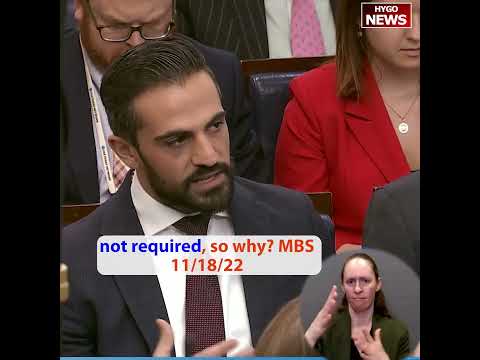
Reporter: Biden Admin Wasn’t Required to Grant MBS Immunity — Why Weigh In While “Re-evaluating the Relationship With Saudi Arabia”? KJP Defers to State Dept
On 11/21/2022, a reporter confronted White House Press Secretary Karine Jean-Pierre about the Biden administration’s decision to proactively file a legal brief granting Saudi Crown Prince Mohammed bin Salman (MBS) sovereign immunity from a lawsuit over the murder of journalist Jamal Khashoggi. The reporter’s critical framing: “The administration was invited by the court to make a filing in this case, but it was not required to do so. So why not let the court make its own determination as it relates to MBS’s immunity, particularly at a time when you’re supposedly re-evaluating the relationship with Saudi Arabia?” KJP’s response dodged: “A federal court requested the government’s legal position, so the Department of Justice provided it. That is what occurred. I would refer you to the State Department on any other specifics."
"Invited… But Not Required”
The reporter’s question rested on a critical distinction. The administration had made a voluntary choice to file a brief granting MBS immunity. The court had invited the administration’s views but had not compelled them. “The administration was invited by the court to make a filing in this case, but it was not required to do so,” the reporter said.
The distinction was significant because it affected how the decision should be interpreted. If the administration had been legally required to file, the decision would have been mandatory and therefore not indicative of the administration’s preferences. Since the filing was voluntary, it represented an affirmative choice to support MBS’s immunity — a choice the administration could have avoided by simply declining the court’s invitation.
This distinction meant the Biden administration had actively chosen to protect MBS from civil liability for the Khashoggi murder. The choice couldn’t be framed as legal obligation; it was a policy decision.
The Khashoggi Murder Context
The lawsuit at issue concerned the October 2018 murder of Jamal Khashoggi, a Washington Post columnist and American permanent resident, at the Saudi consulate in Istanbul. The U.S. intelligence community had concluded that MBS personally approved the operation that resulted in Khashoggi’s murder. The killing had been described as particularly brutal, with reports that Khashoggi was dismembered inside the consulate.
Khashoggi’s fiancée, Hatice Cengiz, and a nonprofit group Khashoggi founded had filed a civil lawsuit in U.S. federal court seeking damages from MBS and other Saudi officials for the murder. The lawsuit sought to hold MBS personally accountable for ordering the killing — accountability that had been denied through any other legal mechanism.
Biden had campaigned on making Saudi Arabia a “pariah” state specifically over the Khashoggi murder. His 2020 campaign had emphasized holding MBS accountable for the killing. During the 2020 Democratic primary, Biden had said about MBS: “We were going to in fact make them pay the price, and make them in fact the pariah that they are.”
The immunity filing represented a complete reversal of those commitments. Rather than helping hold MBS accountable, the Biden administration was actively intervening to protect him from civil liability.
”Particularly at a Time When You’re Re-evaluating”
The reporter’s second critical framing was the timing. “Particularly at a time when you’re supposedly re-evaluating the relationship with Saudi Arabia,” the reporter said.
The “supposedly re-evaluating” phrase was pointed. It acknowledged the administration’s claim that it was reviewing the U.S.-Saudi relationship while signaling skepticism about whether that review was genuine. If the administration was truly reconsidering how closely the United States should align with Saudi Arabia, granting MBS personal legal protection was an odd way to demonstrate distance.
The context was the OPEC+ production cut in October 2022, which had been widely interpreted as a Saudi rebuke of Biden’s diplomacy. Reports of the alleged “West Wing meltdown” over the OPEC+ decision had been followed by administration statements about reconsidering the relationship. MBS had reportedly mocked Biden’s mental acuity in private conversations. Relations between Biden and MBS personally were at a low point.
In this environment, granting MBS immunity was counterproductive to any “re-evaluation” narrative. It was a gift to MBS at a time when the administration was supposedly pressuring him. The contradiction between the stated policy review and the immunity filing revealed which direction the administration was actually moving — toward accommodation rather than confrontation.
”Federal Court Requested”
KJP’s response emphasized the procedural framing. “So look, look again, it’s a federal court requested the government’s legal position, so the Department of Justice provided it. That is what occurred and that is what happened,” KJP said.
The response was technically accurate but substantively misleading. Yes, the court had requested the administration’s views. But “requested” was different from “required.” The administration could have declined to provide an opinion, declined to take a position, or submitted a brief that explicitly left the decision to the court.
Instead, DOJ had filed a brief specifically supporting MBS’s immunity claim. That was an active decision, not a passive response to a court request. KJP’s framing obscured the voluntary nature of the administration’s involvement.
“It was not required to do so,” KJP acknowledged — conceding the reporter’s central point while trying to deflect its implications. “I would refer you to the State Department on any other specifics.”
The Immunity Decision’s Consequences
The legal effect of the immunity filing was significant. Weeks after the filing, a federal judge dismissed the civil lawsuit against MBS, citing the administration’s immunity determination. Khashoggi’s family and the nonprofit group lost their opportunity to hold MBS personally accountable in U.S. courts.
The decision had diplomatic consequences too. Saudi Arabia was emboldened by the immunity ruling — it demonstrated that MBS could commit serious offenses (ordering the murder of an American resident and Washington Post journalist) without facing meaningful consequences from the United States. The “pariah” framing Biden had used as a candidate was definitively abandoned as policy.
For press freedom advocates and human rights organizations, the decision was devastating. Khashoggi had been killed specifically because of his journalism — his columns had been critical of the Saudi government. The murder was seen as an attack on journalism itself. The administration’s decision to protect MBS from civil liability was interpreted as tacit acceptance that journalists could be killed by foreign governments without U.S. legal recourse.
The Broader Saudi Policy Retreat
The MBS immunity filing was part of a broader pattern of the Biden administration retreating from its Saudi Arabia campaign positions:
- 2020 candidate Biden: “We were going to make them pay the price, make them the pariah they are.”
- 2022 President Biden: Fist-bumped MBS in Jeddah, sought OPEC+ cooperation, granted MBS immunity from Khashoggi civil suit.
Every major Biden commitment about Saudi Arabia had been reversed by the end of 2022. The “pariah” had become a diplomatic partner. Human rights concerns had been subordinated to energy cooperation. Accountability for the Khashoggi murder had been traded for the possibility of Saudi cooperation on oil prices.
The MBS immunity decision completed this reversal. The man Biden had promised to hold accountable was now being actively protected by the Biden administration.
Key Takeaways
- The Biden administration voluntarily filed a brief granting MBS immunity from a lawsuit over the Khashoggi murder, though the court had only “invited” rather than required the filing.
- A reporter noted the contradiction: why grant immunity while “supposedly re-evaluating the relationship with Saudi Arabia”?
- KJP conceded “it was not required to do so” but deferred specifics to the State Department.
- The immunity decision directly contradicted Biden’s 2020 campaign commitment to make Saudi Arabia a “pariah” over the Khashoggi murder.
- The decision represented the completion of Biden’s reversal on Saudi policy — from pariah to partner in two years.
Transcript Highlights
The following is transcribed from the video audio (unverified — AI-generated from audio).
- The administration was invited by the court to make a filing in this case, but it was not required to do so.
- Why not let the court make its own determination as it relates to MBS’s immunity?
- Particularly at a time when you’re supposedly re-evaluating the relationship with Saudi Arabia?
- A federal court requested the government’s legal position, so the Department of Justice provided it.
- It was not required to do so.
- I would refer you to the State Department on any other specifics.
Full transcript: 104 words transcribed via Whisper AI.