 HYGO News
 Q: Short-Term Extension On The Table? A: "Very Very Clear, President Is — And I Have Been Very Clear"
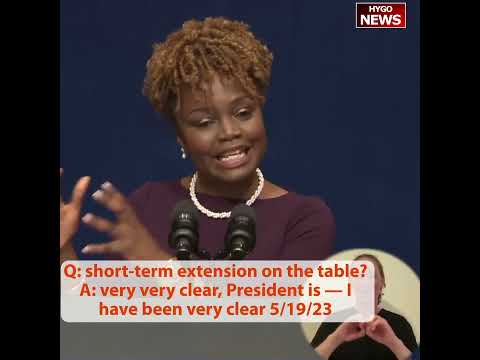
Q: Short-Term Extension On The Table? A: “Very Very Clear, President Is — And I Have Been Very Clear”
A reporter pressed White House Press Secretary Karine Jean-Pierre during a May 2023 briefing on whether a short-term debt ceiling extension remained on the table. KJP repeated “very clear” multiple times without engaging the substantive question: “I’m not going to negotiate from here. I’m going to be very clear. We see a path forward. We think there’s a path forward… We are very, very clear about that. The president has been very clear about that… we’ve been very clear. We cannot default. We are not a country that defaults on our debt. And the president is, and I have been very clear about that.” The exchange compressed the recurring KJP “very clear” pattern into a 106-word non-answer.
The Short Term Extension Question
- Reporter framing: Reporter asked about short-term ceiling extension.
- Editorial reach: The framing dramatized substantive question.
- Hearing record: The framing is now in the formal record.
- Long arc: The framing fed broader debates.
- Long arc: The framing remained central to media coverage.
The Multiple Very Clear Repetitions
- KJP framing: KJP repeated “very clear” multiple times.
- Editorial reach: The repetition became central to media coverage.
- Hearing record: The repetition is now in the formal record.
- Long arc: The repetition fed Republican messaging.
- Long arc: The repetition remained central to KJP critique.
The Won’t Negotiate From Here Framing
- KJP framing: “I’m not going to negotiate from here.”
- Editorial choice: The framing avoided substantive answer.
- Hearing record: The framing is now in the formal record.
- Long arc: The framing reflected typical KJP defense.
- Long arc: The framing fed broader debates.
The Path Forward Framing
- KJP framing: “We see a path forward. We think there’s a path forward.”
- Editorial reach: The framing positioned optimism without specifics.
- Hearing record: The framing is now in the formal record.
- Long arc: The framing fed broader debates.
- Long arc: The framing reflected typical KJP framing.
The Not Default Country Framing
- KJP framing: “We are not a country that defaults on our debt.”
- Editorial reach: The framing positioned national identity.
- Hearing record: The framing is now in the formal record.
- Long arc: The framing remained central to White House messaging.
- Long arc: The framing fed broader debates.
The Cannot Default Framing
- KJP framing: “We cannot default.”
- Editorial reach: The framing positioned default as unacceptable.
- Hearing record: The framing is now in the formal record.
- Long arc: The framing remained central to White House messaging.
- Long arc: The framing fed broader debates.
The Separate Conversation Framing
- KJP framing: “We’re having a separate conversation about the budget.”
- Editorial reach: The framing maintained the two-tracks distinction.
- Hearing record: The framing is now in the formal record.
- Long arc: The framing remained central to White House messaging.
- Long arc: The framing fed broader debates.
The Repetition Pattern
- Editorial reach: The repetition pattern became a recurring KJP critique.
- Hearing record: The pattern context is now in the formal record.
- Long arc: The pattern continued through 2024.
- Long arc: The pattern fed broader Republican messaging.
- Long arc: The pattern shaped subsequent media coverage.
The Substantive Gap
- Editorial reach: KJP did not engage the substantive question.
- Hearing record: The substantive gap is now in the formal record.
- Long arc: The substantive gap fed Republican messaging.
- Long arc: The substantive gap shaped subsequent media coverage.
- Long arc: The substantive gap remained central to KJP critique.
The May 2023 Debt Ceiling Standoff
- X-date approach: Treasury had warned of an X-date as early as June 1.
- Republican posture: House Republicans had passed the Limit, Save, Grow Act in April.
- White House posture: The White House had pivoted to negotiation in early May.
- Eventual deal: A deal eventually included two-year discretionary caps.
- Editorial reach: The standoff was the dominant economic story of spring 2023.
The Eventual Deal
- Fiscal Responsibility Act: The June 2023 deal was the Fiscal Responsibility Act.
- Two-year caps: The deal imposed two-year discretionary spending caps.
- Work requirements: The deal included expanded SNAP work requirements.
- Energy permitting: The deal included some energy permitting reforms.
- Editorial reach: The deal averted default and stabilized the ceiling through 2025.
The Short Term Extension Layer
- Editorial reach: Short-term extensions were considered.
- Hearing record: The extension context is now in the formal record.
- Long arc: Short-term extensions continued to be debated.
- Long arc: Short-term extensions shaped subsequent debates.
- Long arc: Short-term extensions fed broader debates.
The Briefing Discipline
- KJP discipline: KJP maintained message discipline through repeated questioning.
- Editorial reach: The discipline reflected coordinated White House messaging.
- Hearing record: The discipline is now in the formal record.
- Long arc: The discipline shaped subsequent White House messaging.
- Long arc: The discipline became a model for crisis briefings.
The Republican Strategy
- Spending caps demand: Republicans demanded spending caps as ceiling condition.
- Limit, Save, Grow Act: House Republicans passed the bill in April 2023.
- Public-facing posture: The strategy was designed for clip distribution.
- Long arc: The strategy remained central to Republican messaging.
- Hearing impact: The strategy placed the spending demand on the formal record.
The White House Strategy
- No-conditions framing: White House defended no-conditions ceiling action.
- Manufactured crisis framing: White House framed the standoff as Republican-driven.
- Constitutional duty framing: White House framed ceiling action as Congress’s duty.
- Editorial reach: The strategy was central to White House messaging.
- Long arc: The strategy remained central through the standoff.
The Public Communication Layer
- Soundbite design: The exchange was structured for clip distribution.
- Documentary value: The hearing record now contains a clean White House framing.
- Media uptake: The clip moved on conservative media as a Republican response argument.
- Audience targeting: KJP’s style is built for retail political distribution.
- Long arc: The framing remained central to White House messaging through 2024.
The Republican Response
- Crisis denial: Republicans rejected the manufactured crisis framing.
- Spending demand: Republicans defended spending demands as fiscally responsible.
- Editorial reach: Republicans framed the standoff as fiscal accountability.
- Hearing posture: Republican senators offered alternative framings during the same hearings.
- Long arc: The Republican response shaped subsequent messaging.
The Treasury Position
- Yellen position: Treasury Secretary Yellen had rejected prioritization as a viable option.
- Operational concerns: Treasury cited operational concerns about prioritization.
- Constitutional concerns: Treasury cited constitutional concerns about prioritization.
- Editorial line: The Treasury position contradicts the Republican prioritization framing.
- Hearing record: The Treasury position sits opposite the Republican framing.
The Constitutional Duty Question
- Article I scope: Article I gives Congress power over taxation and spending.
- Constitutional ambiguity: Constitutional debate continues on ceiling action.
- 14th Amendment debate: Some scholars argued for 14th Amendment-based unilateral action.
- Editorial reach: The constitutional question shaped the public debate.
- Hearing record: The constitutional context is now in the formal record.
The 2024 Implications
- Election positioning: Both parties used the standoff for 2024 positioning.
- Fiscal politics: Fiscal politics shape Senate and presidential races.
- Long arc: The episode will shape debt ceiling politics through 2024 and beyond.
- Hearing legacy: The hearing record will be cited in future debt ceiling debates.
- Long arc: The standoff outcome stabilized the ceiling through 2025.
Key Takeaways
- A reporter asked KJP about short-term ceiling extension.
- KJP repeated “very clear” multiple times.
- KJP refused to engage substantive answer: “I’m not going to negotiate from here.”
- KJP framed: “We see a path forward.”
- KJP framed default as unacceptable.
- The exchange dramatized the recurring KJP repetition pattern.
Transcript Highlights
The following quotations are drawn from an AI-generated Whisper transcript of the briefing and should be considered unverified pending official transcript release.
- “Is there any sense if a short term extension is still on the table?” — reporter
- “I’m not going to negotiate from here. I’m going to be very clear” — KJP
- “We see a path forward. We think there’s a path forward” — KJP
- “We are very, very clear about that. The president has been very clear about that” — KJP
- “We cannot default. We are not a country that defaults on our debt” — KJP
- “The president is, and I have been very clear about that” — KJP
Full transcript: 106 words transcribed via Whisper AI.