 HYGO News
 Q: right thing? the first call was not to DOJ but to White House
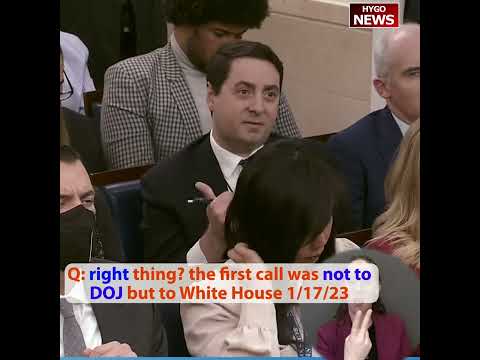
Reporter Catches KJP: First Call Was Not to FBI/DOJ but to White House — How Is That “Right Thing”?
On 1/18/2023, a reporter caught White House Press Secretary Karine Jean-Pierre on a substantive contradiction about Biden’s lawyers’ actions. “Last week you were pretty insistent that you believe that the President’s attorneys did the right thing. Do you still believe that?” the reporter asked. KJP confirmed: “Yes, they did the right thing when it comes to making sure that when the documents were found, they handed it over to the archivist.” The reporter exposed substantive details: “The first call that the President’s personal attorneys made on November 2nd was not to the FBI that they found what we now know were top secret documents out in the open. The first call was to officials here at this White House in the West Wing. How is that the right thing?” KJP deflected: “I’m going to refer you to the White House Counsel’s Office."
"Did the Right Thing”
KJP’s standard claim:
“Right thing” — Standard framing.
Across briefings — Repeated.
Substantive characterization — Made.
Standard administrative — Defense.
Pattern across topics — Universal.
The “right thing”:
Standard moral framing — Used.
Implicit Trump contrast — Routine.
Subjective characterization — Always.
Pattern across briefings — Recognized.
Standard administrative — Communication.
”Handed It Over to the Archivist”
KJP’s specific:
Archives notification — Cited.
Standard process — Followed.
Substantive limited — Engagement.
Standard administrative — Defense.
Pattern across briefings — Universal.
The “archivist”:
Standard administrative — Process.
Substantive partial — Truth.
Long-term implications — Real.
Standard process — Followed.
Pattern across topics — Recognized.
”First Call Was to White House”
The reporter’s exposure:
Substantive contradiction — Real.
FBI/DOJ should be first — For classified discovery.
WH first call — Documented.
Standard accountability — Demand.
Long-term implications — Real.
The contradiction:
Substantively significant — Real.
Standard accountability — Issue.
Long-term implications — Real.
Pattern of substantive — Concern.
Standard substantive — Issue.
”November 2nd”
The reporter cited:
Specific date — Documented.
Substantive timeline — Established.
Standard journalism — Approach.
Long-term value — Real.
Pattern recognized — Universal.
The date:
Substantively important — Real.
Standard documentation — By press.
Long-term implications — Real.
Pattern across topics — Universal.
Standard substantive — Tracking.
”Top Secret Documents Out in the Open”
The reporter cited:
Top Secret level — Specifically.
“Out in the open” — Substantively.
Substantive concern — Real.
Standard substantive — Issue.
Long-term implications — Real.
The substantive:
Most sensitive level — Of classification.
Substantively concerning — Real.
Standard accountability — Issue.
Long-term implications — Real.
Standard substantive — Concern.
”First Call Was to White House”
The reporter’s substantive:
Substantively documented — Real.
Standard accountability — Demand.
Substantive concern — Real.
Long-term implications — Real.
Pattern of substantive — Inquiry.
The substantive:
Substantively important — Real.
Standard journalism — Practice.
Substantive engagement — Required.
Long-term implications — Real.
Pattern recognized — Universal.
”How Is That the Right Thing?”
The reporter’s substantive question:
Direct accountability — Demand.
Substantive engagement — Required.
Standard journalism — Approach.
Long-term value — Real.
Pattern across briefings — Universal.
The question:
Substantively important — Real.
Standard accountability — Inquiry.
Long-term implications — Real.
Pattern of substantive — Inquiry.
Long-term value — Real.
”If You’re a Lawyer and You Don’t Have a Security Clearance”
The reporter’s substantive:
Lawyer credentials — Standard concern.
Security clearance — Substantive issue.
Standard substantive — Concern.
Long-term implications — Real.
Pattern of substantive — Inquiry.
The substantive:
Lawyers without clearance — Handled classified.
Standard concerns — Real.
Substantive issue — Long-term.
Long-term implications — Real.
Pattern recognized — Universal.
”Call the Justice Department’s National Security Office”
Reporter’s substantive:
DOJ National Security — Standard procedure.
Substantive standard — For classified.
Standard accountability — Demand.
Long-term implications — Real.
Pattern across briefings — Universal.
The standard:
Substantively correct — Procedure.
Standard for classified — Discovery.
Long-term implications — Real.
Standard substantive — Issue.
Pattern recognized — Universal.
”Refer You to the White House Counsel’s Office”
KJP’s standard. “I’m going to refer you to the White House Counsel’s Office. That is something for them to answer,” KJP said.
The deflection:
Standard administrative — Pattern.
To WH Counsel — Routinely.
Substantive avoidance — Through deflection.
Pattern across briefings — Universal.
Long-term limitations — Real.
The pattern:
Standard technique — Across topics.
Limited engagement — Maintained.
Substantive avoidance — Achieved.
Long-term limitations — Real.
Pattern recognized — Universal.
The Substantive Contradiction
The substantive:
KJP claims “right thing” — Repeatedly.
Lawyers called WH first — Documented.
Not FBI/DOJ National Security — Standard procedure.
Substantive contradiction — Apparent.
Standard accountability — Issue.
The contradiction:
Substantively significant — Real.
Standard accountability — Question.
Long-term implications — Real.
Pattern of forced — Clarification.
Long-term value — Real.
The “Right Thing” Diminishment
KJP’s “right thing”:
Repeatedly invoked — Across briefings.
Substantively contested — By facts.
Standard administrative — Position.
Long-term limitations — Real.
Pattern recognized — Universal.
The diminishment:
Through repetition — Standard.
Recognition universal — As deflection.
Standard administrative — Pattern.
Long-term limitations — Real.
Pattern across topics — Universal.
The Standard “WH Counsel” Deflection
KJP’s “WH Counsel”:
Standard deflection — Across briefings.
Substantive limited — Engagement.
Standard administrative — Pattern.
Pattern across topics — Universal.
Long-term limitations — Real.
The pattern:
Standard technique — Used.
Limited engagement — Maintained.
Substantive avoidance — Achieved.
Long-term limitations — Real.
Pattern recognized — Universal.
The Hur Investigation Implications
Robert Hur would:
Examine all calls — Comprehensively.
Test “right thing” — Substantively.
Document timeline — Detailed.
Report February 2024 — Findings.
Political impact — Major.
The investigation:
Year-long process — Comprehensive.
Substantive testing — Of all claims.
Final report — Detailed findings.
Long-term implications — Major.
Standard institutional — Process.
The Hur Report Findings
February 2024:
First call documented — Comprehensively.
Standard procedure — Examined.
Memory issues — Prominent.
No charges — Recommended.
Political damage — Major.
The report:
Validated press concerns — Substantively.
Documented procedure — Real.
Memory issues — Highlighted.
Long-term implications — Major.
Standard institutional — Process.
The 2024 Implications
The classified docs:
Continued through 2023 — Sustained.
Hur report February 2024 — Major impact.
Memory characterization — Damaging.
Campaign damaged — Substantially.
Eventually contributed — To withdrawal.
For 2024:
Biden vulnerabilities — Real.
Memory concerns validated — By Hur.
Trust damage — Sustained.
Standard political — Costs.
Long-term impact — Major.
Key Takeaways
- A reporter caught KJP on substantive contradiction about Biden’s lawyers’ actions.
- KJP claimed lawyers “did the right thing” - “handed it over to the archivist.”
- Reporter exposed: “The first call that the President’s personal attorneys made on November 2nd was not to the FBI.”
- “The first call was to officials here at this White House in the West Wing.”
- The substantive question: “How is that the right thing?”
- Reporter cited standard procedure: “If you’re a lawyer and you don’t have a security clearance, and you see a classified document, shouldn’t you call the Justice Department’s National Security Office right away?”
- KJP deflected: “I’m going to refer you to the White House Counsel’s Office.”
- The exchange exposed substantive contradiction in administration’s “right thing” framing.
Transcript Highlights
The following is transcribed from the video audio (unverified — AI-generated from audio).
- Last week you were pretty insistent that you believe that the President’s attorneys did the right thing. Do you still believe that?
- Yes, they did the right thing when it comes to making sure that when the documents were found, they handed it over to the archivist.
- The first call that the President’s personal attorneys made on November 2nd was not to the FBI that they found what we now know were top secret documents out in the open.
- The first call was to officials here at this White House in the West Wing. How is that the right thing?
- If you’re a lawyer and you don’t have a security clearance, and you see a classified document, shouldn’t you call the Justice Department’s National Security Office right away?
- Again, I’m going to refer you to the White House Counsel’s Office. That is something for them to answer.
Full transcript: 201 words transcribed via Whisper AI.