 HYGO News
 Q: propaganda from adversaries A: refer you to DOJ
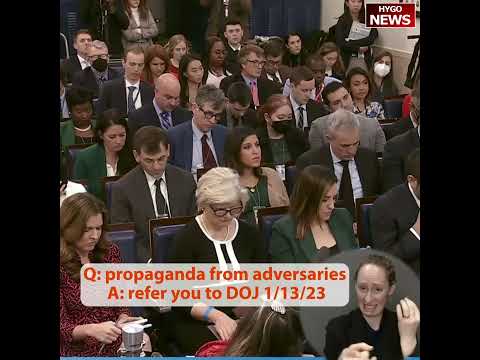
Reporter: Foreign Adversaries Pushing Propaganda on Classified Docs Scandal — KJP: “Refer You to DOJ”
On 1/13/2023, a reporter raised an important national security concern. “We have seen online propaganda from adversaries seeking to take advantage of the revelation of the classified documents. I wonder if you can share with us whether the administration is anticipating any kind of national security implications from this fallout. Are you hearing any kind of intelligence and are you doing anything to deter those threats?” the reporter asked. White House Press Secretary Karine Jean-Pierre deflected: “Again, I’m just not going to talk about any intelligence from here. I would certainly, anything that’s related to this, I would refer you to the Department of Justice.”
The Foreign Adversary Propaganda
The reporter reported:
Online propaganda observed — From adversaries.
About classified documents — Scandal.
Foreign actors exploiting — Revelation.
National security concern — Legitimate.
Administration awareness — Tested.
The propaganda:
Real phenomenon — Actually occurred.
Russia, China, others — Likely actors.
Political warfare — Standard.
Exploitation of scandal — Predictable.
Strategic communication — By adversaries.
The National Security Concern
The concern:
Adversaries exploit scandal — Standard.
Political divisions — Highlighted.
American credibility — Damaged.
Security weaknesses — Advertised.
Strategic advantage — To adversaries.
The administration:
Should address propaganda — Publicly.
Counter-messaging — Warranted.
Intelligence assessment — Expected.
Deterrent actions — Possibly.
Substantive response — Required.
The Reporter’s Substantive Questions
The reporter’s inquiry:
Anticipating implications — From fallout.
Hearing intelligence — About threats.
Doing anything — To deter.
Administration awareness — Tested.
Substantive accountability — Demanded.
The questions:
National security substance — Serious.
Professional inquiry — Standard.
Public interest — Legitimate.
Accountability demanded — Appropriately.
Required substantive response — Ideally.
”Not Going to Talk About Intelligence”
KJP’s deflection. “Again, I’m just not going to talk about any intelligence from here,” KJP said.
“Not going to talk about intelligence”:
Standard deflection — For intelligence matters.
Legitimate to some degree — Generally.
Classified concerns — Real.
But counter-messaging — Different.
Substantive engagement — Avoided.
The intelligence deflection:
Appropriate for specifics — Methods/sources.
Not appropriate for — Counter-messaging.
General awareness — Could be addressed.
Administrative response — Could be described.
Standard broad deflection — Used.
The DOJ Deflection
“Anything that’s related to this, I would refer you to the Department of Justice,” KJP said.
DOJ referral:
Universal deflection — Standard.
Not appropriate — For national security propaganda.
Different agency — For intelligence matters.
Substantive avoidance — Through referral.
Administrative bounce — Again.
The DOJ:
Handles criminal investigation — Of documents.
Not foreign propaganda — Generally.
Not intelligence assessment — Specifically.
Not counter-messaging — Typically.
Wrong deflection — Actually.
The Appropriate Responses
The reporter’s questions could have:
Been substantively answered — Partially.
General assessment shared — Without specifics.
Counter-messaging described — Publicly.
Administrative concern — Acknowledged.
Some engagement — Professional.
Without specifics:
Administration could — Acknowledge concern.
Describe response — Generically.
Reassure public — About awareness.
Demonstrate competence — Substantively.
None of which — Occurred.
The National Security Substance
The substantive concern:
American adversaries exploit — Political scandals.
Russia, China, Iran — Typical actors.
Propaganda warfare — Ongoing.
Information manipulation — Standard.
Strategic advantage — Sought.
American response typically:
Intelligence community monitors — Systematically.
Counter-messaging — Deployed.
Public education — Sometimes.
Administrative awareness — Demonstrated.
Standard practice — For such situations.
The Administrative Responsibility
The administration responsible:
For national security — Broadly.
For monitoring threats — Systematically.
For counter-messaging — When appropriate.
For public reassurance — About competence.
Substantive response — To propaganda.
The administration:
Should have acknowledged concern — Publicly.
Should have described response — Generically.
Could have maintained secrecy — On specifics.
Could have demonstrated — Competence.
Instead deflected — Standard technique.
The Information Warfare Context
Modern information warfare:
Constant adversary activity — From various actors.
Political scandals exploited — Standard.
American credibility — Undermined.
Democratic divisions — Highlighted.
Strategic objective — Of adversaries.
The context:
Required sophisticated response — From administration.
Public awareness — Important.
Counter-messaging — Standard.
Intelligence coordination — Necessary.
Democratic resilience — At stake.
The Standard National Security Communication
For such matters:
General awareness — Acknowledged.
Specific operations — Not discussed.
Counter-messaging deployed — Publicly.
Administrative competence — Demonstrated.
Strategic communication — Maintained.
The administration could have:
Acknowledged concern — About propaganda.
Described general response — Monitoring etc.
Provided reassurance — Publicly.
Maintained operational secrecy — Legitimately.
Balanced transparency and security — Professionally.
The Missed Opportunity
The briefing missed:
Public education opportunity — On adversary tactics.
Administration demonstration — Of competence.
Counter-messaging deployment — Publicly.
Democratic resilience showing — To public.
Substantive engagement — With real concern.
Instead:
Generic DOJ referral — Incorrect.
Intelligence deflection — Overbroad.
Substantive avoidance — Complete.
Pattern continuation — Standard.
Missed opportunity — Clear.
The Specific Propaganda Examples
Foreign adversary propaganda included:
Russia — Amplifying classified docs story.
China — Highlighting American dysfunction.
Iran — Political warfare content.
Various actors — Standard activity.
Online amplification — Across platforms.
The propaganda:
Real and documented — By various sources.
Exploitation predictable — For any scandal.
American vulnerabilities — Highlighted.
Administration knew — Presumably.
Public response — Warranted.
The Intelligence Community Response
The intelligence community:
Monitors adversary messaging — Systematically.
Counter-messages sometimes — Strategically.
Coordinates across agencies — Routinely.
Reports to Congress — Sometimes.
Public reports — Rarely.
For this situation:
Monitoring certainly occurred — Technically.
Assessment made — Probably.
Counter-response considered — Likely.
Public communication — Could have been.
Standard operation — Implied.
The Administrative Silence Costs
The silence:
Missed public education — Opportunity.
Failed to demonstrate — Competence.
Limited public understanding — Of threats.
Ceded messaging ground — To adversaries.
Democratic resilience undermined — Slightly.
The costs:
Short-term political protection — Small.
Long-term strategic damage — Real.
Public awareness — Reduced.
Adversary advantage — Maintained.
Administrative reputation — Damaged.
The Reporter’s National Security Focus
The reporter:
Raised legitimate concern — About propaganda.
Asked substantive questions — About response.
Expected administrative engagement — Reasonably.
Professional inquiry — Standard.
Public interest served — Clearly.
The focus:
Beyond classified documents — Directly.
Broader national security — Implications.
Substantive inquiry — Legitimate.
Expected response — Substantive.
Standard journalism — On national security.
The DOJ Referral’s Inadequacy
DOJ doesn’t handle:
Foreign propaganda — Generally.
Intelligence matters — Typically.
Counter-messaging — Usually.
National security response — Broadly.
Strategic communication — Normally.
The referral:
Misdirected substantively — Entirely.
Inappropriate for question — Obviously.
Standard deflection — Misused.
Administrative confusion — Or deliberate misdirection.
Pattern recognition — By observers.
The Counter-Messaging Importance
Counter-messaging matters:
For democratic resilience — Generally.
Against foreign propaganda — Specifically.
For public awareness — Education.
For policy legitimacy — Maintenance.
For strategic advantage — Over adversaries.
Administration counter-messaging:
Would have been appropriate — For this situation.
Even without intelligence specifics — Generally.
Administrative competence — Demonstrable.
Public service — Educational.
Standard practice — Usually.
The Missed Communications Opportunity
The administration missed:
Public education on propaganda — Generally.
Counter-message deployment — Specifically.
Administrative competence — Demonstration.
Democratic resilience — Showing.
Strategic communication — Publicly.
This missed:
Opportunity for leadership — Publicly.
Educational moment — For democracy.
Counter-adversary messaging — Specifically.
Administrative credit — Possible.
Standard missed opportunities — In crisis management.
The Pattern Consistency
The standard deflection:
Applied to national security — As to documents.
Same DOJ referral — Inappropriate here.
Same intelligence deflection — Overbroad.
Same substantive avoidance — Pattern.
Same administrative silence — Consistent.
The consistency:
Over-applied deflection — Throughout.
Inappropriate for topic — Often.
Standard technique deployed — Regardless.
Substantive avoidance — Maintained.
Pattern recognized — Universally.
The Democratic Communication Principle
Democratic leadership:
Engages substantively — With legitimate concerns.
Educates public — About threats.
Demonstrates competence — Publicly.
Builds resilience — Through transparency.
Standard expected — Behavior.
The administration’s approach:
Deflected substantively — Across topics.
Limited public education — Through silence.
Failed to demonstrate — Competence.
Standard political crisis management — Over democratic function.
Long-term costs — Real.
The Press Role on National Security
The press:
Ask substantive questions — On security matters.
Press for engagement — Professionally.
Report deflections — When occurring.
Inform public — About gaps.
Serve democratic function — Essentially.
The reporter:
Asked legitimate questions — Professionally.
Received inadequate answers — Standard.
Built record — For coverage.
Served accountability — Through inquiry.
Standard professional — Role.
The Broader Information Environment
The information environment:
Complex and contested — Always.
Adversaries active — Constantly.
Democracy at stake — Fundamentally.
Administrative role — Important.
Public education — Essential.
Administrative failure:
To engage substantively — Damaged democracy.
Missed opportunity — To strengthen resilience.
Enabled adversary — Messaging.
Standard short-term — Thinking.
Long-term costs — Real.
The Classified Documents Continuing Context
The classified docs scandal:
Ongoing saga — Weeks of coverage.
Political damage — Accumulating.
Administrative deflections — Standard.
Media coverage — Sustained.
National security dimensions — Emerging.
Each aspect:
Required administration response — Ideally.
Substantive engagement — Expected.
Standard deflection — Deployed.
Pattern consistent — Throughout.
Credibility costs — Growing.
The Hur Investigation Implications
The Hur investigation:
Would examine specifics — Year-long.
Beyond briefings — Independent.
Substantive review — Comprehensive.
Report eventually — February 2024.
Political impact — Major.
The investigation:
Separate from briefings — Institutionally.
Would provide answers — Eventually.
Press briefings limitations — Accepted.
Long-term accountability — Through investigation.
Democratic function — Served eventually.
The Standard Administrative Pattern
The pattern:
Deflection across topics — Consistent.
Ritual language — Deployed.
Process references — Generic.
DOJ/agency deflections — Standard.
Substantive avoidance — Throughout.
This pattern:
Characterized briefings — Broadly.
Beyond classified documents — Generally.
Administrative protection — Primary.
Political messaging — Over public education.
Democratic function — Limited.
The Public Accountability Gap
The public:
Didn’t learn about propaganda — Through briefings.
Didn’t see administration response — Publicly.
Didn’t benefit from — Counter-messaging.
Received substantive silence — Instead.
Democratic education missed — Entirely.
This gap:
Damaged democratic function — Slightly.
Ceded information space — To adversaries.
Limited public awareness — Of threats.
Standard administrative — Failure.
Pattern across topics — Unfortunately.
The Foreign Adversary Advantage
Foreign adversaries benefit from:
American political scandals — Always.
Administrative silence — On counter-messaging.
Public confusion — About response.
Democratic vulnerabilities — Highlighted.
Strategic messaging ground — Uncontested.
This advantage:
Persists structurally — Across administrations.
Particularly acute — During scandals.
Administrative responsibility — To counter.
Standard unmet — Often.
Democratic costs — Real.
The Key Unanswered Questions
The reporter’s questions:
National security implications — Unanswered.
Intelligence awareness — Undisclosed.
Counter-messaging efforts — Unexplained.
Administrative response — Not described.
Substantive engagement — Absent.
Each question:
Deserved substantive response — From administration.
Public interest warranted — Engagement.
Administrative competence — Could have been shown.
Democratic education — Possible.
Missed opportunity — Across all.
The Long-term Costs
The administrative silence:
Damaged democratic resilience — Slightly.
Enabled foreign propaganda — Somewhat.
Limited public awareness — Of threats.
Missed educational opportunity — Clearly.
Standard short-term thinking — Over long-term.
Long-term:
Each missed opportunity — Adds up.
Democratic function eroded — Gradually.
Public engagement reduced — Over time.
Administrative credibility — Damaged.
Standard political cost — Accumulated.
The Broader Briefing Pattern
The classified docs briefings:
Uniformly deflective — Across topics.
Including national security — Specifically.
Process references — Generic.
Substantive avoidance — Consistent.
Pattern established — For coverage.
The pattern:
Limited briefing value — Substantively.
Press work complex — Navigating.
Public information scarce — From administration.
Democratic function — Challenged.
Historical record — Built anyway.
Key Takeaways
- A reporter raised a legitimate national security concern: foreign adversaries pushing propaganda exploiting the classified documents scandal.
- The reporter asked about administration awareness, intelligence assessment, and counter-messaging efforts.
- KJP deflected: “I’m just not going to talk about any intelligence from here.”
- She incorrectly referred the question to DOJ: “I would refer you to the Department of Justice.”
- DOJ doesn’t handle foreign propaganda or counter-messaging matters.
- The administration missed an opportunity to demonstrate competence and educate the public.
- The standard deflection pattern was over-applied to inappropriate topics.
- The missed engagement ceded information warfare ground to adversaries while limiting democratic education.
Transcript Highlights
The following is transcribed from the video audio (unverified — AI-generated from audio).
- Adversary seeking to take advantage from this revolution.
- We have seen online propaganda from adversaries seeking to take advantage of the revelation of the classified documents.
- I wonder if you can share with us whether the administration is anticipating any kind of national security implications from this fallout.
- Are you hearing any kind of intelligence and are you doing anything to deter those threats?
- Again, I’m just not going to talk about any intelligence from here.
- I would certainly, anything that’s related to this, I would refer you to the Department of Justice.
Full transcript: 110 words transcribed via Whisper AI.