 HYGO News
 Q: Orwellian Ministry of Truth? Biden Censorship Targeting Conservative Speech, Disagree With Judge
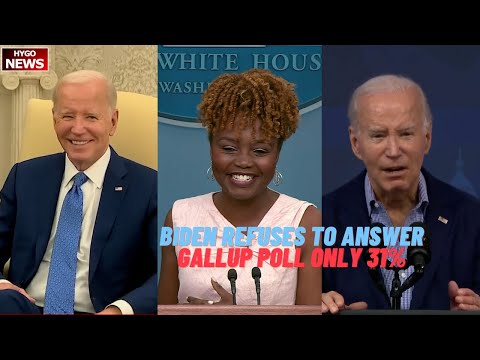
Judge Calls Biden Admin an Orwellian “Ministry of Truth” — White House “Disagrees” but Refuses to Respond to Censorship Charges
On July 5, 2023, the White House faced intense questioning about a federal judge’s ruling that the Biden administration had engaged in what he called “the most massive attack against free speech in United States history” through its contacts with social media companies. Judge Terry Doughty of the Western District of Louisiana issued a preliminary injunction barring multiple federal agencies and officials from communicating with social media platforms to influence content moderation decisions. Press Secretary Karine Jean-Pierre repeatedly said the administration “disagrees” with the ruling but refused to address the specific findings, including the judge’s comparison of the administration to an Orwellian “Ministry of Truth” and his conclusion that the censorship specifically targeted conservative speech.
The Ruling That Shook the White House
Judge Doughty’s 155-page ruling in Missouri v. Biden found that the Biden administration had systematically pressured social media companies including Facebook, Twitter, and YouTube to suppress speech on topics including COVID-19 origins, vaccine efficacy, Hunter Biden’s laptop, and election integrity. The judge concluded that the government’s actions went far beyond permissible persuasion and constituted coercive censorship that violated the First Amendment.
The injunction prohibited officials from the White House, the Surgeon General’s office, the CDC, the FBI, and other agencies from contacting social media companies to “urge, encourage, pressure, or induce in any manner the removal, deletion, suppression, or reduction of content containing protected free speech.”
The judge’s language was unusually blunt for a federal court ruling. He wrote that the U.S. government “seems to have assumed a role similar to an Orwellian ‘Ministry of Truth’” — a reference to the censorship apparatus in George Orwell’s dystopian novel 1984.
KJP Refuses to Address the “Ministry of Truth” Comparison
Fox News correspondent Jacqui Heinrich asked Jean-Pierre directly about the judge’s most inflammatory language.
Heinrich asked: “Can you just respond to the judge’s accusation that each topic suppressed by the administration was a conservative view? He had a pretty strong statement: The U.S. government ‘seems to have assumed a role similar to an Orwellian Ministry of Truth.’ Can you respond to that?”
Jean-Pierre declined: “I’m just not going to respond to the Attorney Gene- — or the judge. I’ll let the Department of Justice do that.”
The stumble — nearly saying “Attorney General” before correcting to “judge” — was minor, but the substance of the refusal was significant. A federal judge had compared the administration to a totalitarian censorship regime, and the White House press secretary would not address the comparison. The deflection to the Department of Justice meant the public would receive no immediate response to one of the most serious First Amendment rulings in recent history.
Refuses to Deny Targeting Conservative Speech
A separate reporter pressed Jean-Pierre on the judge’s finding that the censorship specifically targeted conservative viewpoints.
The reporter asked: “Specifically, do you disagree with the judge’s ruling that this coordination was a form of censorship that specifically targeted conservative speech?”
Jean-Pierre’s response was carefully nonspecific: “Look, we disagree with the decision. I’ll leave it there. And I’m going to let DOJ do their — move forward with their evaluating process.”
By saying the administration “disagrees with the decision” rather than specifically denying that it targeted conservative speech, Jean-Pierre left the most damaging allegation uncontested. The press corps noted the distinction. A blanket disagreement with a court ruling is standard legal posture; declining to deny a specific factual finding within that ruling is something different entirely.
Election Messaging and the First Amendment
Heinrich also asked about the ruling’s impact on the administration’s ability to communicate ahead of the 2024 election.
“I know you can’t talk about 2024, but how will this ruling impact the administration’s efforts to get its messaging out ahead of the election?” Heinrich asked.
Jean-Pierre shut down the line of questioning: “I’m just not going to speak about 2024. We respect the rule of law, and I’ll leave it there.”
The exchange was notable because the question was about the practical impact of a court order, not about campaign strategy. The injunction’s restrictions on government communication with social media companies had direct implications for how the administration could address what it termed “misinformation” on platforms during an election year. Jean-Pierre’s refusal to engage suggested the administration recognized the sensitivity of admitting that its social media engagement strategy had electoral dimensions.
”Continue to Promote Responsible Actions”
When asked whether the administration would change its approach to social media in light of the ruling, Jean-Pierre signaled continuity rather than compliance.
“Look, we’re going to continue to promote responsible actions. I said this moments ago. That is something that we’re going to continue,” she said. “We do disagree. I said this earlier, moments ago. We do disagree with this decision. But the DOJ is going to take a look at this, and they’ll come up with their own options and evaluate this.”
Another reporter asked about the immediate day-to-day impact on White House activities. Jean-Pierre insisted: “Our view remains that social media platforms have a critical responsibility to take action or to take account of the effects their platforms are having on the American people but make independent choices about the information they present. They are a private, as you know, entity, and it is their responsibility.”
The framing of social media companies as “private entities” with their own “responsibility” was a key element of the administration’s defense. The government argued it was not censoring speech but merely flagging concerning content for private companies to evaluate independently. Judge Doughty rejected this characterization, finding that the government’s communications amounted to coercion rather than mere persuasion.
The Blow to “Misinformation” Efforts
A reporter asked directly about the impact on the administration’s anti-misinformation agenda: “How much is this a blow to the White House’s goal of preventing the dissemination of misinformation and disinformation?”
Jean-Pierre could not even quantify the administration’s contacts with social media companies: “I can’t speak to the amounts that contact has had. I mean, that is just not a possible thing to do.”
The inability — or unwillingness — to describe the scale of government-social media communications was striking given that the judge’s ruling documented extensive evidence of frequent, often aggressive contact between administration officials and platform executives. The discovery process in the case had revealed emails, text messages, and meeting records showing a systematic effort to influence what content was allowed to remain on major platforms.
Key Takeaways
- A federal judge issued a 155-page ruling comparing the Biden administration to an Orwellian “Ministry of Truth” and calling its social media censorship the “most massive attack against free speech in United States history.”
- KJP refused to respond to the “Ministry of Truth” comparison or address the judge’s finding that the censorship specifically targeted conservative speech, saying only that the administration “disagrees with the decision.”
- When asked if the administration would change its approach to social media, KJP said it would “continue to promote responsible actions,” signaling defiance rather than compliance with the court order.
- A reporter asked how the ruling would impact election messaging; KJP refused to engage, claiming she could not discuss 2024 while saying the administration “respects the rule of law.”
- The ruling barred officials from the White House, CDC, FBI, and other agencies from pressuring social media companies to suppress protected speech, a sweeping injunction the DOJ was reviewing for possible appeal.