 HYGO News
 Q: oil has flowed to China from that reserve A: This bill addresses a non-issue
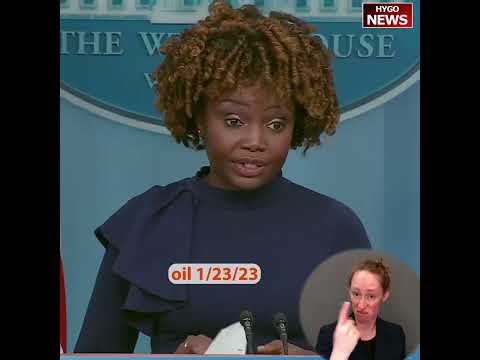
Reporter: Oil from SPR Flowed to China — KJP: Bill Banning That Is “Non-Issue”
In January 2023, a reporter asked White House Press Secretary Karine Jean-Pierre about House-passed legislation that would ban exporting oil from the Strategic Petroleum Reserve (SPR) to Chinese companies. “The House has passed bipartisan legislation that would ban the export of oil from the Strategic Petroleum Reserve to Chinese companies. Given that oil has flowed to China from that reserve during both this administration and the previous one, is that the type of reform that the President would potentially support?” the reporter asked. KJP’s dismissal was notable: “This bill addresses a non-issue. We’re very clear on that. We focus, we’re focused on advancing legislation that would lower costs for American families, not raise them. So I’m just going to leave it there.” The “non-issue” characterization was striking given that oil had documented flowed from SPR to Chinese entities.
The SPR Background
The Strategic Petroleum Reserve context:
National security asset — Historical purpose.
714 million barrel capacity — Roughly.
Biden drawdown — Historic scale.
Record releases — 2022.
China exports — Documented.
The SPR had been created for emergency supply, not routine economic management. Biden’s historic drawdown during 2022 was to combat high gasoline prices. Some of that released oil had been exported, including to Chinese entities.
The China Sales
Oil sales to China documented:
Various shipments — Throughout 2022.
Sinopec related — Some sales.
Hunter Biden connection — Alleged by critics.
Documented amounts — Various.
Political issue — Becoming.
The fact of SPR oil going to China was documented. Amount and specific buyers had been reported. The Hunter Biden connection via BHR Partners had been alleged but details disputed.
The House-Passed Legislation
HR 22 context:
Bipartisan support — House.
Ban exports — To Chinese companies.
Newly Republican — House.
Strategic concern — Addressed.
Biden opposition — Threatened.
Republicans had made SPR China sales issue. The bipartisan House passage suggested some Democratic support. Biden’s opposition was political problem.
The Reporter’s Framing
The reporter’s framing was neutral. “Given that oil has flowed to China from that reserve during both this administration and the previous one,” the reporter said.
The framing:
Both administrations — Noted.
Bipartisan precedent — Of practice.
Factual basis — Established.
Reform proposal — Legitimate.
Question neutral — In tone.
The “both administrations” reference was important. It framed the issue as policy question rather than partisan attack. This was Biden administration issue that was continuing practices from Trump era.
”This Bill Addresses a Non-Issue”
KJP’s dismissal was notable. “This bill addresses a non-issue,” KJP said.
The characterization:
“Non-issue” — Dismissive.
Documented problem — Contradicted.
Strategic concern — Minimized.
Administration position — Clear.
Political framing — Aggressive.
Calling SPR oil exports to China “non-issue” was politically aggressive framing. It contradicted documented facts and bipartisan House concern. The dismissal suggested the administration didn’t want to acknowledge the issue.
The Actual Situation
The actual situation:
SPR releases — Million barrels daily.
Some exported — Including to China.
Legal under current law — But questioned.
Strategic concern — About China specifically.
Reform possibility — Bipartisan support.
This wasn’t fabricated concern. Real oil from strategic reserve had gone to strategic competitor. Whether this should be allowed was legitimate policy question.
”We’re Focused on Advancing Legislation”
KJP pivoted to administrative positives. “We focus, we’re focused on advancing legislation that would lower costs for American families, not raise them,” KJP said.
The pivot:
Administrative priorities — Emphasized.
Different focus — Claimed.
Implicit criticism — Of bill.
“Lower costs” — Framing.
Claim bill would raise costs — Implicit.
The implicit claim was that banning SPR oil exports to China would raise costs for Americans. This was disputable — the oil volumes were modest relative to total SPR releases.
The Cost Framing Analysis
The “raise costs” framing analysis:
SPR oil to China — Limited volume.
Domestic price impact — Debatable.
Overall market effect — Small.
Strategic benefit — Losing.
Political cost — High.
Whether banning Chinese exports would meaningfully affect American gasoline prices was contestable. The volumes were relatively small compared to overall SPR releases. The claim that banning them would raise costs was overstated.
”I’m Just Going to Leave It There”
KJP closed the topic. “So I’m just going to leave it there,” KJP said.
The closure:
Topic termination — Unilateral.
Brief engagement — On merits.
Standard approach — For difficult topics.
Minimal defense — Provided.
Issue buried — If possible.
The quick dismissal and exit was typical pattern. Difficult topics got brief treatment. More detailed engagement would have required more substantive defense of administration position.
The Bipartisan Support Issue
Bipartisan House support was significant:
GOP leadership — Supporting.
Some Democrats — Joining.
Mixed coalition — Against administration.
Political problem — For Biden.
Veto threat awkward — If bipartisan.
Vetoing bipartisan legislation was politically costly. The administration was signaling veto despite bipartisan support. This suggested strong opposition that needed stronger justification than “non-issue.”
The Hunter Biden Context
The Hunter Biden dimension:
BHR Partners — His connection.
Chinese entity — With investments.
Political attack — GOP made.
Biden family — Under scrutiny.
Investigation angle — House would pursue.
The Hunter Biden angle made SPR China exports politically sensitive for administration. Acknowledging concern could open investigative doors. Dismissing as “non-issue” was defensive.
The Strategic Reserve Purpose
SPR strategic purpose:
Emergency supply — Original.
Oil crisis protection — Design.
Economic tool — Modern use.
Biden’s novel use — Political concerns.
Reserve depletion — Concerning level.
Biden’s use of SPR for political price management had been controversial. Depleting strategic reserve for domestic political reasons, while allowing some exports to strategic competitor, raised policy questions.
The Energy Security Dimension
Energy security implications:
SPR depletion — Reducing capacity.
Future emergencies — Less preparation.
Strategic reserves — Purpose questioned.
Policy coherence — Debated.
National security — Relevance.
If SPR was for emergencies, depleting it for current prices was trading future security for current politics. Exporting to China compounded the concern. These were legitimate policy discussions.
The Trump Administration Comparison
Trump-era comparison:
SPR exports — Also occurred.
Smaller scale — Generally.
Different context — No major drawdown.
Legal framework — Same.
Political framing — Different.
Exports to China had happened under Trump too, though scale was smaller. The legal framework had been the same. Why Biden administration was more concerned about Trump-era exports than current ones was unclear.
The Media Coverage
Media coverage of SPR-China issue:
Conservative media — Highlighted.
Mainstream media — Limited.
Fact-checking — Some.
Political coverage — Growing.
Voter awareness — Increasing.
The issue was growing in prominence. Conservative media had been on it consistently. Mainstream coverage was building. Voter awareness was expanding. The “non-issue” framing was running against growing awareness.
The House Investigation
House would likely investigate:
Energy Committee — Jurisdiction.
Oversight Committee — Could take up.
Specific shipments — Examined.
Hunter Biden angle — Pursued.
Administrative decisions — Questioned.
House Republicans had multiple committees that could investigate SPR-China issues. The “non-issue” dismissal wouldn’t stop investigations. It would just mean administration wouldn’t be shaping narrative.
The Political Strategy
Administration’s political strategy:
Dismiss issue — As partisan.
Minimize acknowledgment — Of concerns.
Pivot to positives — Consistently.
Veto when necessary — Threatened.
Wait out attention — Strategic.
This was playing for time. If administration could avoid engaging until media attention moved, issue might fade. But with GOP House majority, attention wasn’t going away.
The Broader Energy Context
Broader energy context:
Gasoline prices — Rising again.
SPR refill — Not happening quickly.
Reserve at decades-low — Level.
Energy independence — Debate.
Policy criticism — Growing.
The energy situation had multiple problematic elements. SPR depletion, China exports, rising gas prices again, slow refill — all fed criticism of administration energy policy.
The Republican Messaging
Republican messaging was strong:
“Draining reserve” — Attack line.
“Selling to China” — Criticism.
“Hunter Biden” — Added angle.
“Energy security” — Framing.
“America last” — Claim.
Republicans had developed strong attack narrative around SPR-China issue. The simple “non-issue” dismissal wasn’t effectively countering this narrative. Administration messaging was weaker than attacks.
The Legislative Process
Legislative process:
House passage — Bipartisan.
Senate consideration — Uncertain.
Biden veto threat — Clear.
Override unlikely — Given margins.
Political messaging — Continuing.
Even if bill didn’t become law, House passage created political messaging opportunity. Biden’s veto would be politically costly. The administration was losing messaging battle regardless of legislative outcome.
The Long-Term Implications
Long-term implications:
Energy policy — Continuing debate.
Reserve management — Questioned.
China policy — Scrutinized.
Accountability — Demanded.
Democratic concerns — Growing.
The SPR-China issue wasn’t going away. It was becoming part of broader Biden energy policy criticism. The “non-issue” framing wouldn’t survive sustained political attention.
The Administration’s Defensiveness
Administrative defensiveness showed:
Quick dismissal — Of issue.
Minimal engagement — With substance.
Hostile framing — Of legislation.
Pivot to positives — Reflexively.
No real defense — Offered.
The defensiveness suggested administration didn’t have strong defense of SPR-China exports. If it had good defense, more substantive engagement would have been possible. The dismissal suggested weak position.
The “Non-Issue” Language
“Non-issue” language implications:
Contemptuous — Of concerns.
Dismissive — Of bipartisan action.
Out of touch — Potentially.
Hostile messaging — Risk.
Reporter antagonism — Possible.
Calling something bipartisan members of House had voted for “non-issue” was politically risky. It could alienate moderate Democrats who supported bill. It suggested administrative disconnect from broader concerns.
Key Takeaways
- A reporter asked KJP about House-passed bipartisan legislation banning SPR oil exports to Chinese companies.
- The reporter noted: “Oil has flowed to China from that reserve during both this administration and the previous one.”
- KJP dismissed: “This bill addresses a non-issue. We’re very clear on that.”
- She pivoted to administrative positives: “We’re focused on advancing legislation that would lower costs for American families, not raise them.”
- KJP closed quickly: “So I’m just going to leave it there.”
- The “non-issue” characterization was striking given documented SPR exports to China and bipartisan House action, and suggested administration weakness on defending practice.
Transcript Highlights
The following is transcribed from the video audio (unverified — AI-generated from audio).
- The House has passed bipartisan legislation that would ban the export of oil from the Strategic Petroleum Reserve to Chinese companies.
- Given that oil has flowed to China from that reserve during both this administration and the previous one.
- Is that the type of reform that the President would potentially support?
- This bill addresses a non-issue. We’re very clear on that.
- We focus, we’re focused on advancing legislation that would lower costs for American families, not raise them.
- So I’m just going to leave it there.
Full transcript: 105 words transcribed via Whisper AI.