 HYGO News
 Q: if Speaker brings up debt limit? A: debt ceiling not political weapon not hostage
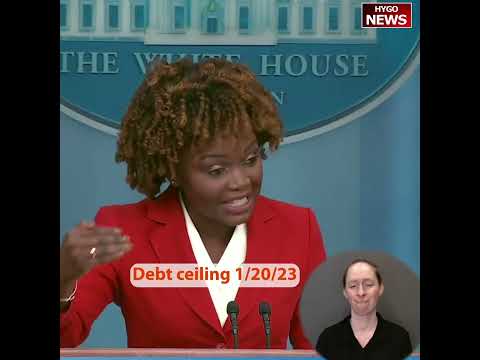
White House on Potential McCarthy Meeting: Debt Ceiling “Not a Political Weapon” — “Should Not Be a Hostage Situation”
In January 2023, a reporter asked White House Press Secretary Karine Jean-Pierre whether President Biden would reiterate his no-negotiations position if Speaker Kevin McCarthy raised the debt limit during any potential meeting. “If a meeting happens with the speaker, if the speaker brings up the debt limit with the president, reiterate the position that you guys have confirmed?” the reporter asked. KJP’s response was yes, with characteristic emphasis: “Look, it’s a range of issues and I just said the president has been very clear about where we stand on the position of default. Really very clear. I’ve said it, the president has said it. And so we have been clear on this. The president has been clear on this. It should not be used as a political weapon, political, we should not be putting it in a hostage situation. We should be dealing with this in a way that is responsible.” The repetitive emphasis on “clear” underscored the administration’s commitment to the no-negotiations position heading into potential Speaker talks.
The Speaker Meeting Context
Speaker McCarthy had been seeking a meeting with Biden:
Newly elected Speaker — January 7, 2023.
Debt ceiling looming — Immediate pressure.
GOP priority — Fiscal negotiations.
Biden reluctance — To engage.
Political positioning — By both sides.
McCarthy wanted to meet with Biden to discuss debt ceiling and spending. Biden was reluctant to engage. Any meeting would be political theater as much as substantive — who appeared reasonable, who appeared reasonable, who would be blamed for impasse.
The Reporter’s Hypothetical
The reporter asked about a specific scenario:
Meeting occurs — Assumed for hypothetical.
McCarthy raises debt limit — Likely.
Biden’s response — Under question.
Position reiteration — Expected.
Meeting dynamics — Explored.
The hypothetical was fair preparation — if a meeting occurred, McCarthy would certainly raise debt ceiling. Biden’s response would be consequential. Reporters wanted to know whether the firm no-negotiations position would hold in direct conversation.
”A Range of Issues”
KJP opened with broad framing. “Look, it’s a range of issues and I just said the president has been very clear about where we stand on the position of default,” KJP said.
The opening:
“Range of issues” — Broader than debt limit.
Standard framing — For meeting scope.
Position anchored — To default prevention.
Biden clarity claim — Established position.
Public record invoked — Prior statements.
The “range of issues” framing positioned the potential meeting as covering multiple topics, not just debt ceiling. This allowed Biden to engage on other matters without appearing to negotiate on debt ceiling specifically.
”Really Very Clear”
KJP repeated emphasis on clarity. “Really very clear. I’ve said it, the president has said it. And so we have been clear on this. The president has been clear on this,” KJP said.
The repetition pattern:
Multiple “clear” references — Four uses.
Different speakers cited — KJP, Biden.
Emphasis through repetition — Rhetorical.
Verbal pattern — Characteristic.
Record establishment — For future.
The repeated “clear” was characteristic KJP emphasis. The multiple references served to establish the position as well-documented and frequently stated. This created political record about administration consistency.
”Not Be Used as a Political Weapon”
KJP reiterated the core position. “It should not be used as a political weapon,” KJP said.
The framing:
Weapon metaphor — For debt ceiling.
Illegitimate use — Characterized.
Political not financial — Tool misuse.
Normative argument — Against leverage.
Administration position — Established.
The “political weapon” framing delegitimized GOP use of debt ceiling as negotiation tool. By characterizing the tactic as weaponization, the administration positioned their refusal to negotiate as principled rather than tactical.
”Hostage Situation”
KJP used the hostage metaphor again. “We should not be putting it in a hostage situation,” KJP said.
The hostage framing:
Consistent administration language — Throughout.
Economy as hostage — In metaphor.
Default as harm — To hostages.
GOP as hostage-takers — By implication.
Moral framing — Against practice.
The hostage metaphor was becoming standard. Multiple administration officials and Democratic politicians were using it. The language was effective political framing — describing what Republicans saw as negotiation as something much more sinister.
”Dealing With This in a Way That Is Responsible”
KJP framed the administration approach as responsible. “We should be dealing with this in a way that is responsible,” KJP said.
The responsibility framing:
Responsible approach — Administration claim.
Clean raise — Without conditions.
Contrasts with GOP — As irresponsible.
Democratic norms invoked — Against leverage.
Governance framing — Over politics.
By claiming responsibility for their position, the administration was implicitly characterizing Republicans as irresponsible. Two versions of responsibility existed — clean raise (Democratic) versus spending discipline negotiation (Republican) — but administration framing preempted this equivalence.
The Meeting Strategy
The administration’s approach to potential McCarthy meeting:
Open to meeting — In principle.
Position firm — No negotiations.
Ranged discussion — Multiple topics.
No concessions — On debt ceiling.
Political positioning — Throughout.
A McCarthy meeting was likely but would need to be managed. Biden needed to appear reasonable and willing to engage while not actually negotiating. This required careful choreography.
The Actual McCarthy Meeting
When Biden and McCarthy did meet (February 1, 2023):
First formal meeting — Since McCarthy became Speaker.
Cordial tone — Publicly.
No breakthrough — On debt ceiling.
Position maintained — By Biden.
Political theater — Successful for both.
The February meeting produced no substantive agreement but served political purposes. Both sides could claim willingness to engage while not compromising positions. The status quo on debt ceiling negotiations continued.
The Negotiation Denial
Throughout this period, administration denied any negotiations:
Biden won’t negotiate — Over ceiling.
McCarthy demands — Rejected.
Discussions framed — As not negotiations.
Denial necessary — For position integrity.
Eventually broke — When pressure mounted.
The “no negotiations” position would eventually have to break. As default approached, actual discussion of policy would become necessary. The firm public stance preserved leverage for eventual real talks, but the stance couldn’t be maintained indefinitely.
The Public Position Framing
KJP’s repeated “clear” emphasized public positioning:
Public record — Being created.
Political accountability — For eventual outcome.
Blame assignment — If default occurred.
Messaging discipline — Administration committed.
Narrative shaping — Through repetition.
The repeated clarity claims were about building public record that would be relevant if default occurred. If administration had to eventually negotiate, the firm public stance would be prior position. If default happened, the stance would support blaming Republicans.
The Constitutional Question
Some Democrats were raising constitutional arguments:
14th Amendment Section 4 — On public debt.
Public debt shall not be questioned — Text.
Possible unilateral action — By Biden.
Constitutional crisis — If attempted.
Legal uncertainty — About authority.
Constitutional scholars and some Democrats were arguing that Biden might unilaterally continue payments despite ceiling. The 14th Amendment theory was untested but existed as potential escape valve from debt ceiling standoff. Administration wasn’t embracing this approach publicly but it existed as option.
The Premium Coin Proposal
Another escape valve was being discussed:
Platinum coin — Trillion-dollar minting.
Legal theory — For avoiding default.
Technical gambit — Controversial.
Media coverage — Extensive.
Administration rejection — Yet.
The trillion-dollar platinum coin idea had been around since 2011. Minting a platinum coin of huge face value could technically allow government to continue payments. Administration had rejected this approach but it remained in public discussion.
The 2011 Precedent Shadow
The 2011 debt ceiling experience shaped 2023 approach:
Obama negotiated — Eventually.
Bad deal resulted — Sequestration.
S&P downgrade — Followed.
Market turmoil — Ensued.
Political cost — To Obama.
Lesson for Democrats — Don’t negotiate.
Democratic commitment to “no negotiations” stemmed directly from 2011 experience. Biden, as Obama’s VP, had witnessed the damage negotiations caused. The 2023 position was deliberately different.
The Default Risk Assessment
If positions didn’t change, default risked:
Treasury payments — Suspended.
Market crisis — Inevitable.
Credit rating — Possible downgrade.
Economic damage — Significant.
Political blame — Distributed.
The risk was real. If both sides held positions rigidly through the deadline, actual default could occur. The consequences would be severe and unpredictable. Both sides had incentive to eventually compromise, but the question was whether compromise would come before or after damage.
The Market Response
Markets were monitoring debt ceiling carefully:
Treasury yields — Sensitive to news.
Stock markets — Watching politics.
Credit default swaps — On US debt.
International concerns — Among debt holders.
Corporate planning — For disruption.
Market participants had seen this before in 2011. Pattern recognition existed — if impasse continued into May/June, markets would increasingly react. The firm January stances would likely need to soften as markets responded.
The International Dimension
U.S. debt ceiling standoff had international implications:
Treasury as reserve asset — Global.
Dollar dominance — Partly dependent.
International investors — Watching.
G7 coordination — Concerns.
Long-term positioning — By other countries.
China, in particular, had been reducing U.S. Treasury holdings. Repeated debt ceiling drama fed narrative about U.S. political dysfunction affecting economic stability. International confidence in dollar dominance was partly at stake.
The Republican Position Evolution
Republican positions would evolve too:
January firm demands — For cuts.
Gradually specific proposals — Emerging.
McCarthy balancing — Caucus demands.
Freedom Caucus constraints — On flexibility.
Eventually some agreement — Needed.
The Republican “we demand cuts” position would eventually need specificity. Cuts to what, by how much, over what timeframe — these details would matter. The vague early demands would give way to specific proposals eventually.
The Media Coverage Strategy
Both sides were using media strategically:
White House messaging — No negotiations.
GOP messaging — Responsible fiscal demands.
Media role — Covering the conflict.
Framing battles — For public opinion.
Pressure campaigns — Through coverage.
Daily press coverage of the debt ceiling standoff kept pressure on both sides. Each side was using press briefings, speeches, and statements to shape narrative. The administration’s firm public stance was partly about winning media framing battle.
Key Takeaways
- A reporter asked KJP whether Biden would reiterate no-negotiations position if McCarthy raised debt limit in any potential meeting.
- KJP confirmed: “The president has been very clear about where we stand on the position of default.”
- The repeated emphasis on “clear” — multiple times in short space — underscored administration commitment to position.
- KJP deployed standard framing: “It should not be used as a political weapon… we should not be putting it in a hostage situation.”
- The administration framed their position as responsible governance: “We should be dealing with this in a way that is responsible.”
- The firm January posture would be tested as debt ceiling deadline approached, with both sides needing to eventually find some accommodation before default.
Transcript Highlights
The following is transcribed from the video audio (unverified — AI-generated from audio).
- If a meeting happens with the speaker, if the speaker brings up the debt limit with the president, reiterate the position that you guys have confirmed?
- It’s a range of issues and I just said the president has been very clear about where we stand on the position of default.
- Really very clear. I’ve said it, the president has said it.
- And so we have been clear on this. The president has been clear on this.
- It should not be used as a political weapon, political, we should not be putting it in a hostage situation.
- We should be dealing with this in a way that is responsible.
Full transcript: 115 words transcribed via Whisper AI.