 HYGO News
 Q: How determined is Biden is to get to the bottom of it? A: That's why Secret Service under purview
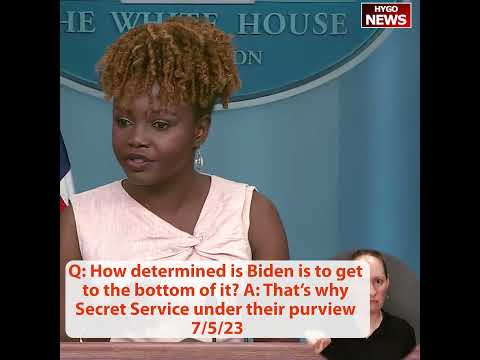
How Determined Is Biden to Find Who Brought Cocaine Into the White House? KJP Deflects to Secret Service
On July 5, 2023, a reporter asked what should have been a simple question: How determined is President Biden to find out who brought illegal drugs into the White House? Press Secretary Karine Jean-Pierre’s initial response did not even mention the President, pivoting instead to the Secret Service. When the reporter pushed back and repeated the question, Jean-Pierre provided generic assurances that Biden thought it was “very important” and “incredibly important” — but offered no evidence of any concrete action the President had taken or directed to ensure the investigation succeeded.
The Question KJP Would Not Answer Directly
The reporter’s question was designed to gauge the President’s personal investment in resolving an embarrassing and potentially security-compromising incident at his own residence and workplace.
“How determined is the President to get to the bottom of who brought illegal drugs into the White House?” the reporter asked.
Jean-Pierre’s first response bypassed the question entirely: “The Secret Service is getting to the bottom, and that’s what matters. And it’s under their purview.”
The answer was notable for two reasons. First, it substituted the Secret Service’s determination for the President’s. The reporter had asked specifically about Biden — not about the investigating agency. Second, the phrase “that’s what matters” was a telling editorial addition, suggesting that the President’s personal determination was irrelevant as long as the Secret Service was working the case.
”The Question Was: How Determined Is the President?”
The reporter did not accept the deflection and repeated the question, making explicit that Jean-Pierre had not answered it.
“But it was — the question was: How determined is the President?” the reporter said.
Forced to address the actual question, Jean-Pierre provided a more direct but still formulaic response: “The President thinks it’s very important to get to the bottom of this. That’s why Secret Service, which it’s under their purview, is looking into this. And they’re going to look into what happened this weekend. So, the President thinks this is incredibly important to get to the bottom of this.”
The response escalated from “very important” to “incredibly important” within the span of three sentences, but the substance remained thin. Jean-Pierre did not describe any specific action Biden had taken, any directive he had issued, any conversation he had had with the Secret Service about the investigation, or any expectation he had communicated about the timeline or thoroughness of the inquiry.
The connection she drew between Biden thinking it was important and the Secret Service investigating was also logically weak. The Secret Service would investigate cocaine found in the West Wing regardless of the President’s feelings about the matter. Their jurisdiction over White House security incidents is institutional, not dependent on presidential direction. Framing the investigation as evidence of Biden’s determination was circular reasoning: Biden cared about the investigation, as proven by the fact that an investigation was happening, which would have happened with or without his concern.
Words Versus Actions
The exchange highlighted a recurring pattern in the administration’s response to the cocaine incident: strong verbal expressions of concern paired with zero evidence of substantive engagement.
If Biden was “incredibly” determined to find out who brought cocaine into the White House, several concrete actions would have been expected. The President could have directed the White House counsel to cooperate fully with the investigation. He could have ordered a review of access logs and visitor records. He could have asked the Secret Service for regular briefings on the investigation’s progress. He could have directed staff to make themselves available for interviews.
Instead, Jean-Pierre had separately stated during the same briefing that the White House was “not assisting in anything” and was “not involved” in the investigation. The contradiction between expressing “incredible importance” and declaring noninvolvement was stark. How could the President be determined to get to the bottom of an investigation that his own White House was refusing to assist?
The Credibility Problem
The reporter’s persistence in asking the question reflected a growing credibility problem for the White House on the cocaine issue. Each deflection, each vague expression of concern, and each refusal to provide specific information eroded the administration’s claim that it wanted answers.
Press briefings operate on a basic exchange: reporters ask questions, and the press secretary provides information that helps the public understand the administration’s position and actions. When a press secretary consistently declines to provide information while insisting the administration cares deeply about an issue, the credibility of those assurances diminishes with each repetition.
By the time Jean-Pierre said Biden thought it was “incredibly important,” the phrase had been drained of meaning by the context in which it was delivered. The White House had refused to say where the cocaine was found, which entrance was involved, when tours ended, whether security protocols were being reviewed, and whether any White House personnel were cooperating with investigators. Against that backdrop, claiming the President thought the investigation was “incredibly important” rang hollow.
The Secret Service as Shield
Throughout the cocaine briefing, Jean-Pierre used the Secret Service’s jurisdiction as both an explanation and a shield. Every question she did not want to answer was directed to the Secret Service. Every expression of concern was attached to the Secret Service’s investigation. Every claim of accountability was routed through the Secret Service’s authority.
This strategy had the effect of making the Secret Service the public face of the administration’s response while insulating the White House from any direct accountability. If the investigation succeeded, the White House could claim the President’s determination had been vindicated. If it failed — as it ultimately did — the White House could point to the Secret Service as the responsible party while maintaining that the President had always considered the matter “incredibly important.”
The approach was politically effective but substantively empty. The Secret Service needed information and cooperation from the White House to conduct a thorough investigation of an incident on White House property. By declining to provide that cooperation while simultaneously expressing confidence in the investigation, the administration created conditions in which a successful outcome was unlikely — then claimed credit for caring about the outcome it had helped prevent.
The Investigation’s Outcome
The Secret Service ultimately closed the investigation without identifying a suspect, citing the high-traffic nature of the area, limited forensic evidence, and the number of people who had access to the location during the relevant time period. The White House treated the closure as a resolution rather than a failure, and Jean-Pierre’s assurances that Biden considered the matter “incredibly important” were never revisited by the press secretary.
Key Takeaways
- A reporter asked how determined Biden was to find who brought cocaine into the White House; KJP initially deflected to the Secret Service without mentioning the President at all.
- When forced to answer directly, KJP said Biden considered it “very important” and “incredibly important” but cited no specific action, directive, or engagement by the President to support the investigation.
- The expressed determination contradicted the White House’s simultaneous declaration that it was “not assisting” and “not involved” in the Secret Service investigation.
- KJP used the Secret Service’s jurisdiction as a shield to deflect accountability from the White House while routing all expressions of concern through the agency’s investigation.
- The investigation closed without identifying a suspect, and the White House’s claims of presidential determination were never substantiated by any concrete action.