 HYGO News
 Q: expressing concern would somehow get ahead of Secret Service investigation A: under purview
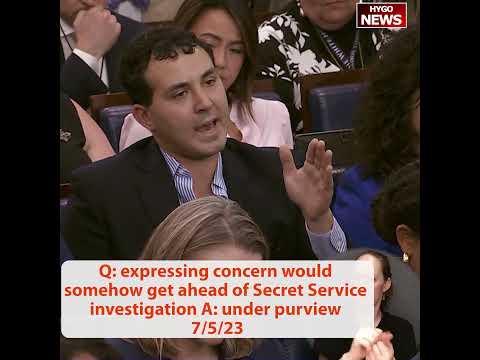
Reporter Asks Why KJP Won’t Even Express Concern About Cocaine in the White House — “So It’s No Big Deal?”
On July 5, 2023, during the White House press briefing on cocaine found in the West Wing, a reporter identified something that had been conspicuously absent from Press Secretary Karine Jean-Pierre’s responses: any expression of concern that an illegal substance had been found on White House property. The reporter challenged Jean-Pierre on how simply expressing concern could possibly interfere with the Secret Service investigation, exposing the absurdity of using the investigation as a shield against even the most basic statements of alarm. When Jean-Pierre continued to deflect, the reporter delivered the sharpest line of the briefing: “So it’s no big deal?”
The Observation That Changed the Briefing Dynamic
Throughout the cocaine briefing, Jean-Pierre had maintained a carefully calibrated posture: she acknowledged the facts of the discovery, deferred to the Secret Service, and repeated that the Biden family was at Camp David. What she had not done was express any concern, alarm, or discomfort about the fact that cocaine — a Schedule II controlled substance — had been found in the building where the President of the United States works.
The reporter called this out directly: “One thing that you’re not expressing is concern over the fact that this was found on the property, and I guess I’m wondering how expressing concern would somehow get ahead of the Secret Service investigation.”
The question was surgically precise. Jean-Pierre had justified every deflection by saying she did not want to “get ahead of” the Secret Service investigation. But expressing concern about an illegal substance being found in the West Wing had nothing to do with the investigation’s findings. Concern is an emotional and institutional response, not an investigative conclusion. The reporter was asking: why can’t you say this is alarming without compromising the investigation?
KJP’s Tellingly Unemotional Response
Jean-Pierre’s answer maintained the same flat, procedural tone she had used throughout the briefing, treating the question as another opportunity to reference the Secret Service rather than as a chance to demonstrate the administration’s concern.
“I think this is being investigated. It’s under the purview of so- — of the Secret Service. We’re going to let them — let them get to the bottom of this and see what happened. I’m just not going to get ahead of it. I’m just not,” she said.
The response was remarkable for what it lacked. There was no statement that the administration found it alarming that cocaine was found in the West Wing. No expression of concern about the security implications. No acknowledgment that the discovery raised troubling questions regardless of who was responsible. No pledge that the White House took the matter seriously beyond routing it to the Secret Service.
Jean-Pierre’s final phrase — “I’m just not going to get ahead of it. I’m just not” — had the quality of someone who had received strict instructions about what to say and what not to say. The repetition suggested not thoughtful restraint but a predetermined script that she was sticking to regardless of the question asked.
”So It’s No Big Deal?”
The reporter’s follow-up was devastating in its simplicity: “So it’s no big deal?”
The question forced Jean-Pierre into a rhetorical trap. If she said it was a big deal, she would need to explain why she had failed to express any concern about it for the entire briefing. If she said it was not a big deal, she would be dismissing the discovery of illegal drugs in the President’s workplace. If she deflected again to the Secret Service, she would confirm the reporter’s point that the White House was treating the incident with a conspicuous lack of urgency.
The question went to the heart of the administration’s messaging problem on the cocaine issue. By treating every aspect of the story as “under investigation” and therefore off-limits for comment, Jean-Pierre had created the impression that the White House was not concerned about what had happened — only about managing the political fallout. The absence of concern was itself a message, and the reporter decoded it in four words.
Why the White House Wouldn’t Express Concern
The White House’s refusal to express concern about cocaine in the West Wing likely reflected a calculated decision rather than genuine indifference. Several political considerations may have influenced the approach.
First, expressing concern would have elevated the story. By treating the discovery as a routine security matter best handled by the Secret Service, the White House aimed to deprive the story of the institutional urgency that would keep it in the news cycle. Any expression of alarm from the podium would have generated headlines and given the story additional momentum.
Second, concern invites follow-up questions. If Jean-Pierre had said she was deeply concerned about how cocaine got into the West Wing, reporters would immediately have asked what the White House was doing about it. Since the answer was “nothing” — the White House had stated it was “not assisting” in the investigation — expressing concern would have highlighted the gap between words and actions.
Third, any expression of concern could have been interpreted as concern about a specific person. Given the public speculation about Hunter Biden, even a general statement of alarm about the discovery could have been framed as the White House acknowledging the seriousness of the situation in ways that drew the Biden family closer to the controversy.
The Broader Failure of the Cocaine Briefing
The “no big deal” exchange encapsulated the larger failure of the White House’s communications strategy on the cocaine incident. By refusing to provide any concrete information, express any concern, define the scope of the investigation, or commit to any accountability framework, Jean-Pierre created a vacuum that was filled by speculation, suspicion, and criticism.
A more effective approach might have combined genuine expressions of concern with a clear statement of what the White House expected from the investigation. Something as simple as “The President is deeply concerned that an illegal substance was found in the West Wing, and he has asked the Secret Service to conduct a thorough investigation and report its findings promptly” would have projected both seriousness and transparency without compromising the investigation.
Instead, Jean-Pierre’s briefing left the impression that the White House viewed the cocaine discovery as a political problem to be managed rather than a security incident to be addressed. The reporter’s observation — that concern was conspicuously absent — was not just a good question. It was an accurate diagnosis of the administration’s approach to the entire matter.
The Investigation’s Quiet End
The Secret Service closed the investigation weeks later without identifying who brought the cocaine into the West Wing. The White House treated the closure as a non-event, consistent with the lack of concern Jean-Pierre had displayed throughout. The quiet end to the investigation validated the reporter’s implied critique: the White House had never treated the cocaine discovery as a big deal, and the investigation’s inconclusive result reflected that institutional posture.
Key Takeaways
- A reporter observed that KJP had not expressed any concern about cocaine being found in the West Wing and asked how expressing concern could interfere with the Secret Service investigation.
- When Jean-Pierre continued to deflect, the reporter asked “So it’s no big deal?” — forcing the press secretary to either express concern she had been avoiding or confirm the White House’s apparent indifference.
- Jean-Pierre’s refusal to express alarm about illegal drugs on White House property created the impression that the administration was managing political fallout rather than addressing a security incident.
- The White House’s calculated decision to avoid expressing concern likely reflected multiple political considerations, including not elevating the story, not inviting follow-up questions about inaction, and not drawing the Biden family closer to the controversy.
- The exchange captured the fundamental communications failure of the cocaine briefing: by refusing to engage with even the most basic human response to the situation, the White House made the story worse rather than better.