 HYGO News
 Q: Does the White House hope that the lab leak theory is not true?
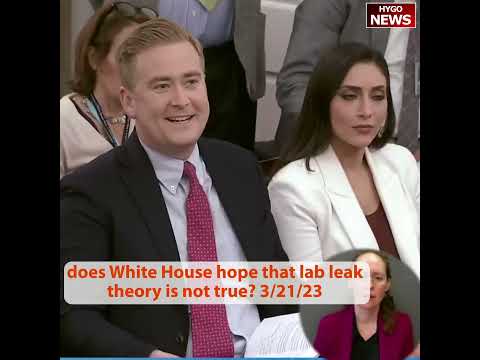
Q: Does The White House Hope That The Lab Leak Theory Is Not True?
National Security Council spokesman John Kirby fielded pointed questions during a March 2023 White House briefing about President Biden’s decision to sign legislation declassifying COVID-19 origin information “except info that would harm national security,” with Fox News correspondent Peter Doocy challenging whether any national security threat could exceed the threat of a virus that killed over one million Americans. Kirby rejected the framing that the White House “hopes” the lab leak theory is untrue, insisting the administration wants “the ground truth” wherever the evidence leads.
The COVID Origins Bill
- Unanimous passage: Congress passed the COVID Origins Act with bipartisan unanimous support.
- Biden’s signing: The president signed the legislation despite prior administration ambivalence.
- Declassification mandate: The bill required declassification of COVID origins intelligence.
- National security exception: The law permitted withholding of information that would harm national security.
- Bipartisan victory: Unanimous passage reflected broad political consensus on public transparency.
The National Security Balance
- Kirby’s framing: The spokesman emphasized “balancing transparency with national security.”
- Information protection: Some intelligence sources and methods require ongoing protection.
- Public interest: Americans broadly want to understand COVID origins.
- Trust implications: Incomplete disclosure risked feeding conspiracy theories.
- Credibility calculation: Administration calculated which information could be released without compromise.
Peter Doocy’s Challenge
- Casualty framing: Doocy cited one million American deaths as ultimate national security threat.
- Threat comparison: He argued no greater national security threat than the pandemic itself.
- Prior reporting: Doocy referenced Fox News coverage of the issue.
- Confrontational style: The exchange reflected his pattern of pointed White House questioning.
- Effective framing: The casualty argument created difficult rhetorical position for the spokesman.
The “Ground Truth” Framing
- Kirby’s response: The spokesman repeatedly emphasized wanting “the ground truth.”
- Evidence-led approach: He framed administration position as following wherever evidence leads.
- Scientific frame: “Wherever the science takes you” signaled evidence-based posture.
- Facts emphasis: Repeated emphasis on “facts” underscored nonpolitical framing.
- Hope rejection: Kirby rejected the characterization of the administration “hoping” for any outcome.
The DOE Assessment Background
- Energy Department assessment: DOE reportedly assessed a lab leak was most likely with “low confidence.”
- Intelligence community split: No consensus existed across U.S. intelligence agencies.
- Classification status: The DOE assessment remained classified at the time.
- Political interest: Conservative lawmakers particularly focused on the lab leak theory.
- Administration response: The White House avoided definitive public positions on origin theories.
The Wuhan Laboratory Context
- WIV focus: The Wuhan Institute of Virology became focal point for lab leak theory.
- Gain-of-function research: Some WIV research involved enhancing virus transmissibility.
- U.S. funding: Small amounts of U.S. research funding had flowed to WIV through EcoHealth Alliance.
- Chinese transparency: China consistently refused independent investigations of WIV.
- Physical proximity: WIV’s location in Wuhan, where COVID first emerged, fueled speculation.
Intelligence Community Divisions
- FBI assessment: The FBI had previously assessed lab leak most likely with “moderate confidence.”
- CIA undecided: The CIA reportedly had not reached definitive conclusion.
- ODNI oversight: The Office of the Director of National Intelligence coordinated community assessments.
- No consensus: The continued lack of consensus reflected evidence limitations.
- Congressional briefings: Intelligence community regularly briefed relevant congressional committees.
Public Transparency Debate
- Declassification benefits: Public transparency could inform future pandemic preparedness.
- Source protection: Releasing information could compromise intelligence sources.
- Political implications: Information release could shape U.S.-China diplomatic relations.
- Scientific value: Understanding origins could inform scientific research priorities.
- Public trust: Transparency could help rebuild public trust in health institutions.
The Department of Energy Role
- National laboratories: DOE operates the national laboratory system.
- Research expertise: National labs have unique biological research capabilities.
- Kirby reference: The spokesman mentioned DOE’s continued study of COVID origins.
- Technical analysis: DOE analysis contributed to overall intelligence assessment.
- Ongoing work: DOE research on origins continued beyond initial assessment.
Congressional Oversight
- Biden briefings: The administration had kept Congress informed per Kirby.
- Committee inquiries: House and Senate committees pursued COVID origins investigations.
- Partisan split: Republicans generally pushed harder for declassification than Democrats.
- Hearing schedules: Multiple committees held COVID origins hearings.
- Legislative outcomes: The Origins Act reflected bipartisan frustration with information pace.
Diplomatic Implications
- China relations: Any lab leak confirmation would significantly damage U.S.-China relations.
- International accountability: Lab leak finding could support international accountability measures.
- WHO involvement: World Health Organization had conducted limited investigations.
- Scientific cooperation: Origins findings could affect future international scientific cooperation.
- Political leverage: U.S. officials weighed political leverage from potential disclosures.
Key Takeaways
- Kirby rejected the characterization that the White House hoped the lab leak theory was untrue.
- The NSC spokesman insisted the administration wants “the ground truth” wherever the evidence leads.
- Peter Doocy challenged whether any national security threat could exceed COVID’s one million American deaths.
- Biden signed the unanimous COVID Origins Act requiring declassification except where national security concerns applied.
- The administration faced continuing pressure to release maximum information about COVID origins.
- U.S. intelligence community remained divided on the relative likelihood of natural vs. lab origins.
Transcript Highlights
The following quotations are drawn from an AI-generated Whisper transcript of the briefing and should be considered unverified pending official transcript release.
- “We don’t have a hope one way or the other, Peter. What we want is the ground truth.” — John Kirby
- “Wherever that takes us, wherever the science takes you, wherever the facts takes you.” — John Kirby
- “The president obviously has to balance transparency with national security.” — John Kirby
- “Is there a bigger national security threat than something that killed one million people?” — Peter Doocy question
- “We have kept Congress informed. Some of that has to be.” — John Kirby
- “Hey, let me finish my answer. And we’re talking about the beginning of his term. Added the Department of Energy in the national labs, told them to keep studying it.” — John Kirby
Full transcript: 153 words transcribed via Whisper AI.