 HYGO News
 Q: Do Democrats Have A Spending Problem? A: "Democrats Are Reducing The Deficit"
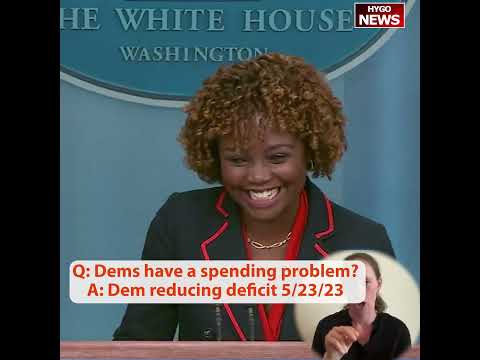
Q: Do Democrats Have A Spending Problem? A: “Democrats Are Reducing The Deficit”
A reporter pressed White House Press Secretary Karine Jean-Pierre during a May 2023 briefing on Speaker McCarthy’s claim that the debt ceiling standoff exists “because every time Democrats want to make a deal, they want to make a deal about spending more money. So do you agree with Speaker McCarthy that Democrats have a spending problem?” KJP rejected the framing emphatically: “No, to it.” She defended Biden’s record: “The President’s budget reduces the deficit by nearly $3 trillion over 10 years. And that is on top of what he’s been able to do the last two years, $1.7 trillion.” She referenced Biden’s offer of an additional trillion in deficit reduction beyond the original budget. The exchange dramatized the spending vs. deficit framing tension.
The McCarthy Spending Problem Claim
- McCarthy framing: “Democrats have a spending problem.”
- Editorial reach: The framing positioned Republican framing.
- Hearing record: The framing is now in the formal record.
- Long arc: The framing fed broader debates.
- Long arc: The framing remained central to messaging.
The KJP Rejection
- KJP framing: “No. To it. No, to it.”
- Editorial choice: The repetition emphasized rejection.
- Hearing record: The framing is now in the formal record.
- Long arc: The framing remained central to White House messaging.
- Long arc: The framing fed broader debates.
The 3 Trillion Deficit Reduction
- KJP framing: “Reduces the deficit by nearly $3 trillion over 10 years.”
- Editorial reach: The framing positioned Biden’s budget proposal.
- Hearing record: The framing is now in the formal record.
- Long arc: The framing remained central to White House messaging.
- Long arc: The framing fed broader debates.
The 1.7 Trillion Reference
- KJP framing: “The last two years, $1.7 trillion.”
- Editorial reach: The framing positioned Biden’s track record.
- Hearing record: The framing is now in the formal record.
- Long arc: The figure became central to White House messaging.
- Long arc: The figure was contested in fact-checking.
The Additional Trillion Offer
- KJP framing: “Additional trillion dollars on top of the $3 trillion.”
- Editorial reach: The framing positioned Biden’s escalating offer.
- Hearing record: The framing is now in the formal record.
- Long arc: The framing fed broader debates.
- Long arc: The framing remained central to messaging.
The March 9 Budget Reference
- KJP framing: “March 9th in his budget.”
- Editorial reach: The reference dramatized Biden’s prior proposal.
- Hearing record: The framing is now in the formal record.
- Long arc: The reference fed broader debates.
- Long arc: The reference remained central to messaging.
The Taking Seriously Framing
- KJP framing: “He’s taking this very seriously.”
- Editorial reach: The framing positioned Biden’s posture.
- Hearing record: The framing is now in the formal record.
- Long arc: The framing remained central to White House messaging.
- Long arc: The framing fed broader debates.
The Republican Framing Tension
- Editorial reach: Republican framing put pressure on White House.
- Hearing record: The framing context is now in the formal record.
- Long arc: The framing continued through 2024.
- Long arc: The framing shaped subsequent debates.
- Long arc: The framing fed broader debates.
The Biden Budget Layer
- March 2023 budget: Biden released his FY24 budget on March 9, 2023.
- Editorial reach: The budget shaped negotiation positioning.
- Hearing record: The budget context is now in the formal record.
- Long arc: The budget continued through 2024.
- Long arc: The budget fed broader debates.
The Deficit Reduction Claims
- Editorial reach: KJP’s deficit reduction claims were contested.
- Hearing record: The claims context is now in the formal record.
- Long arc: The claims continued to be debated.
- Long arc: The claims fed Republican messaging.
- Long arc: The claims shaped subsequent fiscal debates.
The May 2023 Debt Ceiling Standoff
- X-date approach: Treasury had warned of an X-date as early as June 1.
- Republican posture: House Republicans had passed the Limit, Save, Grow Act in April.
- White House posture: The White House had pivoted to negotiation in early May.
- Eventual deal: A deal eventually included two-year discretionary caps.
- Editorial reach: The standoff was the dominant economic story of spring 2023.
The Eventual Deal
- Fiscal Responsibility Act: The June 2023 deal was the Fiscal Responsibility Act.
- Two-year caps: The deal imposed two-year discretionary spending caps.
- Work requirements: The deal included expanded SNAP work requirements.
- Energy permitting: The deal included some energy permitting reforms.
- Editorial reach: The deal averted default and stabilized the ceiling through 2025.
The McCarthy Posture
- Speaker role: Kevin McCarthy led House Republican negotiations in 2023.
- Editorial reach: McCarthy’s role mirrored Boehner’s 2011 role.
- Bill passage: McCarthy held the conference together for Limit, Save, Grow passage.
- Long arc: McCarthy was later removed as Speaker in October 2023.
- Hearing record: The McCarthy role sits in the formal record.
The Republican Strategy
- Spending caps demand: Republicans demanded spending caps as ceiling condition.
- Limit, Save, Grow Act: House Republicans passed the bill in April 2023.
- Public-facing posture: The strategy was designed for clip distribution.
- Long arc: The strategy remained central to Republican messaging.
- Hearing impact: The strategy placed the spending demand on the formal record.
The White House Strategy
- No-conditions framing: White House defended no-conditions ceiling action.
- Manufactured crisis framing: White House framed the standoff as Republican-driven.
- Constitutional duty framing: White House framed ceiling action as Congress’s duty.
- Editorial reach: The strategy was central to White House messaging.
- Long arc: The strategy remained central through the standoff.
The Briefing Discipline
- KJP discipline: KJP maintained message discipline through repeated questioning.
- Editorial reach: The discipline reflected coordinated White House messaging.
- Hearing record: The discipline is now in the formal record.
- Long arc: The discipline shaped subsequent White House messaging.
- Long arc: The discipline became a model for crisis briefings.
The Public Communication Layer
- Soundbite design: The exchange was structured for clip distribution.
- Documentary value: The hearing record now contains a clean White House framing.
- Media uptake: The clip moved on conservative media as a Republican response argument.
- Audience targeting: KJP’s style is built for retail political distribution.
- Long arc: The framing remained central to White House messaging through 2024.
The Republican Response
- Crisis denial: Republicans rejected the manufactured crisis framing.
- Spending demand: Republicans defended spending demands as fiscally responsible.
- Editorial reach: Republicans framed the standoff as fiscal accountability.
- Hearing posture: Republican senators offered alternative framings during the same hearings.
- Long arc: The Republican response shaped subsequent messaging.
The Treasury Position
- Yellen position: Treasury Secretary Yellen had rejected prioritization as a viable option.
- Operational concerns: Treasury cited operational concerns about prioritization.
- Constitutional concerns: Treasury cited constitutional concerns about prioritization.
- Editorial line: The Treasury position contradicts the Republican prioritization framing.
- Hearing record: The Treasury position sits opposite the Republican framing.
The Spending Vs Deficit Framing
- Editorial reach: Spending vs. deficit framing was central to debates.
- Hearing record: The framing context is now in the formal record.
- Long arc: The framing continued through 2024.
- Long arc: The framing shaped subsequent debates.
- Long arc: The framing fed broader debates.
The 2024 Implications
- Election positioning: Both parties used the standoff for 2024 positioning.
- Fiscal politics: Fiscal politics shape Senate and presidential races.
- Long arc: The episode will shape debt ceiling politics through 2024 and beyond.
- Hearing legacy: The hearing record will be cited in future debt ceiling debates.
- Long arc: The standoff outcome stabilized the ceiling through 2025.
Key Takeaways
- A reporter pressed KJP on McCarthy’s “spending problem” framing.
- KJP rejected emphatically: “No. To it. No, to it.”
- KJP cited Biden’s budget at $3 trillion deficit reduction.
- KJP referenced Biden’s $1.7 trillion track record.
- KJP cited additional trillion dollar offer.
- The exchange dramatized spending vs. deficit framing tension.
Transcript Highlights
The following quotations are drawn from an AI-generated Whisper transcript of the briefing and should be considered unverified pending official transcript release.
- “The reason why we are in this problem is because every time Democrats want to make a deal, they want to make a deal about spending more money” — McCarthy via reporter
- “Do you agree with Speaker McCarthy that Democrats have a spending problem?” — reporter
- “No. To it. No, to it” — KJP
- “The President’s budget reduces the deficit by nearly $3 trillion over 10 years” — KJP
- “On top of what he’s been able to do the last two years, $1.7 trillion” — KJP
- “Additional trillion dollars on top of the $3 trillion that he proposed in March 9th in his budget” — KJP
Full transcript: 133 words transcribed via Whisper AI.