 HYGO News
 Q: can you find out Biden grandchildren or any other family members spend time on TikTok? A: No
By HYGO News
Published
· Updated
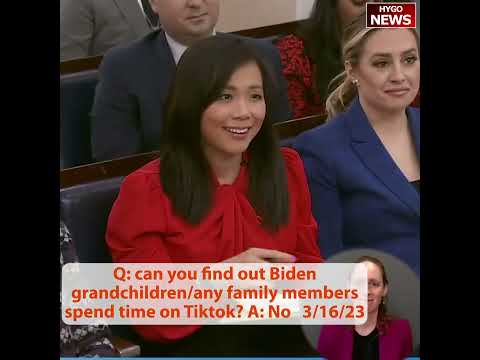
Q: Can You Find Out If Biden Grandchildren Or Other Family Members Spend Time On TikTok? A: No
White House Press Secretary Karine Jean-Pierre declined to investigate whether President Joe Biden’s grandchildren or other family members use TikTok when pressed by a reporter during a March 2023 briefing, saying she would not “speak to” private citizens’ device contents. The follow-up question landed during an extended exchange on the administration’s increasingly aggressive posture toward the Chinese-owned app, highlighting the personal-versus-policy tension at the heart of the TikTok debate.
The Personal-Policy Question
- Biden’s own device: The president had previously said he did not have TikTok installed on his own phone.
- Reporter’s angle: The follow-up probed whether that personal caution extended to family members Biden spends time with.
- Family influence reference: Biden had previously mentioned being “influenced” by family members regarding TikTok — a comment raised by Jean-Pierre in her response.
- Private citizen frame: The press secretary used family members’ private-citizen status to decline further engagement.
- Political sensitivity: An answer either way created risk — confirming grandchild use undermined the national security framing; denying it would be hard to verify.
The Biden Family Context
- Grandchildren count: Biden has seven grandchildren, ranging from young adults to toddlers at the time of the briefing.
- Hunter Biden’s children: The president had publicly acknowledged four of Hunter Biden’s children, with Navy Joan added shortly after this briefing.
- Beau Biden’s children: The late Beau Biden’s children Natalie and Hunter also spent substantial time with the president.
- Age demographic: TikTok’s core user base skewed toward Americans under 30, overlapping with Biden’s grandchildren’s age range.
- Private citizens frame: Previous administrations had sometimes briefed on first family digital habits; this White House resisted that precedent.
KJP’s Deflection Pattern
- “I do not know”: Jean-Pierre admitted personal ignorance of family members’ TikTok use.
- Refusal to find out: Despite the reporter’s explicit request that she “find out,” the press secretary showed no intent to investigate.
- Private citizen shield: The press secretary invoked the private-citizen status of grandchildren to avoid substantive engagement.
- Prior influence reference: KJP’s own mention that Biden “was influenced by them before to make TikTok” suggested family members do use the platform.
- No commitment: She made no commitment to follow up with additional information on the question.
The TikTok Policy Landscape
- Government device ban: Federal agencies had been required to remove TikTok from government devices under December 2022 legislation.
- CFIUS pressure: The Committee on Foreign Investment in the United States was reportedly demanding ByteDance divest TikTok or face a ban.
- Project Texas: TikTok had proposed housing U.S. user data with Oracle under monitored access to address security concerns.
- CEO testimony pending: TikTok CEO Shou Zi Chew was preparing for congressional testimony in the weeks after the briefing.
- State-level action: Dozens of states had imposed their own TikTok bans on government devices.
The “Influenced By Them” Moment
- Biden’s prior claim: The president had told stories about grandchildren urging him to engage with TikTok during the 2020 campaign.
- Campaign context: The Biden campaign had used TikTok for voter outreach, particularly for younger demographics.
- Personal account absence: Biden himself did not maintain a TikTok account, though the official White House account launched later.
- Democratic campaign use: Numerous Democratic lawmakers and officials maintained TikTok accounts for constituent communication.
- Contradiction framing: Critics argued the administration could not credibly call TikTok a security threat while family and staff used it.
Presidential Family Privacy Norms
- First families: Historical practice has protected immediate first family from routine press scrutiny, especially minor children.
- Adult children: Adult children of presidents have faced variable scrutiny depending on their public roles.
- Hunter Biden precedent: Hunter Biden’s legal and financial affairs had received extensive press coverage throughout the administration.
- Grandchildren practice: Grandchildren have traditionally been shielded from press inquiry unless they voluntarily entered public life.
- National security exception: Some analysts argued family digital habits became legitimate public questions when tied to declared security threats.
The Broader TikTok Moment
- House hearing: The House Energy and Commerce TikTok hearing drew record press coverage and partisan sparring.
- Creator pushback: TikTok brought prominent creators to Washington to argue against a ban on economic impact grounds.
- Legal preparation: First Amendment lawyers had been retained by TikTok in anticipation of litigation over any ban.
- Bipartisan concern: Sens. Mark Warner, Marco Rubio, and others had unified across party lines on concerns about ByteDance ownership.
- Youth voter risk: Democratic strategists warned that banning TikTok could alienate young voters ahead of 2024.
The Messaging Calculation
- Family questions as trap: Any specific answer about Biden grandchildren carried political risk in an election cycle.
- Policy vs. personal: The White House attempted to keep the TikTok question framed as national security policy rather than family behavior.
- Press routine: Deflecting follow-ups allowed Jean-Pierre to maintain message discipline on the formal policy review.
- Reporter strategy: The “influenced by family” angle created rhetorical pressure without requiring documentary proof.
- No update commitment: The exchange ended without any commitment to return with additional family information.
Key Takeaways
- Jean-Pierre declined to investigate whether Biden’s grandchildren or family members use TikTok, citing private citizen status.
- The press secretary’s own mention that Biden was “influenced by them” suggested family members had used the platform.
- Biden himself has said he does not have TikTok on his phone, creating a contrast reporters sought to probe.
- The White House worked to keep TikTok framed as a national security policy question rather than a personal-behavior inquiry.
- Democratic strategists faced a tension between using TikTok for voter outreach and treating it as a national security threat.
- The exchange occurred as CFIUS was reportedly pressuring ByteDance to divest TikTok or face a potential U.S. ban.
Transcript Highlights
The following quotations are drawn from an AI-generated Whisper transcript of the briefing and should be considered unverified pending official transcript release.
- “I do not know.” — Karine Jean-Pierre
- “I’m just not going to speak to their private citizens.” — Karine Jean-Pierre
- “I’m just not going to speak to what they have on their phones or not.” — Karine Jean-Pierre
- “He was influenced by them before to make TikTok.” — Karine Jean-Pierre, on grandchildren
- “President Biden has said before that he himself does not have TikTok on his phone.” — Reporter framing
- “Do you know if any of his grandchildren or any other family members who he spends time with has it on their phones?” — Reporter question
Full transcript: 111 words transcribed via Whisper AI.