 HYGO News
 Q: anything China, Canada & Mexico can do tonight to tariffs? Trump: No. Nothing; Sec Burgum
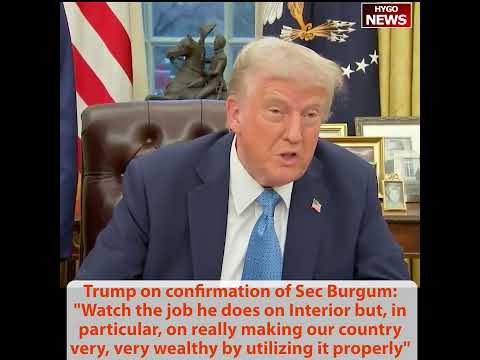
Q: anything China, Canada & Mexico can do tonight to tariffs? Trump: No. Nothing; Sec Burgum
In Oval Office remarks accompanying the swearing-in of Secretary of Interior Doug Burgum, President Trump addressed reporters on his imminent tariffs against China, Canada, and Mexico — set to take effect the following day. Asked whether there was “anything China, Canada, and Mexico can do tonight to forestall your implementation of tariffs tomorrow,” Trump answered directly: “No. Nothing. Not right now.” Asked whether the tariffs were a “negotiating tool,” Trump rejected that framing: “No, it’s not. No, it’s a pure economic.” Trump cited the specific deficit and fentanyl rationale — “big deficits with all three” plus China “sending massive amounts of fentanyl, killing hundreds of thousands of people a year with a fentanyl” and Mexico and Canada “making it possible for this poison to get in.” Trump detailed the trade deficit specifics — “$200 billion deficit with Canada” and “$250 billion deficit” with Mexico. On Canada: “Why should we be subsidizing Canada?” On Mexico: “We have a lot of people coming into the border. And now we’ve largely stopped that, but we’ve stopped that ourselves.” Trump then transitioned to introducing Secretary Burgum: “Watch the job he does on the Interior but, in particular, on really making our country very, very wealthy by utilizing it properly.” Trump positioned Burgum as environmentalist — “He’s going to do it very carefully and very painstakingly good.” Trump framed a “partnership” between Interior and Energy (Chris Wright). Burgum’s priorities: “Not only do we have to produce more energy, we’ve got to produce more critical minerals in this country.” Burgum highlighted Interior’s balance sheet — “500 million acres of public land, 700 million acres of subsurface, over 2 billion of offshore acres” as assets “we need to manage smartly, sustainably for the benefit and use of the American people.”
No Nothing Tonight
“Mr. President, is there anything China, Canada, and Mexico can do tonight to forestall your implementation of tariffs tomorrow?”
The reporter’s question framework:
- Tomorrow implementation
- Tonight actions possible
- Three countries affected
- Forestall possibility
- Last-minute framework
“No, nothing. Not right now. No.”
Trump’s direct answer:
- Nothing available
- Not right now
- No negotiation opening
- Firm commitment
- Tariff framework final
Not a Negotiating Tool
“Not a negotiating tool? No, it’s not. No, it’s a pure economic.”
Trump’s framework:
- Not negotiating tool
- Pure economic rationale
- Trade framework
- Revenue framework
- Not leverage only
The pure economic framework:
- Deficit reduction
- Revenue generation
- Domestic production
- Economic restructuring
- Long-term policy
Deficit Framework
“We have big deficits with, as you know, with all three of them.”
Trump’s framework:
- All three countries
- Big deficits
- Trade imbalance
- Economic harm
- Correction needed
The trade deficits:
- China: ~$290 billion (2023)
- Mexico: ~$152 billion (2023)
- Canada: ~$67 billion (2023)
- Massive imbalances
- Chronic framework
Trump’s numbers differ slightly but frame:
- $200 billion Canada
- $250 billion Mexico
- Various China
- Approximations
- Trump framework
Fentanyl Framework
“And in one case, they’re sending massive amounts of fentanyl, killing hundreds of thousands of people a year with a fentanyl. And in the other two cases, they’re making it possible for this poison to get in.”
Trump’s fentanyl framework:
- China sending fentanyl
- Hundreds of thousands killed
- Mexico enables transit
- Canada enables transit
- All three implicated
The fentanyl crisis:
- Synthetic opioid
- ~75,000 US deaths/year
- Fentanyl overdose deaths
- China precursor chemicals
- Mexico cartel manufacturing
The “hundreds of thousands” framework:
- CDC annual overdose deaths
- Multi-year total
- Fentanyl-specific
- American death toll
- Generational framework
Substantial Increase Possible
“Number one. And number two, we have big deficits. And it’s something we’re doing. And we’ll possibly very substantially increase it. We’re not. We’ll see how it is. But it’s a lot of money coming to the United States.”
Trump’s framework:
- Two reasons (fentanyl + deficit)
- Policy implementation ongoing
- Possibly increase substantially
- See how it is
- Revenue significant
The tariff escalation possibility:
- Current tariff levels
- Potentially higher
- Responsive framework
- Revenue focus
- Policy flexibility
Canada Deficit
“As you know, we have about a $200 billion deficit with Canada getting close to $200 billion. They’ve treated us very unfairly. And I say, why should we be subsidizing Canada?”
Trump’s Canada framework:
- ~$200 billion deficit
- Treated us unfairly
- Subsidizing Canada
- Framework criticism
- Rhetorical question
The Canada-US trade:
- Actually smaller deficit
- Energy import significant
- Manufacturing integration
- Auto industry
- Oil import major
The “subsidizing” framework:
- Trade deficit = subsidy (Trump view)
- Opposite direction money
- American money flowing
- Canadian benefit
- Unequal framework
“They, you know, it’s wonderful. I have so many friends in Canada. It’s a great place.”
Trump’s framework:
- Personal warmth
- Canadian friendships
- Great place
- Not hostility
- Economic framework
The balance:
- Personal affection
- Policy firmness
- Economic framework
- Relationship continuing
- Trade reset
No Concessions
“Is there a concession or a look at the other side? No. We’re not looking for a concession. And we’ll just see what happens. We’ll see what happens.”
Trump’s framework:
- No concessions sought
- Not negotiation
- See what happens
- Policy implementation
- Framework firm
The implementation framework:
- Tariffs imposed
- Reactions awaited
- Responses framework
- Policy tested
- Course corrections
Mexico Same Thing
“With Mexico, it’s the same thing. We have a $250 billion deficit.”
Mexico framework:
- $250 billion deficit
- Same framework
- Parallel action
- Trade imbalance
- Chronic issue
The Mexico trade:
- Nearshoring framework
- Manufacturing migration
- Auto industry
- USMCA framework
- Supply chain
“And we have a lot of people coming into the border. And now we’ve largely stopped that, but we’ve stopped that ourselves.”
The border framework:
- Immigration flow
- Largely stopped
- Self-stopped
- Mexico cooperation limited
- Unilateral action
The Trump border framework:
- Inauguration day EOs
- Border enforcement
- Military deployment
- Remain in Mexico
- Various tools
“We have an amazing group of people working with us.”
Trump’s framework:
- Cabinet team
- Working effectively
- Border enforcement
- Various personnel
- Team framework
Burgum Introduction
“There’s a man behind me who became a tremendous success. He was not a wealthy man. He didn’t start off a wealthy man and he ended up a wealthy man. And, you know, that’s a great talent. And he’s willing to sacrifice so much and to put it to work for our country.”
Doug Burgum introduction:
- Self-made success
- Not born wealthy
- Ended wealthy
- Great talent framework
- Sacrifice for country
Burgum’s biography:
- North Dakota farm background
- Software entrepreneur (Great Plains)
- Microsoft acquisition
- North Dakota Governor
- Business success
Interior Wealth
“He watched the job he does on the interior, but in particular, on really making our country very, very wealthy by utilizing it properly.”
Trump’s framework:
- Interior wealth creation
- Country wealth
- Utilizing property properly
- Asset management
- Resource development
The Interior Department:
- Federal lands management
- 500+ million acres
- Energy resources
- Mineral rights
- National parks
Environmentalist Framework
“And at the same time, environmentally, he does it very, he’s very much an environmentalist. He’s going to do it very carefully and very painstakingly good.”
Trump’s framework:
- Environmentalist (Burgum)
- Carefully framework
- Painstakingly good
- Balance emphasized
- Not reckless
Burgum’s environmental record:
- North Dakota Governor
- Carbon capture support
- Various programs
- Balanced approach
- Industry engagement
Energy Partnership
“But you just watch what happens. And working with the Department of Energy, where his compatriot, his friend, and also consider the most talented man in the oil business, is the head of the Department of Energy. They work together. It’s almost like a partnership. It really is a partnership.”
The partnership framework:
- Interior (Burgum)
- Energy (Chris Wright)
- Compatriot framework
- Friendship
- Operational partnership
Chris Wright:
- Liberty Energy founder/CEO
- Fracking pioneer
- Oil industry leader
- Trump ally
- Most talented framework
Great for Country
“And watch what that does for our country. It’ll be fantastic thing to see.”
Trump’s framework:
- Great for country
- Fantastic result
- Watch unfolding
- Partnership results
- Policy framework
Burgum First Priority
“What is your first priority as Secretary of Interior?”
The reporter question — natural follow-up. Burgum now speaking.
“Well, as you’ve heard President Trump say, we have to turn the ship around. If Interior was a public company, its stock would be in the tank. Revenue has been declining. Production of revenue for American taxpayers is down.”
Burgum’s framework:
- Ship turnaround
- Public company analogy
- Stock in tank
- Revenue declining
- Taxpayer production down
The Interior revenue:
- Royalties from leases
- Mineral production
- Timber sales
- Grazing fees
- Various revenues
The decline framework:
- Biden-era restrictions
- Lease reductions
- Drilling pause
- Royalty decreases
- Revenue trajectory down
Deregulation Order
“The deregulation order, which executive order which President Trump just signed, extremely important because we have to shorten the time it takes to build things in America.”
The deregulation framework:
- Executive order signed
- Extremely important
- Time to build
- Shortening needed
- Comprehensive framework
The permitting reform:
- Multi-year processes
- Environmental review
- NEPA reforms
- Agency coordination
- Timeline reduction
More Energy and Critical Minerals
“And not only do we have to produce more energy, we’ve got to produce more critical minerals in this country. And we’re talking across the whole country, including Alaska, especially a big opportunity.”
Burgum’s priorities:
- Energy production more
- Critical minerals more
- Country-wide framework
- Alaska specifically
- Big opportunity
Critical minerals:
- Lithium (EV batteries)
- Rare earths (electronics)
- Cobalt, nickel, copper
- Uranium
- Various others
The Alaska framework:
- ANWR drilling potential
- NPR-A exploration
- Critical minerals deposits
- Mining permits
- Economic opportunity
Interior Balance Sheet
“Interior, if it was a company, has the largest balance sheet in the world. 500 million acres of public land, 700 million acres of subservice, over 2 billion of offshore acres.”
Burgum’s framework:
- Largest balance sheet
- 500M acres public land
- 700M acres subsurface
- 2B+ offshore acres
- Corporate framework
The Interior assets:
- Bureau of Land Management
- National Park Service
- Fish and Wildlife Service
- Bureau of Ocean Energy
- Various agencies
American Assets
“These are all assets that belong to the American people.”
The ownership framework:
- Belong to American people
- Taxpayer ownership
- Public trust
- Management responsibility
- Benefit obligation
“We all talk about the debt that America has, this 36 trillion. We have perhaps hundreds of trillions of dollars of assets that we need to manage smartly, sustainably for the benefit and use of the American people.”
The balance framework:
- $36 trillion debt
- Hundreds of trillions assets
- Management smart
- Sustainable framework
- American benefit
The asset value:
- Mineral rights
- Oil and gas reserves
- Timber
- Recreation
- Various uses
Significance
The Oval Office exchange captured:
- Tariff firmness: No, nothing — not a negotiating tool
- Pure economic framework: Trade deficit + fentanyl rationale
- Specific deficits: $200B Canada, $250B Mexico
- Burgum introduction: Self-made success, environmentalist
- Interior-Energy partnership: Burgum-Wright framework
- Interior priorities: Energy, critical minerals, deregulation
- Asset framework: Hundreds of trillions to manage
Trump’s firm tariff framework — “no, nothing” — signaled commitment beyond negotiating posture. Pure economic rationale combined with fentanyl crisis gave policy substance.
The deficit numbers provided concrete framework. $200B Canada and $250B Mexico — large numbers justifying aggressive action.
Burgum’s introduction emphasized business acumen and environmental commitment. Balanced framework for controversial Interior role.
The Interior-Energy partnership signaled administration coordination. Burgum and Wright both successful private sector leaders, friendship and operational alignment.
The balance sheet framework — public lands as corporate assets — provided fresh perspective. Interior as wealth generator rather than cost center.
Key Takeaways
- Trump on tariffs tonight: “Is there anything China, Canada, and Mexico can do tonight to forestall your implementation of tariffs tomorrow? No, nothing. Not right now. No. Not a negotiating tool? No, it’s not. No, it’s a pure economic.”
- Trump on deficits: “We have big deficits with, as you know, with all three of them. And in one case, they’re sending massive amounts of fentanyl, killing hundreds of thousands of people a year with a fentanyl. And in the other two cases, they’re making it possible for this poison to get in.”
- Trump on Canada: “We have about a $200 billion deficit with Canada getting close to $200 billion. They’ve treated us very unfairly. And I say, why should we be subsidizing Canada?”
- Trump on Burgum: “Watch the job he does on the Interior but, in particular, on really making our country very, very wealthy by utilizing it properly. And at the same time, environmentally, he does it very, he’s very much an environmentalist. He’s going to do it very carefully and very painstakingly good.”
- Burgum on Interior priorities: “Not only do we have to produce more energy, we’ve got to produce more critical minerals in this country. Interior, if it was a company, has the largest balance sheet in the world. 500 million acres of public land, 700 million acres of subsurface, over 2 billion of offshore acres. These are all assets that belong to the American people.”