 HYGO News
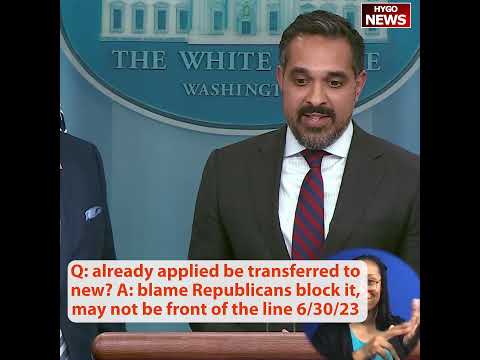
 Q: already applied be transferred to new? A: Republicans block it, may not be the front of the line
Already Applied to Biden’s Loan Forgiveness — Will It Transfer to a New Program? White House Says No Guarantees
On June 30, 2023, just hours after the Supreme Court struck down President Biden’s student loan forgiveness program in a 6-3 ruling, a reporter pressed White House officials on the fate of the 16 million borrowers who had already applied and been pre-approved for debt relief. The exchange revealed an uncomfortable truth: the administration could not guarantee that those who had already gone through the process would receive any priority in whatever new program might eventually emerge.
16 Million Borrowers Left in Limbo
The reporter’s question cut to one of the most immediate practical concerns following the Supreme Court ruling. Millions of borrowers had visited the federal student loan forgiveness website, completed the application, and received notifications that they were eligible for debt relief. Now, with the program invalidated, those borrowers wanted to know whether their applications would count for anything.
The reporter asked: “The millions who’ve already applied to the program that now has been blocked, that — I noticed the President was encouraging people to still sign up. So is the thinking that that could just be transferred to the new regulation once that’s set up? Or how will that work?”
Deputy Director of the National Economic Council Bharat Ramamurti acknowledged the frustration but offered no concrete assurances. “Yeah — again, I know this is not particularly satisfying, but it is too early to say, because we haven’t completed the rulemaking process yet,” he said.
Ramamurti described the enormous demand the program had generated in its brief window of availability: “It is clearly the case that, you know, just a handful of days — I think maybe a little bit over a week — that the website was available, we had an incredible rush of interest. You had 16 million people go to the website, fill out the form, and indicate that they were eligible for debt relief.”
White House Blames Republicans for Blocking Relief
While unable to offer a clear path forward for existing applicants, Ramamurti used the moment to assign blame for the situation. He pointed directly at Republican officials and the Supreme Court for blocking relief that the administration had already begun delivering.
“As the President’s remarks made clear today, he certainly feels for all of the 40 million borrowers but especially those 16 million who went through the process and got a notification saying you will — ‘You are going to get your debt relief,’ only to have Republican officials and the Court step in and block that,” Ramamurti said.
The phrasing was deliberate. By framing the ruling as Republicans and the Court “stepping in” to block relief, the administration sought to redirect the political fallout away from its own decision to pursue a legally vulnerable executive action and toward the opponents who challenged it.
However, Ramamurti was notably candid about the uncertainty facing those 16 million applicants: “But — but, no, it’s not — it’s too — it’s premature to say whether those people are necessarily going to be at the front of the line or anything like that in a new process.”
The admission that pre-approved borrowers might not even be prioritized in a future program underscored the extent of the disruption caused by the ruling. Borrowers who had been told their debt would be forgiven were now back to square one with no timeline and no guarantees.
The Supreme Court Ruling That Ended the Program
The Supreme Court’s 6-3 decision in Biden v. Nebraska brought a definitive end to the administration’s most ambitious student debt initiative. The legal challenge had been building for months and involved multiple tracks.
President Biden had announced the loan forgiveness program in August 2022, offering up to $10,000 in cancellation for borrowers earning under $125,000 and up to $20,000 for Pell Grant recipients. The total cost was estimated at over $400 billion. Six Republican state attorneys general filed suit arguing the program violated the separation of powers by spending hundreds of billions of dollars without congressional authorization. In a separate case, Department of Education v. Brown, two borrowers who did not qualify for forgiveness also challenged the program.
The 8th U.S. Circuit Court of Appeals issued an injunction blocking the program in November 2022. The Department of Justice asked the Supreme Court to lift the injunction, but the Court declined, allowing the block to remain in place while it considered the case on its merits. The final 6-3 ruling held that the administration had exceeded its statutory authority under the HEROES Act, applying the major questions doctrine to conclude that a program of such sweeping economic significance required explicit congressional authorization.
The Broken Promise Problem
The exchange highlighted a political vulnerability for the administration that went beyond the legal defeat. By launching the application website and sending pre-approval notifications before the legal challenges were resolved, the White House had created concrete expectations among millions of borrowers. When those expectations were dashed by the Supreme Court, the political cost was not merely abstract disappointment but the specific frustration of 16 million people who believed they had secured relief.
The decision to encourage people to “still sign up” even after the ruling added another layer of confusion. If the administration could not say whether prior applicants would receive any priority, the value of submitting a new application was unclear. The message seemed designed more to maintain political engagement on the issue than to offer practical guidance to borrowers navigating their student loan obligations.
Key Takeaways
- A reporter asked whether the 16 million borrowers who had already applied and been pre-approved for Biden’s student loan forgiveness would have their applications transferred to any new program after the Supreme Court struck it down.
- White House official Bharat Ramamurti said it was “premature” to say whether those borrowers would be at the front of the line in any future process, offering no guarantees despite their completed applications.
- Ramamurti blamed Republican officials and the Supreme Court for blocking relief that had already been promised to millions of borrowers, framing the political narrative around obstruction rather than legal overreach.
- The Supreme Court ruled 6-3 in Biden v. Nebraska that the administration exceeded its authority under the HEROES Act, applying the major questions doctrine to invalidate the $400 billion forgiveness program.
- The exchange exposed the political cost of launching the application process before legal challenges were resolved, leaving 16 million pre-approved borrowers with dashed expectations and no clear path forward.