 HYGO News
 POTUS meets with Brazilian President, signed trade deal with PM of Malaysia, TRUMP DANCE MALAYSIA
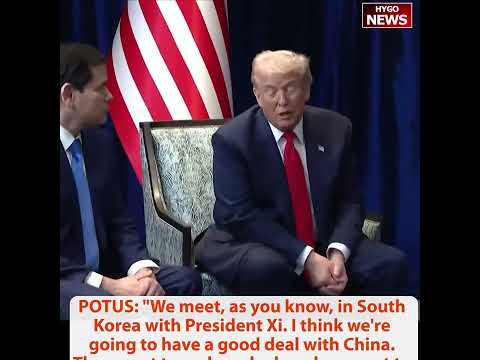
POTUS meets with Brazilian President, signed trade deal with PM of Malaysia, TRUMP DANCE MALAYSIA
President Trump’s Asia trip produced substantial diplomatic results in a single day. Trump met with Brazilian President Lula, signaling a thaw in a relationship that had been tense following prior U.S. sanctions over Brazil’s anti-Bolsonaro prosecutions — Trump called Lula “doing well” and expected “pretty good deals” between both countries, leaving specifics to Jamieson Greer (USTR), Scott Bessent (Treasury), and Marco Rubio (State). Trump signed a major U.S.-Malaysia trade deal and jointly presided over the signing of the Kuala Lumpur Peace Accords — a formal peace agreement ending recent hostilities between Cambodia and Thailand. Trump confirmed he’ll meet with Xi in South Korea within days, with additional U.S. meetings to follow in Washington or Mar-a-Lago. Treasury Secretary Bessent noted the 100% tariff threat scheduled for November 1 gave Trump massive leverage — a framework deal now appears to have avoided that scenario. Asked about meeting Kim Jong Un at the DMZ during the South Korea leg, Trump said he’d be open to it “100%” if Kim reaches out. Trump: “We took part in the signing of a historic peace agreement ending the hostilities between Cambodia and Thailand. We’re calling it the Kuala Lumpur Peace Accords.” On Xi: “I think we’re going to have a deal with China … I think we’re going to have a very fair meeting with China.” On Kim: “If he’d like to meet, I’m open to it … they don’t have a lot of telephone service. They have a lot of nuclear weapons, but not a lot of telephone service."
"Boring Questions”
Trump opened the availability with trademark press criticism. “They’re not great questions today. I must say, you know, they’re sort of boring, sort of boring questions. We’ll see you later. Thank you very much.”
The “boring questions” framing often came when reporters tried to pivot to domestic political stories during foreign travel events. Trump’s frustration: the Malaysian deals, the Cambodia-Thailand peace accords, the China meeting prep were all major news — but reporters wanted to ask about shutdowns and domestic politics.
Meeting with Lula
“Well, first of all, let me just say it’s a great honor to be with the president of Brazil. It’s a great country. It’s a big, beautiful country. And I think they’re doing well. I think they’re doing very well, from what I understand.”
Trump’s meeting with Brazilian President Luiz Inácio Lula da Silva marked a significant tonal shift. Trump had previously sanctioned Brazilian Supreme Court Justice Alexandre de Moraes and imposed tariffs on Brazil over concerns about political prosecutions of former President Bolsonaro and suppression of conservative speech.
Meeting Lula personally, Trump chose friendly framing. The personal rapport strategy: engage directly, find common ground, leave specifics to the team.
“And I think we should be able to make some pretty good deals for both countries.”
Team Approach
“And I’m going to leave that a little bit to Jameson and Scott and Marco in different ways.”
The negotiating team:
- Jamieson Greer (US Trade Representative) — tariffs, trade remedies
- Scott Bessent (Treasury Secretary) — financial/monetary issues
- Marco Rubio (Secretary of State) — diplomatic framework
“Marco, less on the economics side. You could do it very well, but I don’t think you’ll have to.”
Rubio’s State Department role focuses on diplomatic relationship issues — democracy concerns, censorship, political prosecutions — rather than trade mechanics.
“But I think we’ll have, I think we’ll be able to do some pretty good deals. We’ve been speaking and I think we’ll end up having a very good relationship."
"Always Had a Good Relationship”
“We always have had a good relationship. I think it’ll continue.”
Trump’s historical framework: despite policy disagreements, Trump-Lula personal relations have been functional. The personal rapport framework applies here as with Erdogan, Modi, MBS — Trump prefers direct personal rapport with leaders regardless of regime type.
Malaysia Trade Deal
“Today, the prime minister and I signed a major trade deal between the United States and Malaysia.”
Malaysia PM Anwar Ibrahim hosted the ASEAN Summit. The U.S.-Malaysia trade deal announced during the visit reportedly covers semiconductor cooperation, palm oil access, rare earth mineral processing, and tariff reductions on specific categories.
Malaysia hosts major Intel, Micron, and other semiconductor manufacturing facilities — the deal structures U.S. supply chain diversification away from Chinese dependence.
Kuala Lumpur Peace Accords
“And together. We took part in the signing of a historic peace agreement ending the hostilities between Cambodia and Thailand. We’re calling it the Kuala Lumpur Peace Accords.”
The Cambodia-Thailand border conflict had escalated earlier in 2025, with military clashes near the Preah Vihear temple and other disputed border points. The situation had seen multiple deaths and periodic shooting.
Malaysia, as current ASEAN chair, hosted mediation. Trump’s framing credited U.S. participation in the signing rather than claiming sole credit — the trilateral mediation involved Malaysian leadership with U.S. backing.
The “Kuala Lumpur Peace Accords” naming references the Malaysian capital as signing venue. Trump’s eighth war ended (by his count).
China Deal Approaching
“I think we’re going to have a deal with China. We meet, as you know, in South Korea with President Xi. I think we’re going to have a good deal with China and they want to make a deal. We want to make a deal.”
The Trump-Xi meeting in South Korea would be the first in-person meeting of Trump’s second term with Xi. Prior engagement had been phone calls and written communications through various channels.
“We’ve agreed to meet. We’re going to meet then later in China and we’re going to meet in the U.S. in either Washington or Mar-a-Lago, Palm Beach.”
The meeting cadence: Korea first, then China, then U.S. (Washington or Mar-a-Lago). Multiple rounds planned, not single high-stakes summit.
Bessent on Leverage
Treasury Secretary Scott Bessent framed the China approach mechanically. “President Trump gave me a great deal of negotiating leverage with the threat of 100% tariffs on November 1st — and I believe we’ve reached a very substantial framework that will avoid that and allow us to discuss many other things with the Chinese.”
The November 1 deadline was the scheduled imposition of a 100% tariff on Chinese goods. The threat was credible — Trump had shown willingness to actually impose tariffs rather than merely threatening.
With a framework agreement reached, the November 1 tariff imposition would be avoided, and broader discussions could proceed in Korea and subsequent meetings.
”Lot of Meetings”
“So, you know, I think, you know, a lot of these talks, well, we meet, we’ve done a lot of discussions before we meet. We’ve had discussions with Brazil. So I think we’re going to end up having a good deal for both countries.”
Trump’s negotiation philosophy: extensive pre-meeting discussions to resolve most issues before the actual leader-to-leader summit. This minimizes the risk of high-profile meetings failing publicly while giving both sides flexibility during the pre-meeting phase.
“I think with China that’s going to happen and we have other deal, you know, we have Japan, we have South Korea. We have a lot of meetings, but people seem to be very interested in China.”
Trump’s Asia trip covered Japan and South Korea deals alongside the Malaysia and China focus. The comprehensive approach: hit multiple trade frameworks in a single swing through Asia rather than separate trips for each.
DMZ and Kim Jong Un
A reporter asked about meeting Kim Jong Un. “In South Korea, do you have any plans to meet with Kim Jong-un at the DMZ?”
“Well, I would if he wouldn’t contact. I mean, I was the last time I met you and I put it out over the Internet that I’m coming to South Korea.”
Trump referenced his June 2019 DMZ meeting with Kim during his first term. That meeting was famously announced via tweet — Trump simply posted that he was going to South Korea and suggested Kim meet him at the DMZ. Kim responded by showing up. Trump became the first sitting U.S. president to step into North Korean territory.
“If he’d like to meet, I’m open to it, certainly. We had a very…”
Trump’s framework: open to a meeting, would welcome it, but not demanding or initiating.
“What, is it open to it? Yeah, I’m doing it. And if you want to put out the word, I’m open to it.”
Trump reiterated the public signal — his statement itself was the communication channel to Kim.
”Not a Lot of Telephone Service”
“You know, they don’t have a lot of telephone service. They have a lot of nuclear weapons, but not a lot of telephone service.”
Trademark Trump humor contrasting North Korea’s military sophistication with its civilian infrastructure deficiency. North Korea’s nuclear arsenal is substantial; international communication infrastructure is minimal (deliberately, for regime security).
“So I’m open to it. I had a great relationship with them. And he probably knows I’m coming, right? But if you want to put out the word, I’m open to it.”
Trump’s Kim Jong Un relationship during his first term produced three summits (Singapore, Hanoi, DMZ) without achieving denuclearization. The personal rapport was real, the policy outcomes modest. Trump’s willingness to resume engagement signals openness to another round.
”Great Relationship”
“Do you expect to touch it all before this trip? Really, there’s not a lot of ways other than the Internet.”
Trump’s point: North Korea’s isolation means standard diplomatic pre-arrangement isn’t available. Any meeting will have to be arranged publicly or not at all.
“You know, they have a very little telephonic service. But he knows I’m coming and he would… Yeah, I’d be open to it 100%. I got along very well with Kim Jong-un. Thank you.”
100% openness to a DMZ meeting, contingent only on Kim’s interest. Trump’s framework positions him as the diplomat, Kim as the pending respondent.
Significance
The single-day news from Trump’s Asia trip:
- Tonal reset with Brazil’s Lula
- Major U.S.-Malaysia trade deal signed
- Cambodia-Thailand peace accord (war #8 ended)
- China framework deal avoiding November 1 tariff crisis
- Xi meeting confirmed for South Korea
- Kim Jong Un DMZ meeting openness signaled
Each of these would be headline-grade on any other day. The compressed timeline demonstrated the Trump administration’s diplomatic tempo — not one issue per summit, but multiple high-stakes deals per travel day.
Key Takeaways
- Trump on Lula: “It’s a great honor to be with the president of Brazil. It’s a great country. It’s a big, beautiful country. And I think they’re doing well … I think we should be able to make some pretty good deals for both countries … We always have had a good relationship.”
- Trump on Kuala Lumpur Peace Accords: “We took part in the signing of a historic peace agreement ending the hostilities between Cambodia and Thailand. We’re calling it the Kuala Lumpur Peace Accords.”
- Trump on China: “I think we’re going to have a deal with China. We meet, as you know, in South Korea with President Xi … We’re going to meet then later in China and we’re going to meet in the U.S. in either Washington or Mar-a-Lago, Palm Beach.”
- Bessent on leverage: “President Trump gave me a great deal of negotiating leverage with the threat of 100% tariffs on November 1st — and I believe we’ve reached a very substantial framework that will avoid that.”
- Trump on Kim Jong Un: “If he’d like to meet, I’m open to it … they don’t have a lot of telephone service. They have a lot of nuclear weapons, but not a lot of telephone service … I’d be open to it 100%. I got along very well with Kim Jong-un.”