 HYGO News
 POTUS is welcomed to Imperial Palace by Emperor Naruhito, Departure ceremony in Malaysia! Sec Rubio
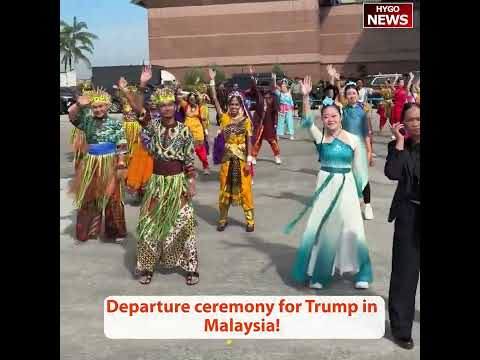
POTUS is welcomed to Imperial Palace by Emperor Naruhito, Departure ceremony in Malaysia! Sec Rubio
The video captures multiple moments from President Trump’s Asia trip. Trump met with Emperor Naruhito of Japan at the Imperial Palace, calling the Emperor “a great man” as he departed the meeting. Trump had a departure ceremony in Malaysia before flying to Tokyo for the second leg of his Asia trip. Secretary of State Marco Rubio addressed reporters about an Israeli strike targeting a Palestinian Islamic Jihad militant, explaining that Israel did not surrender its right to self-defense when entering the Gaza ceasefire. Rubio framed the strike as response to an imminent threat that all mediators agreed constituted legitimate defensive action. Rubio also called on Hamas to speed up the return of hostage bodies — noting 13 hostage bodies, including two Americans, remain unreturned. Trump on Emperor: “Thank you very much. A great man. A great man.” Rubio on Israeli strike: “Israel didn’t surrender its rights in self-defense. Obviously the ceasefire is based on obligations on both sides. By the way, we’d also like to see Hamas speed up the return of hostage bodies with 13 hostages to Americans included. But we don’t view that as a violation of the ceasefire. They have a right and there’s an imminent threat to Israel. And all the mediators agree with that. The ceasefire is based on obligations on both sides.”
Emperor Naruhito Meeting
Trump met with Emperor Naruhito at the Imperial Palace in Tokyo. As Trump departed the meeting, reporters captured his brief comment.
“Thank you very much. A great man. A great man.”
The high praise for Emperor Naruhito. Trump’s simple repetition emphasized his assessment.
Emperor Naruhito:
- 126th Emperor of Japan
- Ascended throne in 2019 after father Akihito’s abdication
- Oxford-educated
- Conservationist and water policy expert
- Represents Japanese continuity and tradition
- Non-political constitutional role but substantial symbolic weight
Trump’s second-term Japan relationship:
- Prime Minister building on predecessor relationships
- Enhanced defense cooperation
- Trade framework adjustments
- Joint approach to China
- Regional security coordination
The Imperial Palace meeting represents high diplomatic protocol. Foreign leaders visiting Japan customarily meet with the Emperor. Trump’s personal expression of respect for Naruhito aligned with traditional U.S.-Japan diplomatic relationship.
Malaysia Departure
The video also captured Trump’s departure ceremony in Malaysia.
The Malaysia stop was likely for:
- ASEAN-related meetings
- Kuala Lumpur Peace Accords signing (or related ceremony for Thailand-Cambodia peace)
- Prime Minister Anwar Ibrahim relations
- Regional trade frameworks
The Kuala Lumpur Peace Accords had ended the Thailand-Cambodia border conflict earlier in Trump’s term. Continuing Malaysia engagement reflected ongoing Southeast Asian diplomatic architecture.
Asia Trip Framework
Trump’s broader Asia trip covered:
- Malaysia (first leg)
- Japan (second leg — Tokyo, Imperial Palace)
- South Korea (potentially)
- China meetings (potentially)
The extended Asia presence demonstrated:
- American engagement with Asian partners
- Competition with Chinese influence
- Trade framework coordination
- Defense relationship strengthening
“POTUS arrives in Tokyo, Japan, for the second leg of his Asia trip.”
The logistics — Trump moving from Malaysia to Japan, with the Imperial Palace meeting scheduled as centerpiece Tokyo event.
Rubio Press Conference
Secretary of State Marco Rubio addressed reporters on multiple Middle East issues.
“You’re talking about the strike against the Masa Nijihad individual? Yes.”
The Israeli strike — on a “Masa Nijihad” individual. Transcription artifact for “Palestinian Islamic Jihad” — the Iranian-backed militant organization in Gaza operating alongside Hamas.
The specific strike targeting a PIJ militant during the Gaza ceasefire:
- Israeli self-defense operation
- Targeted counter-terrorist strike
- Intelligence-driven action
- Limited scope
Self-Defense Framework
“Yeah, look, Israel didn’t surrender its rights in self-defense. Obviously the ceasefire is based on obligations on both sides.”
Rubio’s framework:
- Israel retains self-defense right even during ceasefire
- Ceasefire does not equal surrender of security
- Both sides have obligations under ceasefire
- Targeted strikes not ceasefire violations when imminent threat exists
The legal framework:
- Ceasefire suspends offensive operations
- Self-defense remains inherent right (UN Charter Article 51)
- Imminent threat triggers legitimate response
- Targeted strikes on imminent threats not violations
Hostage Body Return
“By the way, we’d also like to see Hamas speed up the return of hostage bodies with 13 hostages to Americans included.”
Rubio pushing for faster hostage body returns:
- 13 hostage bodies remaining
- 2 American among the bodies
- Hamas retention of bodies as leverage
- Delay compounding family grief
The Gaza hostage framework:
- Living hostages returned in phased releases
- Body returns staggered
- Hamas using delays strategically
- Families awaiting closure
Rubio’s emphasis on American bodies reflects the diplomatic focus on American citizens. Two American hostages killed in Gaza captivity — families need bodies home for proper burial.
Not a Ceasefire Violation
“But we don’t view that as a violation of the ceasefire.”
Rubio’s position — the Israeli strike against PIJ militant does not violate the ceasefire. U.S. position aligns with Israel’s self-defense framework.
“They have a right and there’s an imminent threat to Israel. And all the mediators agree with that. The ceasefire is based on obligations on both sides.”
The mediators — Egypt, Qatar, U.S. — all agreed:
- Imminent threat existed
- Israeli response proportional
- Self-defense applies
- Ceasefire not violated
The consensus among mediators matters politically. Arab mediators (Egypt, Qatar) agreeing Israeli strike was justified strengthens Israeli position against Hamas complaints.
Imminent Threat Standard
The imminent threat framework — longstanding international law standard:
- Threat must be immediate
- Response must be necessary
- Response must be proportional
- Intelligence must support determination
Israel’s intelligence apparatus typically identifies specific threats:
- Planned attacks
- Weapons caches
- Targeted assassinations planned
- Cross-border operations preparing
Targeted strikes eliminate specific threats without broader escalation.
Obligations Framework
“The ceasefire is based on obligations on both sides.”
The dual obligation:
- Israel: suspend offensive operations
- Hamas: release hostages, return bodies, stop attacks
- Both: honor agreements
When Hamas fails obligations (delayed body returns, planned attacks through proxies like PIJ), Israeli response becomes proportionate.
Significance
Trump’s Asia trip and Rubio’s Middle East commentary captured dual diplomatic tracks:
- Asia diplomacy — personal relationships with emperors, prime ministers, regional leaders
- Middle East maintenance — ceasefire operational but imperfect, continued strikes as necessary, hostage issues pressing
The Imperial Palace meeting represents soft diplomacy — personal relationships building strategic partnerships. Trump’s “great man” comment about Naruhito reflects genuine diplomatic warmth.
The Middle East framework — ceasefire as imperfect but holding, self-defense strikes as permitted, hostage issues as priority — maintains the Gaza deal while acknowledging its limitations.
Rubio’s effectiveness as Secretary of State on display:
- Clear framework articulation
- Legal and diplomatic precision
- American interests advocated
- Israeli relationship maintained
- Mediator consensus cited
The 13 remaining hostage bodies including 2 Americans remains a sensitive diplomatic issue. Their return important for closure and for demonstrating continued American engagement.
Key Takeaways
- Trump on Emperor Naruhito: “Thank you very much. A great man. A great man.”
- Rubio on Israeli strike: “Israel didn’t surrender its rights in self-defense. Obviously the ceasefire is based on obligations on both sides.”
- Rubio on hostage bodies: “By the way, we’d also like to see Hamas speed up the return of hostage bodies with 13 hostages to Americans included.”
- Rubio on ceasefire framework: “But we don’t view that as a violation of the ceasefire. They have a right and there’s an imminent threat to Israel. And all the mediators agree with that.”
- Rubio on mutual obligations: “The ceasefire is based on obligations on both sides.”